Terrains of Female Desire: Woman Loving Women and Radical Acts of Self-Care
I focus now on visual readings and feminist praxis of Indo-Trinidadian contemporary visual artist Shalini Seereeram and her collection “Intimate Moments”—which I frame as: (1) visual feminist praxis of women loving other women in the region, (2) visual representation of new femininities that center and explore Indianness through powerful landscapes of private moments outside the domestic sphere, (3) Caribbean aesthetics outside/beyond “paradise” or “the exotic” yet determined to assist us in seeing ourselves (bodies, landscapes, cosmologies, environment, creolized spaces) as beautiful and sacred across all our differences. This reflects Mohammed’s exploration of how the Caribbean picturesque has been challenged by Caribbean peoples, who “are busily engaged in understanding the eccentricities of Caribbean identities, a concern that is both timeless and universal” (2009, 289). Yet symbols and metaphors of Caribbean tropical paradise, or as Mohammed puts it, “colonial packages of planation luxury into a new all-inclusive deal,” continue to be repackaged through the region’s tourist industry (2009, 290). Therefore, it is vital to investigate the ways that Caribbean artists challenge and transform how we see ourselves, bodies, and spaces. Seereeram’s visual art is grounded in the Caribbean space and might certainly be compared to the work of other Indo-Caribbean women artists such as Betsy Karim, Bernadette Persaud, Portia Subran, Kelly Sinnapah Mary, and/or Danielle Boodoo-Fortune. Some of these artists can be described as creating feminist work, while others challenge/contest the stereotypical and traditional representations of Indo-Caribbean women as they draw on Indian myth and artifacts. While these similar connections may be intriguing and worthwhile for further investigation, for this chapter I focus on Seereeram’s work only because I think her work is unique in same-sex loving representations and her particular use of Caribbean aesthetics. I see these specifically through her composition of subjects that are multi-ethnic within Caribbean landscapes, specifically referencing Indo-Caribbeanness in terms of vibrant color palette, design, and adornment. Therefore, we can see her as part of a legacy of Indo-Caribbean artists and of post-indentureship work of expanding notions of Indianness.
Gabrielle Hosein and Lisa Outar in their important collection on Indo- Caribbean Feminisms engage representations of Indo-Caribbean female bodies, and they question the ways that Indian femininity is so often visually represented in stereotypical and traditional ways. They question the use of the “Indian aesthetic” in the Caribbean and how these dominant images stand in contradiction to the various ways that Indo-Caribbean women see and represent themselves. These visual representations are part of what Mohammed describes as the Asian signature, especially the Indian aesthetic that is most often represented through the Indian female body. Hosein and Outar chart and explore the complexity of Indo-Caribbean feminisms in an effort to challenge “flattened” images. They argue that while Indo-Caribbean literature and scholarship has pushed against these limited notions of Indo-Caribbean femininity, “the dominant notions of the Indo-Caribbean woman as Hindu, as passive, as heterosexual, as conservative, as submissive, as guardian of Indian culture via her body and her morality continue to haunt us” (Hosein and Outar 2012, 2). They select a painting by Shalini Seereeram to represent the collection. Interestingly, they see/read the artist’s work operating within and outside stereotypical representations: “She shows Indo-Caribbean women crossing feminist, geographical, ideological, and historical waves, surrounded by feminine markers of power such as the lotus and continuing to carry responsibilities for family and community sustenance” (Hosein and Outar 2012, 2). As they suggest, she pushes us to see beyond constrained or stereotypical visions of Indo-Caribbean women and represents Indianness in and through Caribbeanness.
The artist’s newest collection continues this exploration against and beyond constrained visions of Indianness, specifically Indo-Caribbean women’s representations and femininity. Hosein and Outar assert that “Indo-Caribbean women must continue to visualize the myths that constitute sources of power in the new femininities and feminisms that come to life in the modern and mundane” (2012, 2). Seereeram’s new work engages in visualizing powerful myths that offer new visions of femininity and feminisms for Indo-Caribbean women that disrupts the traditional representations of docile, conservative, and heterosexual. Seereeram’s “Intimate Moments” collection can also be seen as shaping a new visual culture for Indo-Caribbeanness that is intricately woven into Caribbeanness, which I argue can be understood through and alongside the feminist theory and visual culture work of Mohammed. Seereeram’s artwork places Caribbean women’s bodies within landscapes that signify Indianness, spaces that are both private and public, and portray same-sex love and desire. Yet her paintings also reflect the diverse and complex landscape and bodies of the Caribbean; her artwork can be seen as claiming space, desire, and multiple identities for Caribbean women while at the same time illustrating Caribbean aesthetics that are simultaneously Indian and African. Moreover, she uses Indian and Hindu cosmology and spirituality for a very particular purpose—one that reflects post-indentureship, Indo-Caribbean, feminist consciousness. Finally, I read and analyze her paintings up against the dominant notions of paradise and the Caribbean picturesque to explain how her work resists stereotypical representations of “the exotic” and “tropical paradise.” Close readings of these paintings through the framework of seeing difference reveal what I argue is visual feminist praxis and knowledge production that re-visions Caribbean iconography and thus Caribbeanness.
Seereeram unveiled her newest collection of works “Intimate Moments” at the Y Art Gallery in Port of Spain, Trinidad and Tobago (November- December 2014). During her fifteen-year career, Seereeram has shared many beautiful portraits and landscapes, but in this new collection, she has made her work much more personal. She explains that this body of work is about her life’s experiences and moments of emotion and transition: “Intimacy to me is not purely physical; it is an emotional dance that interplays within ourselves. It does not always accompany a sexual interlude, but in fact, is the intensity one experiences within a chapter of our existence” (Seereeram 2014a). Her artist statement reflects the connective thread of the collection and alludes to the explicit representation of Caribbean women loving women. The artist tells us enough to think through how she represents Caribbean bodies and landscapes that encompasses visioning intimacy between Caribbean women. While her work in previous shows and collections have also focused on sensuality, beauty, and subtle intimacy through representations of women, this new collection goes further into explicit desire. Seereeram is known for capturing bodies in motion with scenic backgrounds, using techniques such as twisted bodies, continuous lines, intricate patterns, and vibrant colors and dramatic contrasts and swirls that are described as representing Indo-Caribbean culture. Further, she often represents the douglarization of Caribbean culture, the melding of Indian and African cultures particularly in Trinidad and Tobago. The women in her paintings often evoke racial mixing with mixtures of light- to dark-brown skin tones and Indian and African features yet are styled most often in Indian saris and jewelry. Her style also includes faces that are very similar with almond-shaped eyes, strong broad noses, and full lips with two different indications of hair texture—from patterned short hair to long flowing hair. Seereeram’s detailed patterns in the background scenes of her paintings generally evoke an Indo-Caribbean aesthetic through colors, design, and composition.
In her new collection of over thirty paintings, her signature style is most evident, but there are expansive dimensions to the new work in terms of subject matter and framing: (1) women loving and desiring women explicitly and (2) placement of women’s bodies in public spaces and nature while in passionate embrace or singular portraits of defiant acts. These nature scenes rebuke the private sphere and domestic space that has sustained dominant images of Indo-Caribbean women as docile and traditional.
Moreover, each painting pushes us to see ourselves beyond the dominant paradise or tropical representations. The pieces are indeed beautiful and alluring, but they do not relegate Caribbean women’s bodies to “the exotic” nor the Caribbean environment to “the tropics.” These representations of Caribbean women can be understood as producing knowledge or a new Caribbean iconography of women that offers a counter-narrative to the “set of stereotypes, divisible by race, colour, class, appearance, dress, habits, occupation, and the like and this has persisted from the seventeenth century to the present, with changing permutations as race, colour, and class relations also undergo shifts” (Mohammed 2009, 317). The entire collection represents a diverse landscape of shifting identities and desires for Indo-Caribbean women.
Most striking in this collection is the dynamic interplay of movement and exchange between women, with representations of Caribbean women loving women and radical acts of care for self. The intimacy represented between the women and intimate moments with self resonate strongly as what I call the terrains of female desire. Hence, I see the collection as offering a visual terrain of what it means for women to love women in the Caribbean—a visual and mythic response to the question Michelle Cliff asks rhetorically perhaps but also a question she has taken up in her fiction and poetry: “what would it mean for a woman to love another woman in the Caribbean?” (Raiskin and Cliff 1993). This terrain means affirming female desires for self and for other women. It means visually representing same-sex desire through women’s bodies in caress with Indo-Caribbean women and mixed Caribbean women loving and touching each other’s bodies with tenderness and joy. Seereeram represents this in a number of paintings, but I will focus my analysis on three paintings that represent same-sex desire and women loving women—“Just a Moment Longer,” “An Intimate Moment,” and “Belonging.” These paintings also include the deliberate placement of Indo-Caribbean and mixed Caribbean women in public spaces and nature, thereby resisting the domestic space or the private realm of intimacy and the invisibility of same sex desire. A number of pieces include gardens, nature, and outdoor landscapes, yet they do not reproduce the stereotypical notions of tropical paradise. Seereeram creates a unique Caribbean iconography that rejects the colonial gaze or package by giving us a visual imaginary grounded in Caribbean seeing, subjectivity, and understanding of ourselves and spaces on our own terms. The landscapes are nothing like the dominant images of the Caribbean produced for the tourism industry—these paintings evoke claims to spaces

Fig. 11.1 Shalini Seereeram, “Just a Moment Longer”
and place. The women are subjects who are empowered and defiant in their spaces and beings—they are not framed through a colonial gaze nor available for consumption. Each painting that I analyze in further detail below offer us dynamic ways of seeing difference and thereby seeing the Caribbean differently and expansively (Fig. 11.1).
In “Just a Moment Longer,” two brown women are laying down in full embrace, cheek to cheek and hands wrapped in each other. The women are dressed in saris and adorned in jewelry, as in many of her other works, thereby representing Indo-Caribbean women and Indo-Caribbeanness through the motifs, colors, and design. The women are clearly positioned as lovers as this piece moves us beyond the subtlety in other pieces, which still suggest same-sex loving and embrace. I focus on the more explicit representations of women loving women in collection because they trouble the private and public dichotomy for Indo-Caribbean femininity and for same-sex desire. The landscape includes both private markers, with fabric and pillows, and public, with the stars, mountains, and water revealing a night scene. The colors are warm in blues, greens, and purples with intricate patterns and details. The lotus in the background of this painting references Indian myth, femininity, and spirituality—symbolizing female energy, divinity, and the sacred. The layering of the painting’s background gives us much to consider in this visual framing of love and intimacy;
as the title suggests, the women want “Just a Moment Longer” as they appear both cautious yet determined in their loving embrace and touch. These representations of same-sex female desire through Indo-Caribbean aesthetics, dress, and expansive landscape offer new and daring visions of Caribbean women and femininity. These women are not docile, traditional, or linked only to the domestic space. Their gendered negotiations are a far stretch from representations and realities of the past—these representations offer a visual feminist praxis of what Indo-Caribbean feminist thought and scholarship has troubled and investigated. Moreover, these women also represent an expansive notion of Caribbeanness in terms of race, ethnicity, and sexuality. Their features, hair, and skin tones can be seen as multi-ethnic, brown, black, Indian, African, and/or Caribbean mixed-raceness. Their sexuality is front and center of the painting, and the textures of the visual landscape vibrate with sexual intimacy. The painting tells us a story of love and belonging in terms of race, sexuality, ethnicity, place, and space—thereby demanding to be seen and to see each other regardless of social norms or cultural expectations.
Seereeram shares intimate stories through not only the images and subjects in her work but also the materials and techniques, from acrylic on canvas to wood carvings and found objects that each tell a story. As a self-taught artist who is very open about her family stories, Seereeram discusses her use of used/found materials as part of her process and upbringing. Yet she also wants her work to represent and include all Caribbean women, in particular the racial mixes and ethnicities that make up her home of Trinidad and Tobago. Her vision and commitment to sharing stories through her artwork is evident in the collection and her process. I asked her how this collection was different from her previous ones. She explained that she had “hinted before about same-sex desire and sexuality, but this collection is explicitly focused on love and intimacy between women” (Seereeram 2014b). I asked her what has the response been like, and what has been most surprising in the response. She said that younger people have come up to her and talked about their sexuality and same sex desire: “People feel safe to talk to me” (Seereeram 2014b). Seereeram also shared that she was ready at this point in her career to be open and honest about her politics and her sense of self. She explained that she has certainly been informed by a feminist politics and the women’s movement and organizing in Trinidad and globally. However, she describes her work and this collection in particular as very personal, yet she understands how representing same-sex desire between women has challenged and continues to challenge social norms. At a public forum on “Queerying Hinduism” in Chaguanas, Trinidad (which I attended on 13 June 2015), Seereeram was one of the panelists and she spoke about her new work representing female same-sex desire as taking a risk and putting her career on the line. But she also expressed being able to do so with some comfort knowing that she is well established. Further, she participated in the first Pride Arts Festival in Trinidad (June 2015). As an Indo-Trinidadian woman who identifies as lesbian, Seereeram’s statement and participation in explicit LGBT events can be seen as another dimension of her art—extending out of her new collection. The artist being visible and open about her own sexuality contributes to the visual feminist praxis I see in her work (Fig. 11.2).
The painting “An Intimate Moment” takes us even deeper into this praxis as it one of the most sensual pieces of the collection. The painting is acrylic on wood with a collage effect and with found objects adorning the piece, and the color palette reflects an evening landscape within a dark blue frame. Two brown and half-naked female bodies are fully entwined and connected, draped in orange and purple fabrics, and one of the women has her eyes closed. Their nipples are exposed and beautifully touching in a layered effect through a wooden collage of pieces that makes the artwork appear 3D. This moment takes us into the private realm, yet

Fig. 11.2 Shalini Seereeram, “An Intimate Moment the 3D aspect pulls us out into the public sphere. We can see the visual pushing of boundaries in this same-sex female desiring and loving representation. I see this as visual feminist praxis because of her daring to show and transform the visual culture of the Caribbean—into a space where this should be so natural as the curves and movements of each of her paintings. The women make us feel comfortable and at ease with their love and loving of each other and their bodies. The landscape of the painting reveals another dimension of what I see in this new Caribbean iconography. The women’s bodies in half dress and nighttime lighting wrapped in each other could be easily taken as yet another “exotic” or “tropical” representation of Caribbean paradise. But the women, their bodies, the textures of the painting, and the background reveal something different. The women’s nudity and the comfort and ease of their togetherness refute notions of respectability that pervade the social and cultural landscapes of the region. The confidence and love in their expressions reveal subtle defiance in their same-sex desire without conflict or guilt in this clearly framed Caribbean space, within a context where sex acts among people of the same sex are prohibited by law (Fig. 11.3).
“The Promise” portrays another fierce embrace between two Caribbean women balancing between the private and public space, but it offers a

Fig. 11.3 Shalini Seereeram, “The Promise political engagement through its title, which can be seen as a response to the social and political landscape of Trinidad and Tobago. I read this painting as an enactment of visual feminist praxis through affirming same-sex female desire and Caribbeanness. Seereeram has said that she wanted to challenge herself visually to address issues of sexuality and discrimination against sexual minorities. She said that she wanted to participate in her own way to the “We Can’t Wait to End LGBT Discrimination in T&T” social media campaign. This campaign was launched in Trinidad and Tobago in response to the former Prime Minister Kamla Persad-Bissesar’s declaration in September 2014 that the country was not yet ready for decriminalization of homosexuality and there needed to be a public referendum to make such a decision. The “We Can’t Wait” campaign created a strong public response and rebuttal through social media, which lasted over a year and has even been extended through a new coalition of LGBTI advocacy organizations called Allies for Justice and Diversity, who have organized strategies during the 2015 election season and postelection to call on lawmakers to address the needs and concerns of LGBTI people living in Trinidad and Tobago. “The Promise” (and Seereeram’s explicit women loving women art pieces that she has continued to create since the show—adding to her collection and new body of work) can be read through the political and social movements growing in Trinidad as well as the personal concerns of the artist. Moreover, the artwork reflects a visual feminist praxis asking us all to see same-sex desire and loving as natural and part of the Caribbean landscape. For Indo-Caribbean women in particular, this painting can represent affirmations of being and belonging for same-sex desiring women; the women are dressed in saris and have long flowing hair—both references to Indian femininity and womanhood. They can also be read as making a promise to each other in their love and defiance by being together in this particular space and political context, which can be understood as Trinidad and Tobago. Here we see same-sex desire as political and personal rebellion against that which is so often invisible and silenced. This artwork demands space and calls for acceptance and belonging (Fig. 11.4).
We can see the theme of Caribbean belonging and connectedness across the collection. The painting “Belonging” represents another scene of embrace and same-sex love outside in the public/nature, yet this one has different layers of meanings and mythic references. The scene includes one brown woman and one blue woman in fully wrapped arms and bodies, which evokes a demand for space and belonging in the Caribbean

Fig. 11.4 Shalini Seereeram, “Belonging”
and being part of Indo-Caribbean culture and mythology intimately and completely. The blue woman is referencing and signifying the Hindu God Krishna when blue-bodied in female form. The artist plays with Krishna’s gender and the story of Krishna and Radha, which is found in Hindu mythology and stories where Krishna changes form to suit different sexual relationships and lovers (Vanita 2005; Pattanaik 2003). The Hindu mythic love story of Krishna and Radha is one that focuses on the joining of souls and also the changing of gender to accommodate love. Seereeram represents a radical engagement with this Hindu mythic love story by including two female bodies (who can be read as Indo-Caribbean women) in such serious embrace once again in the public space. They are so close that they are almost becoming one with each other and the natural landscape. She uses daytime blue, green plants with lotus and a river in the background, with the lotus and the water symbolizing femininity, the sacred, and divinity.
These mythic elements amplify the women’s connectedness as they appear to be in an almost dance motion exuding no fear or conflict in their love and openness as they look out into the nature/public defiantly asserting their belonging to this space and place. There is power and knowledge emanating from this connection of two Caribbean female bodies bursting with love and laughter, defying conventions of gender and sexuality or respectability.
Each of Seereeram’s paintings in this collection pushes against notions of respectability or tradition by focusing on the love, care, embrace, and bodies of women loving women in the Caribbean (Indo-Caribbean women especially.) Seereeram takes us into places of discomfort within her beautiful, alluring, and comforting landscapes, which can be seen as creating a new Caribbean iconography which features a defiant representation of Caribbean women as subjects, as lovers, as women loving women, as being and belonging to this space and place. She represents the complexity of Caribbean racial and ethnic mixtures, the social and cultural landscapes of Indo-Caribbean and Afro-Caribbean, while offering spaces of Caribbean ambiguity that can be read through the African presence and Asian signature, yet also a new Caribbean iconography and way of seeing that Mohammed asks us to investigate. This painting takes up the mythic stories and traditions of the past to re-frame notions of self, subjectivity, love, and desire for Caribbean landscapes.
Seereeram’s focus gravitates between the intimacy between Caribbean women and simply being within self, being human and warrior. She suggests that it is time for Caribbean women especially to take better care of ourselves and find our voices in a Caribbean landscape that remains male- dominated, where masculinity seems in crisis. I would say that brown and black visions of Caribbean femininity have had their own crises of being relegated to the realm of dichotomous and racialized notions of weak and emotional yet too strong and angry, invisible and docile yet hypervisible and hypersexual/oversexed. Seereeram’s visual feminist praxis represents the complexity and fullness of Caribbean women and femininity as warrior women—filled with strength, love, sensual sexyness, and determination to be whole for each other and for ourselves. In speaking about the overall collection, Seereeram said, “this show is a journey about exploring love and emotional connectivity, but it’s also about the experience of intimacy, with yourself, and even when it’s painful” (Seereeram 2014b). This is perhaps most evident in one of the most haunting and largest pieces of the collection, titled “Temple of Silence,” which illustrates the complexity of
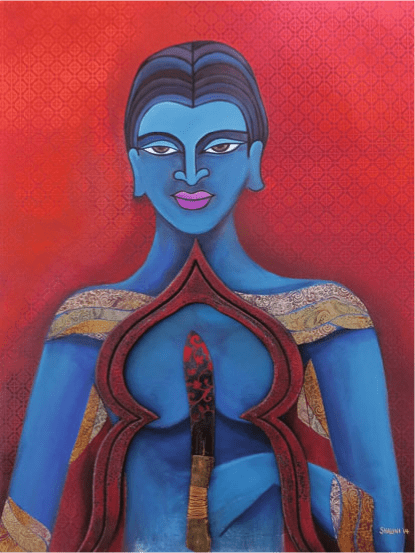
Fig. 11.5 Shalini Seereeram, “Temple of Silence”
emotional experiences and what I see as radical acts of self-care; Caribbean women loving each other and protecting ourselves and our bodies carefully and fiercely (Fig. 11.5).
The blue woman in “Temple of Silence” powerfully asserts resistance through the obvious symbol and use of the cutlass, making explicit reference to sugar cane plantations and the history/herstory of Indian indentured labor. While the cutlass is also a symbol of resistance for African people, signifying rebellion and revolution when enslaved Africans fought against the horrors of slavery, Seereeram is portraying her own specific personal family experience of cane farming and indentureship. Her use of an actual cutlass in the painting is striking and centers the work on the troubling histories of the Caribbean space especially for Indo-Caribbean people. Resistance and defiance resonate throughout the painting and can be seen through the woman’s fierce eyes and direct gaze engulfed in the deep red background.
This is one of the few pieces in the collection with a direct and frontfacing gaze and body, which speaks to its power and forceful nature. The blue female body is a warrior woman, yet Krishna in female form with Seereeram’s signature mix-up of Indian and African features—hence, she is Caribbean woman of color, multi-ethnic, mixed-race, yet also Indian. Our fierce woman warrior takes up most of the painting with an actual cutlass and wooden cutout framing the cutlass. It seems as if there is a temple surrounding the cutlass, which are all inside the body of this powerfully adorned blue woman, signifying Caribbean femininity that is both Indian and African mixtures of cultures, peoples, bodies, myths, and stories of resilience and revolution. There is discomfort and anger in the painting, yet there is also peace and calmness. Since the cutlass represents multiple forms of resistance for both Indian and African legacies of oppression, we can read this piece as working on multiple levels in representing a new Caribbean iconography and forging Caribbean aesthetics that speak across and beyond difference. The use of the cutlass in this painting can also be seen as evoking another layer of resistance, with a female body holding the cutlass, rejecting the patriarchal violence especially visceral in Trinidad. Hence, I also see a feminist consciousness and praxis emanating from this piece as we can see the cutlass-wielding, female warrior goddess protecting herself and her people. Her features, fierce gaze, blue skin, and temple as center and cutlass wielding magic are quite different from the other pieces in the collection. Yet she is everything the collection signifies: Caribbeanness and Indo-Caribbeanness as one, one story, one place, multiple identities and desires, multiple stories and complex relationships, seeing our differences together.
Seereeram’s artwork/knowledge reflects intimacy, love, and care, while also asserting spaces of freedom for Caribbean women to love and desire each other. The collection flows between these lone and radical self-care moments to women loving women with openness and sweetness, disrupting and expanding notions of intimacy and being. “Intimate Moments” can be seen as a sharing of stories, a call for loving acceptance of each other, and perhaps a reminder of what it means to be our full selves in spite of discrimination, oppression, and silence. These pieces unsilence same-sex desire and rebukes a politics of respectability for Caribbean women, most assuredly Indo-Caribbean women. They move us into Caribbean spaces of belonging outside/beyond tropical paradise—a Caribbean iconography in which we can see ourselves differently—as subjects, as desired, as loved and loving, as human and in the struggle for freedom from inequality and oppression.
This visual feminist praxis offers us much needed representation, a call to action, and affirmation in the knowledge that artists and writers produce. By bringing together the work of Patricia Mohammed and Shalini Seereeram, I hope we can see differently the ways that art as knowledge can push our creating, theorizing, and feminist praxis in order to build and determine Caribbean futures.

