Resource-based View
Many authors are of the opinion that in the era of heavy computerization and digitization of information resources, the organization’s success can be explained through the lens of Resource-based View (RBV). RBV asserts that the success of an organization’s strategy depends on alignment of its resources and capabilities providing the basis to build key competences. Acquisition, configuration, reconfiguration, and development of available information resources are critical factors in gaining a competitive advantage and creating value ( Cosic, Shanks, & Maynard, 2012; Olszak, Bartus', & Lorek, 2018; Wade & Hulland, 2004). An extended approach to RBV resources entails intangible categories including organizational, human, and networks (Ahn & York, 2011). According to RBV, to lead to a competitive advantage, resources should be VRIN: Valuable (enable an organization to carry out a value-creating strategy), Rare (are in short supply), Inimitable (cannot be perfectly replicated by competitors) and Non-substitutable (cannot be countered by a rival with a substitute). This knowledge-based resource approach of RBV stimulates organizations to attain, access, and maintain intangible endowments since these resources are the ways in which firms combine and transform tangible input resources and assets.
The traditional RBV concept infers that the information resources are static and do not account for changes in the unstable environment of the organization. These challenges of the environment can be met with dynamic capabilities (DC). The resource adoption method is at least as consequential as the value of these resources (Hsu & Ziedonis, 2013). The benefits realized from the resource pool are transient; therefore, organizations need to concentrate on continuous acquisition of new resources (information and knowledge) and the creation of their new configurations (Sirmon et ah, 2011). It may be useful to consider DC in the context of three clusters of activities and adjustments (Teece, Pisano, & Shuen, 1997): (1) identification and assessment of an opportunity [sensing), (2) mobilization of resources to address an opportunity and to capture value from doing so [seizing), and (3) continued renewal [transforming). These activities are essential if the organization wants to sustain itself as markets and technologies change, although some firms will be more efficient than others in performing some or all of these tasks. In the context of organizational support, sensing entails exploring technological opportunities, probing markets, and listening to customers. Seizing pertains to (Ortbach et ah, 2012): (1) solution development (a firm’s capability to generate different potential solutions, e.g., process design, concept development, idea refinement); (2) solution evaluation and selection (established procedures to allow informed decision-making, and thus selection of the most suitable solution for a specific problem); and (3) solution detailing (forward thinking and control mechanisms should constitute an action plan). The last activity—transforming consists of unfreezing, changing, and re-freezing sub-capabilities. When searching for new suggestions concerning new products and services, it is important to break up the existing work structures and procedures. The acceptance has to be promoted by active communication about the changes and benefits that result from them. Changing sub-capability refers to the actual implementation of the idea of change. The last sub-capability relates to all tasks necessary to promote internalization of the newly deployed ideas.
Information and Knowledge – Organization’s Strategic Resources
The source of organization’s power has shifted from land, finance, and material capital to intangible resources (Herschel & Jones, 2005; McGonagle & Vella, 2002; Negash &C Gray, 2008; Wickramasinghe & von Lubitz, 2007). Organizations are more often governed by information, knowledge, intelligence, intellectual capital, and wisdom (Davenport & Harris, 2007; Liautaud &C Hammond, 2001; Wixom &C Watson, 2010). It is stated that the ability of an organization to take advantage of all available information and knowledge is its critical success factor. However, this challenge becomes more daunting with a constantly increasing volume of information and dynamic change in the environment (Schick, Frolick, & Ariyachandra, 2011). The ability to manage information, especially knowledge, is recognized as the main factor of organizational success (Davenport, Harris, & Morison, 2010; Drucker, 2002; Howson, 2008; Knox, 2014; Manyika et ah, 2011).
Understanding the essence of knowledge requires clarifying the basic differences and relationships between such terms as data, information, and knowledge. This issue has been discussed in the literature a number of times (Laudon &C Laudon, 2018; Tiwana, 2000; Wu, 2000). Data means a set of numbers, facts, transactions, and events that have been recorded, e.g., on some medium (in the computer’s memory). They constitute the raw starting material on the basis of which information is created. Organizations collect data about their employees, customers, and suppliers. However, they must be processed and presented in the right context to become fully valuable to the organization and be considered information.
The complex socioeconomic reality means that information alone is not enough in decision-making processes. One should reach for knowledge which reveals various causal relationships, discovers new ways of acting, and serves to anticipate future. Knowledge is inseparable from learning, logical thinking, and discovering new facts and rules. Nowadays, this knowledge is recognized as the basis for effective decision-making.
At this point, it is worth mentioning that the term “knowledge” dates back to the time of Plato and Aristotle. Modern understanding of knowledge is manifested in the works of D. Bella, M. Polanyi, A. Toffler, and I. Nonaka. It is identified with organizational assets, organizational memory, and key competences (Davydow, 2000; Nonaka &C Takeuchi, 2000). In I960, P. Drucker, when discussing the role of knowledge in the organization, used terms such as “knowledge workers” and “knowledge-based work.” He was also one of the first to state that the US economy shifted toward a knowledge-based economy and that its main resource is not material capital but knowledge.
Of the many opinions about the role of knowledge in decision-making, one is particularly interesting and important. It is claimed that today it is necessary to use first of all deep knowledge, which does not result directly from simple data analysis. Such knowledge is shaped in a long-term process of learning, gaining experience, accumulating information, organizing it into logical cognitive structures, bonding with emotions, and using it within various value systems. However, this requires creativity, innovation, experimentation, and organizational learning. Particular attention is paid to higher-level learning, the so-called generational learning, which, unlike adaptive learning, requires new ways of looking at the world, understanding customers, and understanding the need for better business management. This type of learning, referred to as a double learning loop, requires the organization to constantly experiment and test its results, while causing changes in the organizational knowledge base. Its effect is the embedding of knowledge in processes, products, services, in the structure and culture of the organization, and in relationships it creates with its close and distant environment (Figure 1.2).
The importance of knowledge for an organization results from the very characteristics of this resource. Hie following attributes are usually mentioned: (Nonaka & Takeuchi, 2000):
■ Domination: it is stated that the competitive position of enterprises depends mostly on an effective use of knowledge. Other resources are in fact sidestepped to secondary manufacturing factors.
■ Inexhaustibility: knowledge, unlike other resources, is not consumed, on the contrary, the more and more often it is used, the more its value increases.
■ Simultaneity and mobility: it is noticed that the same knowledge can be used by many organizations and people, and in many places at the same time. Knowledge is mobile as opposed to traditional resources such as premises, machinery, etc.
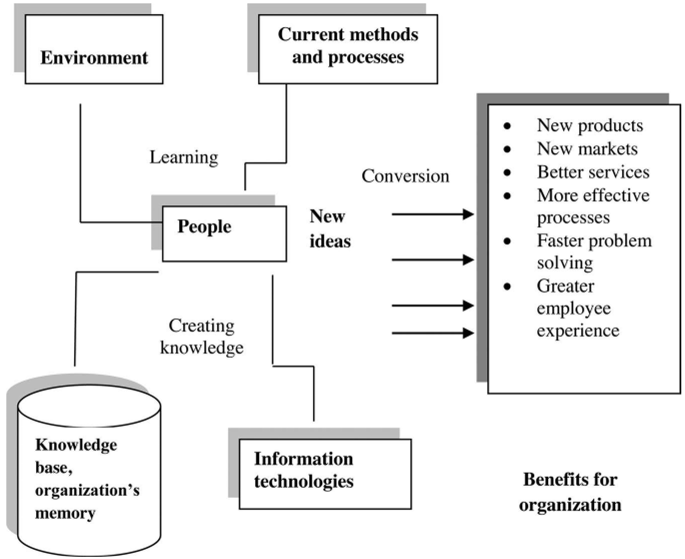
Figure 1.2 Adoption of knowledge in organization.
Source: Elaborated on (Awad & Gbaziri, 2004).
■ Non-linearity: it is pointed out that even a small amount of knowledge can have unimaginable consequences, and vice versa; a huge amount of knowledge may prove to be useless. The lack of linearity also means that the same body of knowledge can bring dramatically different effects in different enterprises.
■ Complexity: knowledge is a complex resource, comprising practical knowledge (know-how), theoretical knowledge (know-why), strategic knowledge (know-what) as well as informal relationships in the enterprise. Knowledge is an attribute of both individual members and the entire organization.
■ Learning: knowledge of individual employees and the entire organization is inseparably connected with the learning process, which means acquisition and implementation of knowledge in processes, products, services, and solutions in the field of organizational structures. Particular attention, as it has been emphasized earlier, is paid to higher-level learning, the so-called generational learning.
■ Applicability: knowledge has no value until it is applied. In addition, to be effective, it must be developed and managed in conjunction with human resources.
It is people and information technologies that create intellectual capital. While information technologies are responsible for collecting, processing, and sending information, people are important when converting data into information, especially their deep vertical knowledge and ability to reason.
■ Costliness: it should also be noted that knowledge is an extremely costly resource in production, but usually cheap (and sometimes free) in reproduction.
Naturally, knowledge is not a resource which can be taken for granted. Its value changes over time. In this situation, organizations must continually acquire new knowledge resources and create new configurations from them. In other words, knowledge, like any other resource, requires adequate power, revitalization, configuration, and reconfiguration. The ability of an organization to dynamically acquire, modify, configure information resources, and create unique configurations from them becomes a key competence of a modern organization (Sirmon et al., 2011; Wade & Hulland, 2004).
Recognition of knowledge as the main resource of an organization, determining its success, justifies the need for effective management of this resource. The experience of many firms in knowledge management illustrates that this process is associated with many problems. They may result from various reasons:
■ Knowledge is located in many places.
■ Knowledge is often of an informal nature.
■ There is a blurred division of knowledge into public and private.
■ Much of the knowledge is obtained interactively and used jointly in subgroups or networks.
■ Knowledge consists of many types and carriers.
Some difficulties in using knowledge to make decisions stem from the fact that it is usually located in different places, both inside and outside the organization. Most often these are internal documents and files, correspondence, information systems, databases, e-mail, Internet sources, social media, newsletters, etc. In many cases, access to these resources is difficult due to not only their dispersion, but difficulties in identifying them and their informal character.
A large body of knowledge, extremely valuable for the decision-making process, is knowledge which includes cognitive and social skills that result from the experience and relationships that organization’s employees, customers, and stakeholders create. Such knowledge, to a large extent, is informal and extremely difficult to codify (formalize), but it is visible in action. This category primarily includes experience, intuition, premonition, and organizational culture. The use of such knowledge requires the skill of locating experts, creating knowledge maps, coding and integrating knowledge, and the development of various techniques enabling access to such knowledge (Sanchez & Heene, 1997).
Today, a large body of knowledge arises as a result of the development of various networks of relationships (Jashapara, 2006) which can be created at many levels, especially at the level of a single unit, organizational groups, and relationships of the organization with its environment. A single individual and their cognitive capabilities have always played an unquestionable role in creating knowledge. However, such an individual model of creating knowledge in contemporary management has somewhat lost its importance. The focus has shifted to collective work, which means team learning and pursuit of group consensus. This way of creating knowledge depends to a great extent on the quality of communication of individual people. However, it should be noted that this approach has become somewhat outdated. It is now claimed that the success of an organization can be explained by analyzing the network of relationships it has entered into. What happens outside is more important for the organization’s success than what happens within it. Relationship networks provide strategic weight to creation of knowledge resources. The network, together with the resources obtained through it, can become a source of relatively lasting competitive advantage and a source difficult to imitate. Therefore, competences in creating such connections, using appropriate supervision mechanisms, building ways of knowledge sharing, improving partner systems, and maintaining a central position in the network are important.
As it has already been stressed, using knowledge in decision making is not a simple task, inter alia, due to the fact that knowledge consists of many carriers and types. For example, an organization’s knowledge can be classified into one of four categories (Knowledge Management, KPMG Consulting, Research Report, 2000):
■ Know-what — refers to knowledge of facts. In this case, knowledge is synonymous with information.
■ Know-why - concerns knowledge of principles and laws of nature. Access to this type of knowledge accelerates technical progress and reduces the frequency of error in testing procedures.
■ Know-how — refers to skills, i.e., the ability to do something. It applies to both employee skills and new product development.
■ Know-who - identifies knowledge holders and describes the knowledge they possess.
An interesting division of knowledge was introduced by Japanese scientists Nonaka and Takeuchi (2000) who distinguished formal (explicit) and informal (implicit) knowledge. Formal knowledge is the part of knowledge that has been presented through procedures, words, signs, or symbols. It is therefore systematized and relatively easy to transfer. In turn, the essence of informal knowledge is sometimes difficult to explain. It is created on the basis of experience and intuition, and it is a kind of know-how of an employee, project team, or the entire organization. It is difficult to copy and imitate.
Within formal as well as informal knowledge, procedural, declarative, semantic, and episodic knowledge can be distinguished. Procedural knowledge tells us how to perform specific tasks and procedures. Standard programming languages are usually used to encode it. Declarative knowledge, on the other hand, serves to describe certain situations, objects, and relationships between them. It indicates what the problem is and what the goal of the solution might be, not what steps should be taken to reach it. One could say that it refers to knowing if something is true or false. In coding such knowledge, the principles of formal and informal logic, known, e.g., from expert systems and neural networks, are helpful.
Semantic knowledge becomes useful in making decisions. It reflects the deeply hidden relationships between various events. Semantic networks, neural networks, knowledge maps, and data mining techniques are used to represent these types of relationships.
It has been shown many times that decision-makers learn by studying the past, and especially learn from their own experience as well as from customers and competitors. Information about past decisions and their consequences turns out to be valuable in identifying and forecasting organization’s future successes and failures. Therefore, it is worth collecting episodic knowledge that refers to various facts, processes, and experiences which have taken place in the past. Case Base Reasoning (CBR) techniques, knowledge repositories, knowledge maps and data warehouses are particularly helpful in coding this type of knowledge.

