Bulgaria
Country profile
Geography
Bulgaria is in the southeastern part of the Balkan Peninsula in Europe, and it occupies about 22% of the peninsula. It has a border line of 2,245 kilometers, including 1,181 kilometers of land border, 686 kilometers of river border and 378 kilometers of coastline border. It has a land area of 111,001.9 square kilometers. The Danube defines Bulgaria’s border with Romania, while the Balkan Mountains divide the country into the Danubian Plain in the north and the Thracian Lowland in the south. Lowlands, hills and mountains each occupy one-third of the territory. The Rhodope Mountains arc in the southwest region, and Musla, at 2,925 meters, is the highest point of both Bulgaria and the Balkan Peninsula. Bulgaria’s average altitude is 470 meters. The Balkan Mountains run laterally through Bulgaria, and divide the country into the flat Danubian Plain in the north and the Rhodope Mountains and the Maritsa Valley in the south. Rila is also an important mountain range in Bulgaria.
Natural resources
Bulgaria is poor in natural resources. It has coal, lead, zinc, copper, iron, manganese, chromium, mineral salts and small amounts of oil. Its forest area is approximately 4.12 million hectares, covering about 33% of its land area.
Population and ethnicity
Bulgaria’s population is 7,153,700, according to a 2015 national census. The main ethnic group, Bulgarians, accounts for 84% of the total population. Turks and Roma people comprise 9% and 5% of the population, respectively, while other minorities (Macedonians, Armenians, etc.) comprise 2%. Bulgaria’s most populated cities are Sofia, Plovdiv, Varna and Burgas. Today, there are about 3,000 Chinese in Bulgaria, most of whom arc in Sofia, the capital, engaging in wholesale, retail and catering.
Political system
The National Assembly is the parliament of Bulgaria, and the leader of the National Assembly is the Speaker. According to the constitution adopted in 1991, the parliament is vested with legislative and supervisory powers, and it has the power to make decisions on major issues, such as domestic and foreign affairs. The National Assembly is unicameral and has 240 members elected for a four-ycar term by proportional representation.
Diplomatic relations
Bulgaria joined NATO in March 2004 and the EU in January 2007. While giving priority to developing relations with the EU and the United States, the Bulgarian government actively participates in regional cooperation, keeps good relations with its neighbors, pursues diversified diplomacy and endeavors to join the Schengen area.
China and Bulgaria established diplomatic relations on October 4, 1949. Their relations went smoothly in the 1950s but stagnated for a while in the 1960s. Since the 1980s, exchanges and cooperation between the two countries have improved. This period in China-Bulgaria relations was characterized by steady diplomatic development. The Bulgarian government adheres to the One-China Principle. In recent years, the two countries have witnessed frequent high-level visits and increased mutual political trust. In November 2013, Premier Li Keqiang met with Bulgaria’s prime minister Plamcn Oresharski during the Leaders’ Meeting of China and Central and Eastern European Countries in Bucharest. In January 2014, Bulgaria’s president Rosen Plevnelicv visited China. In October 2014, the leaders and foreign ministers of the two countries exchanged congratulatory messages on the 65th anniversary of the establishment of diplomatic ties. In July 2016, Premier Li Keqiang met with President Plcvnc-liev during the 11 th Asia-Europe Meeting Summit.
Economy
Bulgaria is a member of the World Trade Organization and the EU. As it entered the 21st century, Bulgaria has recorded relatively strong growth, with an average annual GDP growth of over 6% between 2000 and 2008. After the recession of 2009, its growth has gradually improved. Bulgaria is traditionally an agricultural country, and about 40% of its land is arable land. Its priority and characteristic industries include textiles and clothing, chemicals, rose oil production, wine-making, dairy product processing and tourism.
Table 7.4
|
Year |
GDP (USS billions) |
GDP per capita (USS) |
GDP growth rate (%) |
|
2008 |
54.667 |
7,296.12 |
5.65 |
|
2009 |
51.783 |
6,955.99 |
-4.22 |
|
2010 |
49.939 |
6,752.55 |
0.05 |
|
2011 |
56.95 |
7,750.04 |
1.58 |
|
2012 |
53.577 |
7,333.36 |
0.24 |
|
2013 |
55.626 |
7,656.64 |
1.28 |
|
2014 |
56.717 |
7,851.27 |
1.55 |
|
2015 |
48.953 |
6,819.87 |
2.97 |
Source: World Bank.
Bulgaria, a member of the Central European Free Trade Agreement, has an export-driven economy with a small economic size and a high degree of dependence on foreign trade.
Legislation
The current Bulgarian Constitution was adopted on July 12, 1991 and entered into force the following day. It stipulates that Bulgaria is a parliamentary country, and the president symbolizes Bulgarian national unity and represents Bulgaria internationally.
Society
Bulgaria implements a 12-year compulsory education system. In the 2015/2016 school year, there were 4,964 schools, with 1,249,109 students and 101,294 teachers. It had 2,078 primary and secondary schools, 830 secondary technical schools and vocational technical training centers and 54 colleges and universities. Bulgaria officially launched the National Health Insurance Fund in July 1999. Since then, every employee should pay a monthly contribution equal to 6% of his or her monthly wage set in the labor contract; this is 40% of his or her total payment, with the remaining 60% paid by the employer.
Current status of industrial capacity cooperation
Foreign investments in Bulgaria
A stable political and economic environment, low operating costs and EU membership all contribute to Bulgaria’s appeal as an international investment destination. According to the Bulgarian National Bank, the FDI absorbed by Bulgaria in 2013 amounted to 1.229 billion euros, down 17% ycar-on-ycar. Its largest sources of FDI arc the Netherlands and Luxembourg, contributing 603 million euros and 200 million euros, respectively, to Bulgaria’s FDI inflow. Industries attracting the most investments arc transportation, warehousing, communications, wholesale and retail, repair and manufacturing. The United Kingdom withdrew investments of 110 million euros from Bulgaria, marking the largest such withdrawal.
According to the World Investment Report 2016 published by UNCTAD, Bulgaria’s FDI inflows in 2015 amounted to US$1,774 billion, lower than the figures of 2013 (US$1,837 billion) and 2014 (US$1,777 billion). Its FDI stock was US$42,106 billion as of 2015.
Bulgaria has maintained slow growth in recent years, with an improved investment environment. It is getting better ratings from international rating agencies, which makes it an attractive destination for foreign investors. Bulgaria has one of the EU’s lowest corporate income tax and personal income tax rates set at 10%. It ranks as 38th in the World Bank’s Doing Business 2015, and
54th out of the 144 most competitive countries and regions according to the Global Competitiveness Report 2015-2016 published by the World Economic Forum. As shown above, Bulgaria has a favorable environment for doing business and strong competitiveness. Besides, its prices and operating costs arc relatively low. According to the Eurostat, Bulgaria has the lowest prices in the EU, at 50% of the EU average. It is a large power exporter in the EU. Its industrial electricity prices and industrial natural gas prices arc set at 71% and 84% of the EU average, respectively, and it has the lowest rent for industrial land in the EU.
China-Bulgaria cooperation in industrial capacity
At present, there are more than 20 Chinese enterprises investing and contracting projects in Bulgaria. In 2013, China’s investments in Bulgaria were mainly concentrated in the following five areas: automobile manufacturing, such as a project funded by Great Wall Motors, which operates well; project contracting, such as the flue-gas desulfurization project of Insigma Technology, and a Dcvnya cement mill project with Sinoma (Tianjin) as the general contractor; agriculture, such as a project of Tianjin Agricultural Reclamation Group; communications, represented by projects of Huawei and ZTE; and renewable energy, as in the case of a photovoltaic project in Ihtiman.
According to China’s Ministry of Commerce, China’s FDI in Bulgaria was US$20.42 million in 2014. By the end of 2014, China’s FDI stock in Bulgaria amounted to US$170 million. In 2014, Chinese companies signed 18 contracts for construction projects in Bulgaria, with a contract amount of US$62.11 million and a turnover of US$209 million. China sent 86 expatriates to Bulgaria in 2014, and at the end of that year, there were a total of 214 Chinese workers in Bulgaria. China’s newly-signed large-scale construction projects in Bulgaria include a Bulgarian telecommunication project constructed by Huawei Technologies Co. and a solar power plant with a power-generating capacity of 478 megawatts constructed by Astroncrgy in Zhejiang.
In June 2016, the opening ceremony of the Forum on Global Production Capacity and Business Cooperation was held in Wuhan. Representatives of Chinese and foreign enterprises held negotiations and signed contracts for dozens of major projects. Hubci New Silk Road International Cooperation and Exchange Association signed contracts for two projects to introduce Chinese medicine to Bulgaria. One of the projects contracted by the Association was to reconstruct and expand the Bulgarian military airport into a logistics airport for civil use. The other was a Bulgarian joint-venture hospital project, a key, high-quality project in Bulgaria. This project, with an investment of US$50 million, aims to reconstruct and expand a large hospital in Sofia, acquire more medical equipment and set up the Chinese medical care department. With planned investment of US$100 million, the hospital after reconstruction will benefit a large number of local people. Projects signed at the Forum cover such fields as new material.
Central and Eastern European countries 335 new energy, high-tech, bio-medicine and infrastructure, all contracted by Hubeibased companies with strong competitiveness. These overseas projects will not only help Hubci-based enterprises reduce costs and upgrade, but also promote employment, improve people’s livelihoods and sustain the economy in Bulgaria, thus achieving a win-win situation.
Under the China-Central and Eastern Europe Cooperation Framework, the Bulgarian government responded actively to the Twelve Measures proposed by Premier Wen Jiabao in 2012, and the Bucharest Guidelines for Cooperation between China and Central and Eastern European Countries announced by Premier Li Keqiang in 2013. Bulgaria is an important partner of China in Southeastern Europe. The China-Bulgaria economic and trade relations arc developing steadily, with a gradually improved trade structure and relatively fast-growing trade volume. Investment and cooperation projects related to energy, telecommunication, automobiles, manufacturing, agriculture and project contracting have been launched and achieved real results, and such projects arc getting more diversified in various forms. Bulgaria’s growth potential and its important position in the EU are favored and recognized by many Chinese enterprises. However, due to historical reasons, China’s enterprises do not know much about Bulgaria, and investment and cooperation between the two countries are still in the stage of exploration, with only a small number of projects in limited sectors. But one thing for sure is that China’s industrial capacity is of increasing importance for Bulgaria and Central and Eastern Europe to grow.
Areas and priorities of cooperation
China’s BRI, as well as Bulgaria’s actions taken to promote exchanges and cooperation between the two countries, such as the signing of intergovernmental agreements and establishing of local cooperation mechanisms, arc all efforts made to promote better economic and trade cooperation. Bulgaria is an important partner of China in Southeastern Europe. The China-Bulgaria economic and trade relations arc developing steadily, with a gradually improved trade structure and relatively fast-growing trade volume. Investment and cooperation projects related to energy, telecommunication, automobiles, manufacturing, agriculture, and project contracting have been launched and achieved real results, and such projects arc getting more diversified in various forms.
Bulgaria’s international investment index was 26.16 in 2015, ranking as 90th out of the 108 sample economics. This shows that Bulgaria’s overall market environment is poor, with great challenges and risks. Among the 11 factors covered by the index, the first three contributors to the country’s appeal as an investment destination arc market potential, force majeure and trade, meaning that Bulgaria is attractive to international investors in these three aspects. In recent years, Bulgaria has maintained slow growth, with an improved investment environment, and it is getting better ratings from international rating agencies. Compared with other EU countries, Bulgaria lags in its economy and innovation, and has certain risks due to its investmentpolicies. However, Bulgaria’s population quality is high, with 80% of its employed population having secondary or university degrees. It has relatively low labor costs and operating costs. Its industrial electricity prices and industrial natural gas prices arc set at 71% and 84% of the EU average, respectively, and it has the lowest rent for industrial land in the EU. This shows that Bulgaria has great market potential, with large market volume, which is an important factor considered by foreign investors. Trade, on the other hand, is used to measure a country’s openness to the outside world. According to the Bulgarian National Bank, in 2015 Bulgaria’s exports and imports were 21.92 billion euros and 24.54 billion euros, up 4.2% and 3.1% over 2014, respectively.
The contributions of infrastructure, the social environment and the natural environment are moderate, while those of the macro economy and financial stability are relatively weak. Bulgaria is still in a transitional phase towards regional economic integration. Its unemployment rate was 7.8% in September 2016. S&P’s, Moody’s and Fitch’s sovereign credit ratings for Bulgaria in 2014 were BB+Stable, Baa2 Stable and BBB-Stablc, respectively, all ranking as investment grade. As of July 7, 2015, S&P’s sovereign credit rating for Bulgaria was B-/C, with a Negative outlook. This shows that Bulgaria still has issues and problems in its course of transition; that the foundation for its political, economic and social development is vulnerable; its systems and mechanisms need to be improved; and its business environment still faces great challenges.
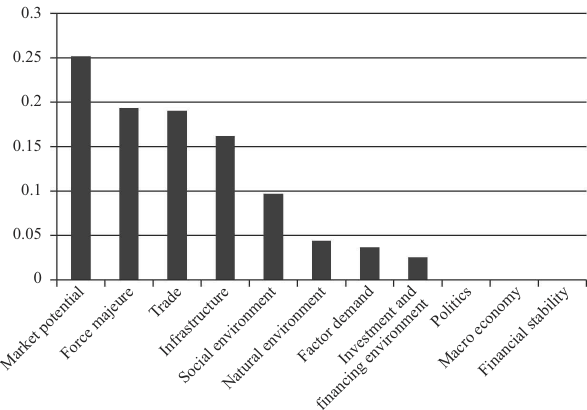
Figure 7.5 Contribution of various factors to Bulgaria's appeal as an investment destination, 2015.
Source: International Investment Research Center of Wuhan University.
Then further predictions are made, based on economic models, concerning the probability of change in 2015. A calculation is made to measure whether the change of each factor exceeds a predetermined value. If it docs, the probability is high with large volatility; otherwise, it is low. The results arc shown in Figure 7.6. Here we can see that the probability of change for financial stability, factor demand and politics is well above 0.5, meaning that these aspects arc less stable but have greater opportunities for investment, and close attention needs to be paid to these aspects.
China is one of Bulgaria’s most important trading partners and can be a platform for Chinese enterprises and products to enter the European market.
China and Bulgaria have broad prospects for cooperation. Most of Bulgaria’s infrastructure, such as roads, railways, ports and airports, was built during the 1960s and 1980s. Due to insufficient investments in recent years, Bulgaria’s infrastructure is now generally old, obsolete and in dire need of repairs, which, to some extent, restricts Bulgaria’s economic growth. China can take an active part in large-scale interconnection infrastructure projects proposed by Bulgaria, such as the high-speed railway and the Black Sea Expressway; explore three-way cooperation in nuclear power; expand cooperation in agricultural trades and tourism; and further strengthen peoplc-to-people exchanges, in a bid to achieve common growth and prosperity.
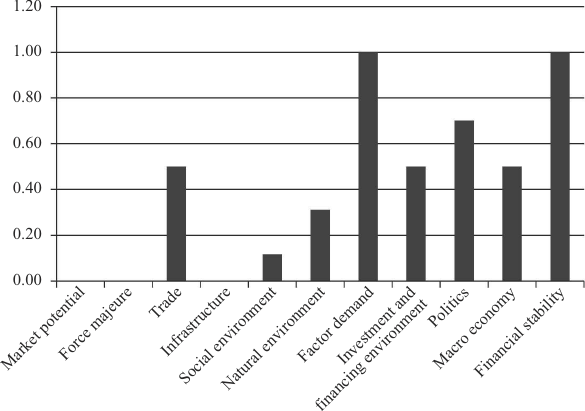
Figure 7.6 Probability of change in each factor in Bulgaria, 2015. Source: International Investment Research Center of Wuhan University.
Policy analysis
Preferences
The Bulgarian government promulgated the Investment Promotion Act in 1991, which provided equal treatment for foreign and domestic investors. In September 2007, Bulgaria passed the Seventh Amendment to the Act to adapt to the new circumstances after it joined the EU. The Act again emphasized that foreign companies shall be treated equally with Bulgarian companies. It also increased investments in high-technology and high-unemployment areas; provided preferential policies to foreign enterprises investing in manufacturing, renewable energy, the information industry, R&D, education and medical care; and canceled those for foreign investors engaging in iron and steel, ship and chemical fiber manufacturing.
Foreign enterprises investing in Bulgaria can apply for EU funds, but other EU preferential policies are not available. Chinese enterprises should carefully study these preferential policies and make investments with prudence.
Industry-specific preferential policies
Bulgaria’s industry-specific preferential policies mainly aim to support large investments in renewable energy manufacturing, energy, computer technology R&D, education and healthcare. Investments in fixed or non-fixed assets in Bulgaria may enjoy preferences for three years after they obtain approval from relevant authorities if the following conditions are met: the investment must be related to the establishment of a new company, the expansion of an existing company, the development of new products, a fundamental change in the overall production process or modernization of existing products and services; or it must be in the following business sectors: renewable energy manufacturing, power generation, computer technology R&D, education or healthcare. Up to 80% of the total sales revenue shall come from the above business sectors, and 40% of the investment shall come from the investor’s own or borrowed resources. The investment project shall last at least five years in Bulgaria, and create jobs that last no less than three years. The Investment Promotion Act lowered the thresholds for investments in high-tech industries and high-unemployment areas.
According to the Act, investments arc divided into Class A and Class B, or designated as priority investment projects. The basic threshold amounts for Class A and Class B investments arc 20 million leva and 10 million leva, respectively. For investment in high-tech industries, the thresholds for Class A and Class B projects arc 7 million leva and 4 million leva respectively; while for investment in high-tech activities in the services sector, the threshold amounts arc 4 million leva and 2 million leva, respectively. The threshold for priority investment projects is 100 million leva and 200 persons employed; that for investments in the establishment of high-tech zones is 30 million leva and 50 persons employed; and that for investments in high-tech and knowledge-intensive services, such aseducation and R&D, is 20 million leva and 50 persons employed. Based on the number of persons employed and local growth and employment conditions, the investment thresholds can be lower. The following incentives provided by the Bulgarian government are available for Class A, Class B and priority investment projects: a shorter waiting time for administrative services, lower thresholds when acquiring ownership and other rights in corporeal immovables, and government-funded vocational training for those under the age of 29 who arc employed in eligible investment projects. In addition, individualized administrative services and financial support for infrastructure needed in the project arc provided for Class A investments by the Bulgarian government. Priority investment projects involving corporeal immovables can enjoy government support, and the immovables can be sold or purchased without a bidding procedure. State aid is available for education and R&D activities related to the eligible priority investment projects upon application.
Regional preferential policies
Bulgaria’s region-specific incentives arc mainly targeted at high-unemployment areas. In order to attract foreign investment, the Bulgarian government has set up industrial parks in major cities throughout the country. The government encourages the flow of foreign investment to high-unemployment areas (defined as areas having an unemployment rate at least 35% higher than the national average). For investors investing in such areas and having a tax deduction and other forms of state aid of more than 75 million leva (37.5 million euros), a written certificate from the Commission on Protection of Competition is required to obtain such tax incentives. If a foreign enterprise investing in such areas has no more than 200,000 euros of tax deduction and other forms of state aid, this means that the enterprise benefits less from the tax incentives. As regulated by the Bulgarian government, production companies investing in high-unemployment areas and meeting the following conditions arc exempted from corporate income tax: the company’s production activities arc mainly in high-unemployment areas, and the company shall not be liable for other taxes, social securities and fines in the year when it applies for corporate income tax exemption. The remitted corporate income tax should be invested back, within three years of the end of the fiscal year in which the tax is remitted, for acquiring fixed assets and non-fixed assets necessary for production, such as licenses, patents and technology. The investment for acquiring non-fixed assets should not exceed 25% of the costs of fixed assets. The enterprise should also take no less than 25% of the total reacquired assets as supporting funds. Such assets arc not allowed to be sold within five years, unless the company is merged with other companies or reorganized due to the fact that the unemployment rate of the enterprise is higher than the national average by more than 50%.
SEZ preferential policies
To attract foreign investment, the Bulgarian government has built 24 industrial parks in major cities throughout the country, and provided good conditions in terms of transportation, water supply, electricity, telecommunications, office space and plant necessary for production. All industrial parks arc close to important pan-Europcan corridors and international highways, and near seaports, river ports or airports. With relatively abundant labor resources, these parks arc generally located in or near cities where manufacturing and service enterprises concentrate, and enjoy preferential treatment in terms of investment and revenue. China Huawei Technologies Co., for example, is present in one of these industrial parks in Bulgaria.
Bulgaria is disadvantaged in terms of exchange rates, infrastructure and labor relations. Therefore, for Chinese enterprises that intend to invest or have invested in Bulgaria, the said disadvantages should be taken into consideration in carrying out investment, trade, contracting and labor services. Such companies should also pay special attention to prior investigations, analyze and assess relevant risks and try to stave off risks to guarantee their own interests.
Competitiveness analysis
According to the Global Competitiveness Report 2015-2016 published by the World Economic Forum, Bulgaria ranks as 54th out of the 140 most competitive countries and regions of the world. Compared with its ranking of 54th out of 144 countries and regions in 2014-2015, its competitiveness has increased, yet there is still plenty of room for growth. The most problematic factors for doing business in Bulgaria arc poor access to financing and inefficient government bureaucracy.
Cooperation cases
Telecommunications
Huawei treated increasing its presence in Bulgaria as an important part of its global development strategy as early as 2004. In February 2004, Huawei Technologies Bulgaria was officially set up, marking its entrance to the Bulgarian telecommunication market. Relying on Huawei’s strong technical strength, good brand reputation and more than 10 years of hard work by all its employees, Huawei Technologies Bulgaria has launched telecommunication products covering the whole product line and put them into service. As one of Bulgaria’s largest telecommunication equipment suppliers, it has provided reliable and safe telecommunication infrastructure for local mainstream operators, established long-term strategic partnerships with them and created jobs for local people. Huawei Technologies Bulgaria currently has more than 100 employees, more than 80% of whom arc local people. Huawei began to offer scholarships to outstanding Bulgarian students to study in China every year for up to five years
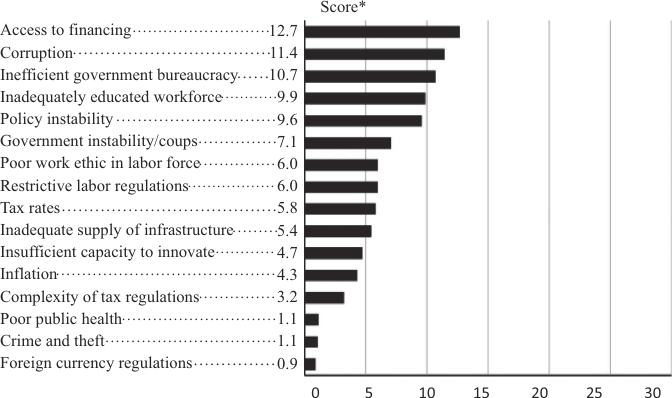
Figure 7.7 The most problematic factors for doing business in Bulgaria.
Source: Global Competitiveness Report 2015-2016 of the World Economic Forum.
from 2014, with a view to promoting educational and cultural exchanges between China and Bulgaria.
Electromechanical industry
Xiangtan Electric Manufacturing Group Co. (XEMC) enjoys the reputation of “the cradle of the mechanical and electrical products in China.” After decades of development, XEMC has become the backbone of China’s electrical industry, the production and research base of major state technical equipment and the designated defense equipment manufacturer. According to the EU’s Renewable Energy Directive 2009/28/EC, the target for Bulgaria’s share of energy from renewable sources in gross final consumption of energy is 16% by 2020, but so far this ratio is only 6.5%, which shows great potential in developing the power-generating capacity of Bulgaria’s wind power and new energy plants. In 2010, Bulgaria shut down a large nuclear power plant because of its special emphasis on safety and environmental protection, which greatly affected the already tight supply of electricity. According to a new energy development plan, Bulgaria needs to increase the power-generating capacity of its wind power plants from 315 to 3,000 megawatts in the coming years. This shows that Bulgaria’s wind power market has great potential. The increase of powergenerating capacity is also conducive to creating more jobs. Based on its advantages in the Chinese market, XEMC has pursued a mutually beneficial strategy and actively advanced the Bulgarian wind power project in order to further expand its overseas business and enhance its strength and global competitiveness. Upholding the strategy of “overall planning, phased implementation and making progress step by step,’’ XEMC invested about 16.718 billion yuan to acquire and build the Bulgarian wind power plant.
This 1,032-megawatt project is expected to drive the export of more than 500 sets of megawatt-level direct-drive wind-driven generators and supporting products produced by XEMC, greatly increase XEMC’s global market share of wind turbines and improve its global competitiveness and market influence in the wind power industry in an all-round way. Due to energy and environment crises and the Fukushima Daiichi nuclear disaster in Japan, Bulgaria and some major countries have formulated priority development strategics for new energy such as wind energy. The global wind power industry is embracing a new round of high-speed development. Investing in Bulgarian wind power plant is not only a way of showing the Chinese government’s support for developing clean and renewable energy, but also a way of showing the rapid growth and technical strength of Chinese enterprises in the field of new energy. It is conducive to enhancing the good image of the Chinese government and enterprises in the field of energy worldwide, and achieving good social and political benefits both at home and abroad. Bulgaria has a large wind power market and advantages in reaching out to the neighboring regions, relevant industries and markets. XEMC’s acquisition of Bulgaria’s 1,032-mcgwatt wind power plant and subsequent investment and construction will greatly enhance the share and influence of XEMC in the global wind power market. This project is a portal for XEMC entering the European wind power market, and will greatly increase the presence of XEMC’s products and technologies in Eastern Europe and the EU, thus paving the way for XEMC to seize the Eastern European and the EU markets, further develop the global market and enhance its global competitiveness.
Agriculture
Thanks to joint efforts, the BRI will promote a new international agricultural cooperation architecture, create new opportunities for agricultural trade and investment and create a new order for global agricultural governance. In addition, it will bring new opportunities for food security and the agricultural food industry in developing countries along the road, and promote industrial capacity cooperation of the agricultural food industry in the countries along the road. Through international industrial capacity cooperation in agricultural food, the value chain of the Chinese agricultural food industry is extended overseas through investment and cooperation to form an agricultural supply chain covering countries and regions along the road, and facilitate countries along the road to upgrade and improve their agricultural food industries. This is not only in line with the interests of such countries, but also good for China’s agricultural industry.
The secretary-general of the Bulgarian-Chinese Chamber of Commerce and Industry said she hoped China would step up cooperation with Bulgaria,
Central and Eastern European countries 343 especially in the processing of agriculture products and promotion of dairy products, and that she looked forward to seeing more Bulgarian products in China. Tianjin Agricultural Reclamation Group rolled out an agricultural project in Bulgaria in 2012, and established a farm in Plovdiv, Bulgaria’s second largest city, in 2014. This project has a total of 150,000 mu (1 mu = 0.067 hectares) of land for purchase and leasing, and the major crops include wheat and sunflower. Agriculture is a basic industry, and it takes great effort and a long time for it to make a profit. But after two years of operation and management, the farm achieved a balance of payments. Wang Jianmin, head of the Group in Bulgaria, was confident in the strategy of Chinese agriculture going global. He said that the farm had more than 70 employees, all local people except for except six Chinese managers. According to him, the management decisions were made by both Chinese and Bulgaria managers, and the farming was handled by local people who were familiar with mechanized operations. While ensuring better welfare for local employees, the Group also drew on advanced management experience in the Chinese market and motivated local people by hiring more of them. Wang said that “going global” in agriculture was not for the Chinese to farm abroad, but to promote local agriculture with Chinese technology and funds.
Bulgaria set up a farm in Tianjin as a sign of the China-Bulgaria partnership in the 1950s. But over more than half a century, Bulgaria has encountered profound changes in culture, soil and society. To better understand Bulgaria today, the Group has sent investigation groups to Bulgaria four times, and reached the conclusion that the soil, climate and cultural conditions there arc optimal. After testing, the Group found that Bulgarian alfalfa contains no less protein than that produced in the United States, and has lower prices. Therefore, the Group decided to establish an agricultural entity in Bulgaria, the first of its kind launched by China in an EU country. In 2011, the Group’s Bulgarian company leased 100,000 mu of farmland to grow alfalfa, corn and other crops, and to build an overseas feed production base for cows. In order to expand production, the Group invested 10 million euros in the Danube River area where the water transportation is effective. It dispatched technical and management personnel, acquired modem agricultural equipment and tools and employed local people to ship the products back to China to develop the Group’s animal husbandry. As such, the Group is highly recognized by all sectors of Bulgaria. Prime Minister Boyko Borissov spoke highly of the Group, and Agriculture Minister Miroslav Naydenov attended the opening ceremony of the Group’s Bulgarian company in person. Bai Zhisheng, Chairman of the Group, said that its goal of investing in Bulgaria was to find a long-term foothold in EU countries. In April 2016, the Group showed its intention to invest in the franchise of the airport in Plovdiv and set up an agricultural industrial park to store and process agricultural products and equipment.
In recent years, the Group has continued to open up and promote development, thus advancing its investment promotion strategy in a comprehensive, multilevel and multifaceted way. To put the “going global” strategy of the
Communist Party of China (CPC) Tianjin Municipal Committee and Tianjin Municipal Government into action, speed up industrial structure adjustment, transform the growth model and strengthen the agricultural reclamation economy, through in-depth investigation and discussions, the Group decided to set up a company in Bulgaria. Based on Bulgaria’s rich and fertile land, the Group engages in the production of grain, forage grass and wine to meet its needs in animal husbandry and wine production. At the same time, it takes advantages of Bulgaria’s good ecological environment and the zero-tariff deal with the EU to develop animal husbandry and fine organic agriculture, and advance trade based on this. The Ministry of Agriculture, CPC Tianjin Municipal Committee and Tianjin Municipal Government attach great importance to the project, and the Bulgarian government has also showed strong support. The Group’s company and farm in Bulgaria indicate that the Group has taken a further step in implementing the “going global” strategy of the Committee and Municipal Government, and stepping forward to international markets and diversified growth. The Group will further strengthen its cooperation with Bulgaria, make all-round efforts to implement this project, build an international reputation, use resources from both international and domestic markets and improve resource allocation to gain larger markets and make the Group stronger and better.
Automobiles
In 2012, China’s Great Wall Motor officially opened a plant in Bulgaria for operations, the first integrated car plant set up by a Chinese automaker in an EU market. Founded by Great Wall Motor and its local partner, Litcx Motors, the factory imports components from the former in the form of KD (knocked down) for assembly and production. The project kicked off in May 2009. "This is the first integrated car plant set up by a Chinese automaker that will produce in Europe and for Europe,” said Ivo Dckov, Marketing Director of Litcx Motors. "But production will increase as the markets here and in other European countries (mainly in Eastern Europe) develop.” According to him, the ratio of new car sales volume to old cars in Bulgaria was 1:10, and that of other European countries was 1:3, representing great market potential in Bulgaria and Europe. Great Wall Motor, on the other hand, as an automaker with promising prospects, has such advantages as low prices and five-year warranties. The two companies will benefit very well from each other. A spokesman of Litcx Motors said that the new plant only imported components and parts from China at the start, but in the long run, the company hoped to make some components and parts locally, and that it had been in talks with a number of subcontractors to realize local procurement in the next two to three years.

