Style
As said previously. The Atlas is a pseudo-academic treatise designed to satirize the pretensions of the objectiveness of science - the belief that scientific knowledge is immune from ideological manipulation. Post-structuralists have already reminded us about the entwined relationship of knowledge and power. Anyone engaged in knowledge production knows that one must use an immense amount of academic jargon and demonstrate extensive reading of scientific thought to attain the thoroughness required of an academic paper. Sometimes, papers are padded with extensive awkward translations to show that authoritative theory is referenced, and copious notes and citations of classics are included to show evidence. Such is the theoretical framework that has been set up by the "archaeology” in The Atlas's subtitle and the content of "Part 1: Theory." In this part of the text, there are footnotes that express the science of the text and the authoritativeness of the essay. However, In the English translation, the footnote appended to the chapter of “Extra territoriality” (The atlas, 1997, pp. 28-32) has been deleted. In the original the footnote was written in archaic Chinese prose, mimicking the historical Chinese style, which aggravated the historical value of the pseudo-finding of the archeological artifacts. For the Anglophone reader, this is not only irrelevant, but also indigestible.
Dung never explicitly divulged that he would rewrite the original version of 1997. Nor did he announce that he altered the original text. The change of the original remains an obscure fact. The metatextual transference among versions remained a solemn game. In 2011 an illustrated version of The Atlas was published by another press in Taiwan to promote the pictorial design of a young Hong Kong illustrator. Although this illustrated Chinese version was presented as a visually beautified version, it should be safe to surmise that Dung planned to use this version to incorporate all the changes made since the full-fledged English translation had been conceptualized.
Ever since this (Linking Publishing) version was published, the genealogical development of the original and the subsequent tr anslations was disturbed (Dung, 2011). As a result, the existence of the various translations into foreign languages since 2011 allows us to see that the ontological being of the original has been completely dismantled through the proliferation of versions including the Japanese full translation in 20129 and the two French partial translations in 2014 and 2016 (Dung, 2014, pp. 615-639; Dung, 2016, pp. 384-431). The partial translations respectively in Macedonian in 2013 (Dung, 2013, pp. 98-104) and Dutch in 2017 (Dung. 2012a), revealed that Dung replaced the original 1997 Chinese version and ensured that the global reception of The Atlas through translation would be based on his 2011 Chinese version. This can be summed up by the following two pictorial charts (Figure 8.1 and 8.2):
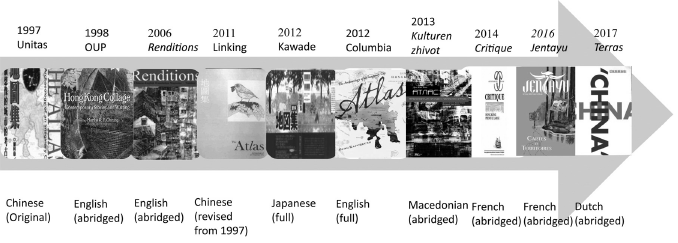
Figure 8.1 Translations of The Atlas in chronological order
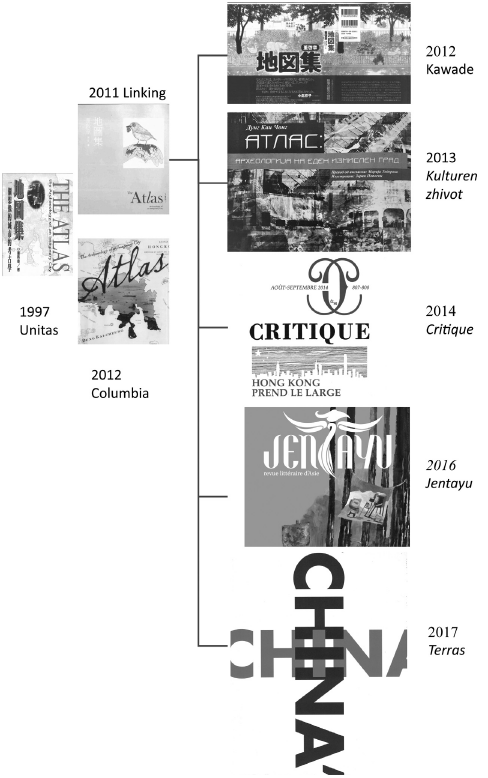
Figure 8.2 The rewritten version lias replaced the original
After 2011, the translational flow or the synergies created by the translators and the author were no longer restricted to a one-way traffic flow: from the original to the translation, from the author to the translator. Instead, the translation sequence should be conceived as the following:
Another special feature of the English translation published in 2012 is that it comes with a long preface written by the author, titled “An archeology for the future.” In this preface, he says, “I have learned many things from them [the two co-translators Bonnie McDougall and Anders Hansson] as a co-translator and have made revisions to the original Chinese text at various places that couldn't stand the close scrutiny of these two experienced teachers” (The Atlas. 2012b, p. xxxii). Here, Dung conferred a new authorial intent and bestowed his authority on his co-translators. Unlike Vladimir Nabokov, who always continued controlling everything as he self-translated his work with the co-translators (Beaujour. 1995, pp. 714-24). Dung used the analogy of teacher and stirdent to describe the relationship between the tr anslator and himself. He was a humble student and he was the receiver.
This has transformed the previous known power relations between the author and translators. The Atlas demonstrates a new model of self- and team-translations. Self-translation could preserve his sentiment and the textual form intact, but this collaborative translation enabled him to confr ont his limits and linguistic shortcoming and perfect the author’s self-translation. More importantly, with the joint effort, the author and the translators made the invisible Hong Kong literature visible. This new visibility redressed Dung’s criticism on the representation of Hong Kong in his translation skopos, “A large part of the reality of life here [Hong Kong] is unrepresented, unrevealed, and ignored," Dung lamented (The Atlas, 2012b, xii).

