Institutional Integrity
Transparency International holds that corruption does not occur as an isolated phenomenon affecting a particular sector or institution, but rather it is usually of systemic nature. Consequently, according to Transparency International, a successful approach in combating corruption needs to be a holistic one that includes all stakeholders. Transparency International (2012) has developed a tool that assesses the integrity system of institutions, how these institutions deal with the risk of corruption, and how their policies help the fight against corruption. Transparency International (2014b) has used the same methodology to review the institutions at an EU level.
The methodology19 used by Transparency International to assess a country’s national integrity system (NIS) focuses on an evaluation of the key public institutions and nonstate actors in a country’s governance systems and procedures that contribute to integrity, transparency, and accountability in a society. The institutions assessed are legislature, executive, judiciary, public sector, law enforcement agencies, electoral management bodies, ombudsman, supreme audit institution, anticorruption agencies, political parties, media, civil society, and business.
The assessment examines both the formal framework of each institution, as well as the actual institutional practice, highlighting discrepancies between the formal provisions and reality on the ground. This in-depth investigation of the relevant governance institutions is embedded in a concise context analysis of the overall political, socioeconomic and sociocultural conditions in which these governance institutions operate.
A thorough review of laws, policies, and existing research studies constitutes the main data source for the assessment for the formal framework and the context analysis. To collect information on the practice of the relevant institutions, a number of key informant interviews are conducted with knowledgeable persons from the public sector, civil society, academia, and other sectors.
In addition, wherever feasible, field tests are conducted. This data is used by the researcher to score the NIS indicators, which provide a quick quantitative summary of the qualitative information assembled in the NIS report.20
The overall results of the NIS assessment can be summarized in the form of the NIS temple, as shown in Figure 5.1. The temple is made up of NIS pillars, which are composed of their composite scores for the dimensions of capacity, governance, and role within the system.
The assessment can be a useful tool in
• gathering evidence that can be used for advocacy and policy reform initiatives since they can identify weaknesses in institutions;
156 •
Corporate Fraud and Corruption
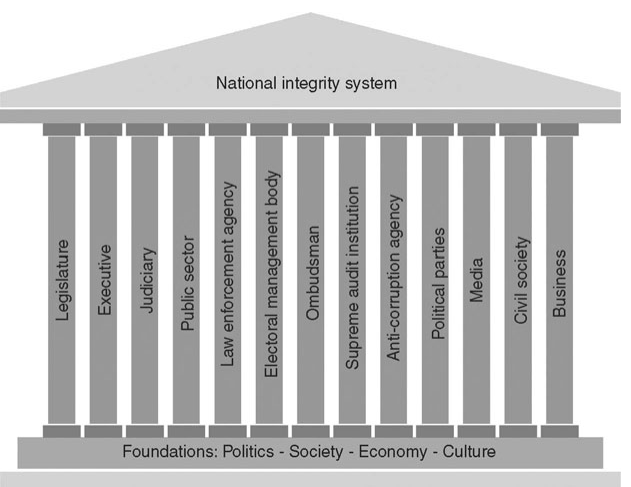
Figure 5.1 National Integrity System (NIS) Assessment Tool Source: Transparency International 2012
- • providing benchmarks for measuring further developments in country and a basis for comparison among the NIS components, since a snapshot view indicates the areas that are lagging behind;
- • being used as a planning tool for future work that needs to be done by an institution since it detects priority areas for reform and cross-cutting problems; and
- • providing a comprehensive overview of the functioning of the main governance institutions in a country since its output is a holistic snapshot of the entire governance system rather than an in-depth treatment of a specific institution.
The NIS has been introduced in over 80 countries since its inception in 2001. While it has become an “increasingly important, and well established, tool for assessing good governance and anti-corruption activities throughout the world” (Macaulay and Mulcahy 2014, 1), little is known about the impact the assessment has had. Due to its institutional focus it would be expected to impact legislation and policy, behavioral change, public awareness raising, and civil society capacity building. In the comparative study for the
United Kingdom and New Zealand, Macaulay and Mulcahy (2014) concluded that a stand-alone NIS assessment would not be effective where there is little media coverage and little policy impact. Thus the NIS assessment can be used as a tool in assisting anticorruption where it has been given extensive media coverage, but it cannot be used by itself to ensure integrity in soci- ety/government/institutions. When it comes to behavior that is considered unethical or the decision to go ahead with such behavior, a person’s conscience (moral code) in the main determines his/her perception, attitudes, and decision. A person’s conscience is constructed during many years in different contexts. When a person is in school, college, or university, it is a good time to impact on his/her conscience, thus investing in prevention.

