Membership Functions and Uncertainty
Introduction
The membership function (MF) is a line that defines how each point in the input space is mapped to a membership value (or a membership hierarchy) between 0 and 1 (Duch, 2005). Input space is sometimes referred to as universal. A nice name for a simple concept.
One of the most surprisingly used examples of fuzzy sets is the tall people set. In this specimen, spiel's universe is all potential heights, from 3 to 9 ft, and the word "tall" corresponds to the line by which man defines tall strata. Given the tall man set's well-defined (sharp) ditch of the classic set, anyone over 6 ft tall can officially say he or she is tall, but such stardom is arguably absurd. Considering that the numbers are on the utopian side, it may make sense to consider the set of all mistakes greater than six, but when you want to talk almost close to real people, you deny that one is short and the other is the taller. Turning over is irrational. The height is the width of the hair.
But if the kind of stardom that whilom shows doesn't work, what's the right way to pinpoint tall people? Like the plot of the weekend, the pursuit of icons shows a smooth variety of lines, from not tall to tall. The output axis is a number known as a membership value between 0 and 1. Lines are known as membership functions and are often specified as p. This line defines the transition from not high to high. The two are somewhat tall, but one is much smaller than the other.
The subjective interpretation and objective units are built right into the fuzzy set. If I say "she's tall," the membership feature "tall" should be worth a shot, no matter if I'm 6 years old or an adult. Likewise, units are included in the curve. It makes no sense to say, "Is her height in inches or meters?"
The only condition that the membership function must actually meet is that it must be different between 0 and 1. The function itself can be a misdirected line that can be pinpointed as a function that works for us in terms of simplicity, convenience, and convenience, speed and efficiency.
A classical set might be expressed as
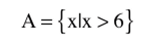
A fuzzy set is an extension of a classical set. If X is the universal set and its elements are denoted by x, then a fuzzy set A in X is specified as a set of ordered pairs:

|tA(x) is tabbed by the membership function (or MF) of x in A. The membership function maps each element of X to a membership value between 0 and 1.
Fuzzy Logic Toolbox includes 11 types of seat membership functions. These 11 functions consist of several important functions such as partial linear function, Gaussian distribution function, sigmoid curve, and quadratic and cubic polynomial curves (Fulcher, 2008). By convention, all membership functions are at the end of their names.
The simplest membership feature works using straight lines. The simplest of these is the trigonometric membership function, and the function name is trimf. It is nothing more than a confusion of the three points that make up a triangle. The trapezoidal membership function trapmf has an appetizing top and is actually a truncated triangular curve. These straight-line membership features have a sound box of simplicity.
Two membership functions are built into the Gaussian distribution curve: a simple Gaussian line and a double-sided composite of two different Gaussian curves. The two functions are gaussmf and gauss2mf.
It is a polynomial-based curve that can be used for multiple membership functions in the toolbox. The three related membership functions are the Z, S, and Pi curves, all named for their shape. The zmf function is an asymmetric polynomial line that is not closed to the left, smf is a mirror image function that opens to the right, and pimf is zero at both extremes rising from the middle.
There are so many different choices that you can separate when choosing your favorite membership features. Also, Fuzzy Logic Toolbox allows you to create your own membership function if you find this list to be too restrictive (Azar, 2010). On the other hand, if this list looks confusing, remember that just one or two types of membership functions, such as triangular and trapezoidal functions, can fit well. There are plenty of options for those looking to explore the possibilities, but a perfectly good fuzzy inference system doesn't require exotic membership features. Member features summary:
- • Fuzzy set describes an ambiguous concept (fast runner, hot weather, weekend).
- • Fuzzy sets allow the possibility of being a partial member. (Friday is a kind of weekend, and the weather is rather hot.)
- • The tier to which the object belongs to the fuzzy set is displayed as a member value between 0 and 1. (Friday is the weekend for tier 0.8.)
- • A membership function associated with a given fuzzy set maps input values to membership values.

