Interpersonal meanings in gestures
Performative Gestures are not coded for interpersonal and textual meanings as they do not serve primarily a signifying function. Also, unlike for ideational meanings, the relationship between gestures and speech is not a determining factor in the expression of interpersonal meanings. As such, all Communicative Gestures, regardless of whether they are Speech Independent, Speech Correspondent, or Speech Dependent, are described collectively in terms of the ways by which they express the interpersonal meanings.
The interpersonal meanings made with Communicative Gestures are described with reference to the Appraisal Theory developed by Jim Martin and Peter White. The Appraisal Theory was developed to more comprehensively describe the interpersonal meanings made in language (Martin, 1995,2000; Martin & White, 2005). The productivity of Appraisal Theory is demonstrated in its application to a range of other semiotic modes apart from language. This includes Macken-Horarik (2004) on images, Stenglin (2008) on Three-Dimensional Space, and Hood (2011) on gestures. In particular. Hood (2011) proposes that the three aspects of interpersonal meanings in appraisal: Attitude, Graduation, and Engagement, are embodied in gestures as well. Hood (2011) argues that gestures can express feelings and values in Attitude, they grade meaning along various dimensions in Graduation, and they expand or contract space for others during interaction in Engagement.
Notwithstanding, it is recognised that the interpersonal meaning of Attitude is more usually expressed with facial expressions rather than with gestures. Ekman and Friesen (1978), Ekman and Rosenberg (2005), Hood (2011), and others, have observed that facial expression is the primary means by which Attitude, in particular, the sub-categorisation of Affect, is expressed. For gestures, the extent of affect expressed may be less nuanced than that of facial expressions. In this light, a simple polemic set of values that broadly classifies the attitudes in gestures as Positive and Negative are proposed. The distinction in polarity lies in the assumption that gestures generally express positive attitude. As such, negative attitude is encoded when a contrary point is made, when negation is expressed or where adversarial meanings are represented. For example negative attitude can be expressed in the gesture of the hand thrusted forward with the palms shaking to signify ‘No’.
The interpersonal meaning of Graduation in gestures in ‘grading an objective meaning... [can offer] a subjective slant to the meaning, signalling for the meaning to be interpreted evaluatively’ (Hood, 2011: 43). This can be extended to the meanings of intensity, size, quantity, scope (Graduation as Force) or of specificity or completion (Graduation as Focus). Martinec (2001) discusses the other aspects where the interpersonal meanings of graduation are expressed, namely size, specificity, speed, and muscle tension. In particular, Speed, as a broader category, can also be taken as a proxy reference, to some extent, for intensity and muscle tension. An elementary three-point scale indicating Fast, Medium, and Slow can be used as an approximate measure for the gesture. Gestures with slow graduation connote emphasis and deliberateness. Gestures with fast graduation convey urgency, energy, and dynamism.
The interpersonal meaning of Engagement is expressed through the positioning of the hands to expand and contract negotiation space for the other voices in the discourse. Following the categorisation proposed by Hood (2011: 46), an open palm or palms up position ‘embodies an elicitation move on the part of the teacher, enacting an expansion of heteroglossic space, inviting student voices into the discourse’.This is frequently observed during class discussion when the teacher asks questions and invites responses from the students. The palms-down position contracts the space for negotiation. It deters contribution and involvement from the other party. It usually serves to assert the authority of the teacher and is often used when the teacher gives instructions. Beyond the expansion and contraction of interactional space, the modality of possibility can also be expressed through an oscillating gesture, where the hand rotates or traces a circular movement. Oscillating gestures represent possibility and usually co-occur with the linguistic expression of modality. The interpersonal meanings of engagement made through gestures serve to coordinate and regulate the ebb and flow of the discussion. The nature of interpersonal meanings in gestures is shown in Figure 4.6.
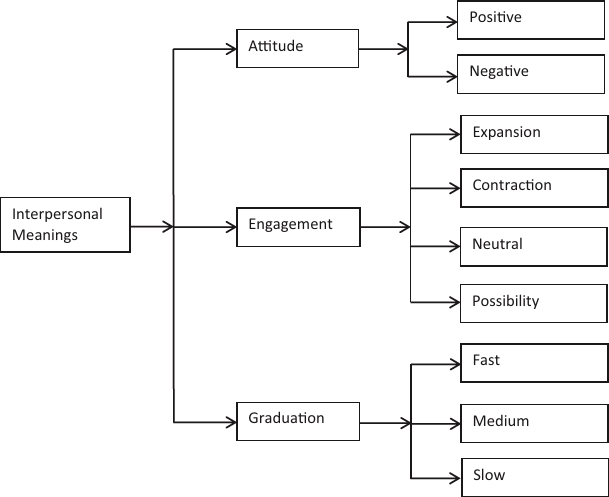
FIGURE 4.6 Interpersonal meanings in gestures Reproduced from Lim (2019: 105).
Textual meanings in gestures
The textual meanings in gestures are only coded for Communicative Gestures and not for Performative Gestures as the latter do not have a signifying function. The textual meanings in gestures serve as an organisational resource for the ideational and interpersonal meanings made. All three metafunctional meanings are expressed simultaneously in Communicative Gestures. The textual meanings in Communicative Gestures are described in terms of the Wavelength (Martinec, 2004), and in the cases of pointing — Directionality and Specificity (Hood, 2011). The nature of textual meanings in gestures is shown in Figure 4.7.
The textual meaning ofWavelength follows from Martinec’s (2004) argument that gestures embody the rhythmic flow of information according to different wavelengths. Each wavelength presents a peak where prominence is given to the meaning made. Martinec (2004) also proposes a hierarchy of wavelengths where the shorter wavelengths correspond to peaks in a longer wavelength. The dimension of rhythm can be coded through approximating the rhythmic beat or repetitive motion of a particular gesture. This is especially so with Speech Dependent Gestures, where beats are used to express the representation of Importance in the ideational meanings made by language.

FIGURE 4.7 Textual meanings in gestures Reproduced from Lim (2019: 105).
The textual meaning of Directionality can be expressed through Communicative Gestures of pointing. Within the classroom context, the gesture of pointing is usually towards the interfaces which are displaying information. This includes the laptop’s projection on the screen, the whiteboard, and through the visualiser, where the notes and gestures are projected on the screen. Such directional goals can signify a physical mediation between the enactor, in this case, the teacher and the information presented. This demands and draws attention to the representations on the interface which can consist of written language, images, figures, and symbols as well.
The textual meaning of Specificity can also be expressed through Communicative Gestures of pointing. Hood (2011: 38) argues that variation in bodily resources can be interpreted ‘as varying along a cline of specificity’. As such, the ‘smallest body part that enables the highest degree of specificity is the little finger’. Specificity can be expressed in terms of pointing with the index finger, with the entire hand, a fist or with specific fingers. The teacher may also point towards the students, sometimes collectively as a class and sometimes as individuals. In addition to having high specificity through the act of pointing with the index finger, the gesture also functions ideationally as an imperative and interpersonally to demand engagement. The intensity of these meanings is reduced when an entire hand, of lower specificity, is used to point instead.

