General introduction
Good sense is the most evenly shared thing in the world, for each of us thinks he is so well endowed with it that even those who are the hardest to please in other respects are not in the habit of wanting more than they have.
(Descartes, Discourse on Method, 27)
Religion as a content area rivals good sense as a faculty. Even those who are the hardest to please in other respects are not in the habit of wanting to know more than we already know about it, but readily come to firm conclusions and set behaviors concerning religion ... and thereby hangs a tale. The initial thesis of this work is simple enough. It is that the history and philosophy of religion and the history and philosophy of art are critically in need of integration and mutual consideration. This is not to state that religion and art are “the same thing” (or “things” at all). Clearly, they are not. They are two discrete abstract nouns, and there are sustainable distinctions to be made between them. There can be art objects and events that are unconnected with institutional religion, and there may be religious activities that lack all artistry. On the other hand, the objects and activities of the material culture to which these two abstract nouns refer, both past and present, are so inextricably interconnected that it is imperative to our understanding of each that we cease the futile and damaging attempt to tell their stories as if they were entirely distinct. Since the Renaissance, and particularly since the Protestant Reformation, the insistence in the modern. Western, European, Christian, or post-Christian world on conceiving religion and art as fundamentally dissimilar has been carried forward with remarkable tenacity. However, with the recent and increasing emphasis on the material culture of religion and with cognitive and evolutionary insights into both religion and art (and with the introduction of some long-overdue humility and self-awareness in the West), it is increasingly apparent that this distinction and the conceptions of art and religion associated with it are fatally flawed. An Ethology of Religion and Art: Beauty, Belief and Behavior clarifies and justifies these claims and draws out some of their implications and entailments, resulting in an understanding of art and religion and their relationship that is detailed, accurate, and, 1 hope, extremely useful.
What’s the problem?
I first started thinking seriously about the problematic relationship of religion and art when I began teaching an undergraduate course of that name in 2005. Not that I hadn’t thought about it before—I had thought about it enough to know that it worried me. Religion alone is a deeply problematic concept and the many attempts to define it have never proven satisfactory. Combined with the equally ill-defined concept of art it constitutes a “two-body" problem in which the behavior of one imprecise variable is unpredictably influenced by the dynamics of another that is equally elusive. It is common knowledge that religion and art are inextricably bound up with one another so as to be almost inseparable prior to the Renaissance and across the world. A huge proportion of everything that is identified as “art,” culturally from Angkor Wat to the Ziggurats, and chronologically from Gobekli Tepe to the Crystal Cathedral, has overtly religious themes. As Barbara DeConcini, one-time president of the American Academy of Religion, put it:
there are important connections between religion and art: both are oriented toward meaning, and both deal in universal human values—both are fundamental to being human. What is more, religion and art share remarkably similar discourses. Each works primarily through story, image, symbol and performance.
(1991, 2)
The German theologian, philosopher, and biblical scholar Friedrich Schlei-ermacher (1768—1834) insisted in 1799 that "religion and art stand beside one another like to friendly souls whose inner affinity, whether or not they equally surmise it, is nevertheless still unknown to them" (1958, 158). In the 19th century, the Danish philosopher and author Soren Kierkegaard (1813—1855) felt that art had only recently achieved integrity and autonomy from religion. He also believed that art had gone too far and was beginning to become a substitute for religion. Sacred and profane inspiration were for him fundamentally incomparable, and he thought that if the Christian tradition were seen as an aesthetic phenomenon, then it was in danger of being explained away (1940). In The Sacred Shrine: A Study of the Poetry and Art of the Catholic Church (1912) the Finnish philosopher Yrjo Hirn (1870-1952) argued that the early equivalents of religion and art existed seamlessly blended together in the earliest stages of their development. In Sacred and Profane Beauty (Tom Heiligen in der Kunst, 1957), the Dutch phenomenologist of religion Gerardus Van der Leeuw (1890—1950) argued that the arts and religion began in a state of original unity, each art, and religion itself, only later achieving its own integrity and autonomy (2006). More recently, Marcia Brennan, in a fascinating work. Curating Consciousness: Mysticism and the Modern Museum (2010), has indicated the continuing, if concealed, consanguinity of art and religion by arguing that art museums remain places of mystical experience, suggesting that even
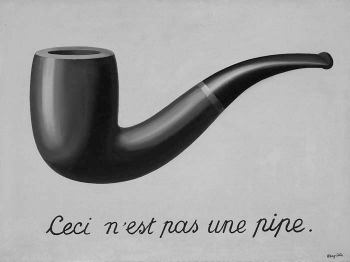
Figure 1.1 La Trahison des Images by René Magritte (1928—1929). Los Angeles County Museum of Art. © C. Herscovici/Artists Rights Society (ARS), New York. Digital Image © [2019] Museum Associates/LACMA. Licensed by Art Resource, NY. © ARS, NY, Los Angeles County Museum of Art, Los Angeles, California, USA.
modern art never really separated itself from the complex mystical traditions that preceded it.
The Biblical Second Commandment orders that
you shall not make for yourself a graven image, whether in the form of anything that is in heaven above, or that is on the earth beneath, or that is in the water under the earth. You shall not bow down to them or worship them.
(Exodus 20.1-17)
This has often been taken as driving a wedge between art and religion, making them undeniably distinct. Yet, as David and Linda Altshuler convincingly point out (1984), early Jewish synagogues were by no means bereft of art. Their conclusion is that the Commandment is an organic unity composed of two halves. It is not a prohibition of art per se, but a prohibition of “bowing down and worshipping” our own representations—a warning, I would argue, against “the treachery of images”—that is, against mistaking the representation for the thing represented.
It would be a mistake to assume that such a caveat would be too sophisticated for early Hebrew authors. They were equally, if differently, sophisticated as any anatomically modern humans. David Lewis-Williams, a scholar of both the contemporary San art of South Africa and Paleolithic cave painting, warns us that even the artists of Paleolithic images may have had no intention to represent physical, empirical items but specifically to represent “spirit beings” (2002, 194). While the visions were real as visions, they were not real in the sense of representing “a real bison,” that is, a physical, flesh and blood being. If Paleolithic artists could exercise such sophistication, it is no stretch of the imagination to argue that the writers of the Second Commandment did, too. The essence of the idolatry they sought to avoid is taking the representation to be the thing it represents, treating the pointing finger as the moon.
How, then, are art and religion related? As one walks into the bizarrely folded and convoluted edifice that has grown up on the foundation that is the confluence of religion and art (I can’t help but think of the edifice as a Frank Gehry marvel), the entrance is littered with crumpled handbills. Pick them up, unfold them, smooth out the creases, and they turn out to be warnings: John Dixon counsels us that “[n]early every attempt that has been made to incorporate art into the study of religion or to account for art theologically has to some degree done violence to one or the other, either by distortion or impoverishment" (1983, 78). David Chidester says that
as soon as we say, “Religion and Aesthetics" we are caught in a problem. It would seem that we are bringing together two relatively separate and independent entities: two separate areas of human activity, two separate subject fields ... into some arbitrary juxtaposition.
(1983, 55)
James Elkins has said, "I can’t think of a subject that is harder to get right, more challenging to speak about in a way that will be acceptable to the many viewpoints people bring to bear" (2004, ix), and Elkins observes that, for some people, the word “religion” can no longer be associated with the ideas of art. “Talk about art and talk about religion have become alienated one from the other, and it would be artificial and misguided to bring them together" (x). Yet there is, arguably, a “field” of the study of religion and art. In 1991 DeConcini told us that "Religion and art has been a ‘field’ in the sense that one can study it in graduate school and find positions teaching it in colleges only since the 1950s" (1991, 323), but 13 years later, David Morgan was still asking, “is there, in fact, a history of art and religion as a field of study? ... has ‘art and religion’ been a discreet and circumspect topic of enquiry?” He concludes that it is "presumptuous” to see the study of art and religion as a distinct field (2004, 17).
Trying to teach the subject(s) seemed a nightmare of haunting, ill-defined behemoths lurking just out of sight, eternally vanishing into the mists of ignorance. When I first taught the course, I took Lewis Carroll's The Hunting of the Snark, in which the Bellman, who captained the hunt, had a map that was “a perfect and absolute blank,” as the leitmotiv. In Carroll’s immortal words:
... beware of the day.
If your Snark be a Boojum! For then
You will softly and suddenly vanish away, And never be met with again!
... and each Snark threatened to be a Boojum. The whole complex threatened to be so far from anything that could be dealt with reliably and rationally, especially by a single individual, that it seemed inevitably to lead to such pretentious nonsense that one’s every opinion could evaporate (or sublime) before the righteous scorn of one’s colleagues. I soldiered on, buoyed up by the indefatigable enthusiasm of my students and their apparently unshakeable conviction that I knew what I was talking about. The best single book I could find on the subject, Diane Apostolos-Cappadona’s anthology. Art, Creativity and the Sacred: An Anthology in Religion and Art, was first published in 1984 and contains articles that, albeit extremely valuable, date from the 1930s and 1940s and are thus ignorant of developments that are more recent. It is also a graduate-level text. I supported my students as best I could and helped them through the readings and provided as many more as I could find that might enlighten them (and me) concerning the relationship of religion and art. Apostolos-Cappadona’s book is immensely helpful as an introduction to the problem, but it raises more questions than it answers, being full of suggestive, somewhat breathless, indications that art in religion enables “the expression of the inexpressible" and “vision of the invisible.’’ It is almost universally agreed that art permits the artist to express and the audience to apprehend that which is otherwise inexpressible and beyond apprehension. There are also obvious implications as to the nature of the invisible that is thus revealed. It is not simply that invisible agents such as gods and spirits become available to experience through the media of sculpture or painting or as elements of narrative (although this is far from unimportant). It is the universal, the infinite, "the undifferentiated continuum,” the transcendent, the structure of reality, ultimate reality, or the truly real, that is somehow made available to the bodily senses. Thomas Franklin O’Meara claims that “art suggests a mode of subjectivity that not only rejects the technocracy of words but which unleashes, bestows, and discloses the more of Presence” (206). O’Meara quotes the German Idealist philosopher Friedrich Wilhelm Joseph Schelling (1775—1854) as saying that “Beauty is the infinite presented in the finite" (1978, 208). Similar statements occur throughout the volume: according to the sculptor, Stephen De Staebler, “|i|f you strip away all the doctrines and dogmas, religion becomes a very precarious relationship between a frail and finite reality and a sense of all-present infinite reality" (26). F. S. C. Northrop calls this
apprehending the undifferentiated continuum in and through the immediately apprehended differentiated continuum ... this mode of knowing not only apprehends the immediately sensed world of “differentiated” objects and feelings, but—in and with that—the underlying "undifferentiated,” sacred unity that empowers and is the ground for everything.
(1946, 315-358, 394-404, as quoted by Richard Pilgrim 1984, 138)
O'Meara also says that
the aesthetic illustrates human theological interpretation of divine revelation. The aesthetic modality is a basic fact of experience. Aesthetics can describe religion, revelation, faith, and thinking about faith with the strength and clarity equal to the categorical style...|Aesthetics] does not presume that theology or life is mainly word, syllogism, myth, or symbol.
(205)
In the same volume, Paul Tillich talks of “the deceptive character of the surface of everything we encounter which drives one to discover what is below the surface. ... The truly real which cannot deceive us... Ultimate reality is expressed in artistic forms” (220). Effective art reveals “the breathing of the universal in the particular,” according to the catalog of the exhibition “Bernard Leach: 50 years a Potter” (Leach 1961, 88 quoted by Cecilia Davis Cunningham, 9). “The transcendent appears through art," according to Langdon Gilkey (1984, 189). O'Meara says that for Schelling art is “a realization of absolute consciousness. It is an access to the structure of reality—past, present, and future. Art, like philosophy, is revelation” (1978, 209—210).
But what on earth does all this mean'? Isn’t it just sublime nonsense? Does it express anything other than the writers’ love of art? How can one explain it? Is the Snark a Boojum or not? Clearly, art is being assumed to perform what is usually thought of as the central function of religion—to reveal the otherwise unknown nature of the “really real,” the sacred, the invisible world or cosmic order, which determines the ultimate value of our behavior. The present volume proposes to explain how it does so.
I initially picked up an Ariadne’s thread provided by phrases such as Paul Ricoeur’s “disclosure of new modes of being, of new forms of life, gives to the subject a new capacity for knowing himself” (quoted in DeConcini 1991, 325) and John Dixon’s "the worshipper returns to his own circumstances not so much better informed about the nature of the common life as prepared to see the ordinariness of things radiant with the faith” (1984, 288). Apostolos-Cappadona has also edited an anthology of articles by historian of religion. Mircea Eliade, on the subject of religion and art (Eliade, 1986), and such phrases are reminiscent of Eliade who, in his discussion of religious symbols, had said that symbols allow people to “become conscious” of alternative modalities of the real. They “disclose to us a perspective from whence things appear different." They “make the immediate reality ‘shine’” (1986, 6). Eliade is often accused (among other things) of being a “closet theologian," and an obfuscatory mystic who simplistically accepts the reality of transcendental agencies and whose understanding of religion is, therefore, incoherent (McCutcheon 2001). I do not believe this to be the case, as I will explain in detail in Chapter 6, but the problem remains: how can one make coherent sense of such claims? How are religion and art related?
Elkins points out that “there is almost no modern religious art in museums or in books and art history" (ix) and it is, perhaps, from the apparent disappearance of religion from modern art that we should take some clues. While I agree that talk about art and talk about religion have become alienated from one another, I disagree strongly that “it would be artificial and misguided to bring them together” (Elkins, x). It is telling that, while Elkins recognizes that he accepts a very particular definition of art for a very particular reason—"in order to avoid having to say what art should be about, or even what it has been about.” He defines art as “whatever is exhibited in galleries in major cities, bought by museums of contemporary art, shown in biennales and the Documenta, and written about in periodicals such as Artforum, October, Flash Art, Parkett or Tema Celeste” (1). This is what is often termed “the institutional definition of art.” Ellen Dissanayake and the ethologists of art who are principal contributors to my argument fundamentally reject it. While such a definition sufficed for Elkins’ particular purpose in that volume, it has very particular consequences. This institutional definition of art has its own virtues and can be, and often is, invoked as an ostensive definition of the class (I will say more about the nature and types of definition in a following chapter), it simply assumes the fundamental discontinuity of art and religion and thus provides no possible response to the questions raised by most of the aforementioned authors concerning the indisputable connections between the two. Religion and art may have become alienated, but they had some earlier relation, even in the modern West, and they still do in much of the world as they did throughout history. It is necessary and extremely instructive to consider that relationship.
Tracing the relation of religion and art throughout human history may be like trying to trace the trajectory of two sparks through an ongoing explosion. I was much encouraged while struggling to understand the art of divination in the Yijing when I came across Richard Smith’s assertion that “an impossible task is nonetheless worth undertaking if the topic is interesting enough” (2008, xii). Art and religion are certainly interesting enough, and their relation may not, in the end, be impossible to disentangle. No-one can be fully expert in all aspects of such an inquiry and a certain dilettantism is unavoidable. It is necessary to take risks to construct novel and creative hypotheses that can be further inspected, tested, and, if not falsified, gradually improved upon. A sensible limitation to a specific genre, geographical area, or historical period, with a concomitant narrowing of the relevant material, is an advantage that this study cannot have. My analyses in the following chapters stray into various fields in which I am not entirely expert and so will be vulnerable to the readings of specialists in each area. I am not an evolutionary biologist or geneticist—my appeals to those fields are made to support the coherence and viability of the understanding of art and of religion that I elucidate here rather than claiming to have unlocked the genetic code of religion.
I am attempting to write for readers of different backgrounds and I hope that my peers in the history and philosophy of religion will find something of use and value in the following speculations about religion in general. I also hope that students will be able to use the book to improve their understanding of the nature and interrelation of religion and art. Finally, I hope that the general reader with an interest in either religion or art will benefit from the book. With these things in mind, I can only call for an initially charitable reading,2 tolerant of failure to refer to all of the relevant literature, which allows the larger understanding to emerge. This study emerges from the aesthetics of religion, a subset of the philosophy of religion. It is, however, a philosophy of religion broadened along the three axes suggested by Kevin Schilbrack (2014), who proposed that a philosophy of religion that is adequate to its task (and not artificially restricted to problems of philosophical theology appropriate only within the Western monotheistic traditions) must be expanded along the axis of alternate religious traditions, the axis of lived as opposed to merely literate or intellectual religion, and the axis of other disciplines that study of religion. I entirely agree, and the following chapters seek to achieve a perspective that draws on the whole panoply of religious behavior, on a wide variety of disciplines, and on lived religion as a matter of human behavior and physical activity rather than abstract doctrine and disembodied thought. ’
Given these caveats, an initially “artistic” approach that is necessarily creative is more appropriate than an attempt to be entirely prosaic, categorical, or pseudo-scientific. The braiding of an argument, no matter how prosaic and categorical the language employed, is a creative process, the art of which should not be underestimated.'1 It is also necessarily historical to some extent. The study of religion properly constitutes a history and philosophy of religion,5 and I cheerfully count myself among those who insist on the creative nature of historiography. Nineteenth-century conceptions of science still haunt the contemporary understanding of history, but to quote Hayden White,
as a discourse about things no longer perceivable, historiography must construct, by which I mean imagine and conceptualize, its objects of interest before it can proceed to bring to bear upon them the kinds of procedures it wishes to use to “explain” or “understand" them. ’
The discourse before you fully intends to be creative and I hope that it proves imaginative.

