Plant-Derived Molecules Engage Endogenous Receptors
The Effects of Bioactive Cannabis Plant Chemicals Lead to the Discovery of Receptors and Endocannabinoids
While the endogenous cannabinoid system (ECS) carries the plant’s name because study of cannabis effects led to the system’s discovery, the bodily regulatory system is in fact exponentially older than the plant. All animals, vertebrates and even invertebrates, have an ECS, the oldest identified being the sea squirt, a creature that developed nearly 600 million years ago.5 By comparison, cannabis developed as a distinct botanical genus no earlier than 34 million years ago during the Oligocene epoch, and its closest genetic relative, hops, did not appear as a species in the fossil record until only around 6 million years ago.16 The appearance of a botanical compound that interacts with a much older animal receptor system may support a teleological or ethnobotanical contention that there is a coevolutionary relationship in which plants have developed highly sophisticated chemistries to cooperatively appeal to creatures, unwittingly assisting with those plants’ reproduction and dissemination, as well as to repel insect and animal herbivore threats. An understanding of the plant’s survival rationale also helps to explain why its bitter-tasting defensive chemical alkaloids when used as medicines often are taken along with a proverbial “spoonful of sugar” to make their ingestion more palatable.
Molecular similarities attest to the core of biochemical evolutionary links between plants and animals. This becomes apparent when comparing the critical energy molecules of plants and animals. Light energy processing is possible through chlorophyll that allows photosynthesis, while animals’
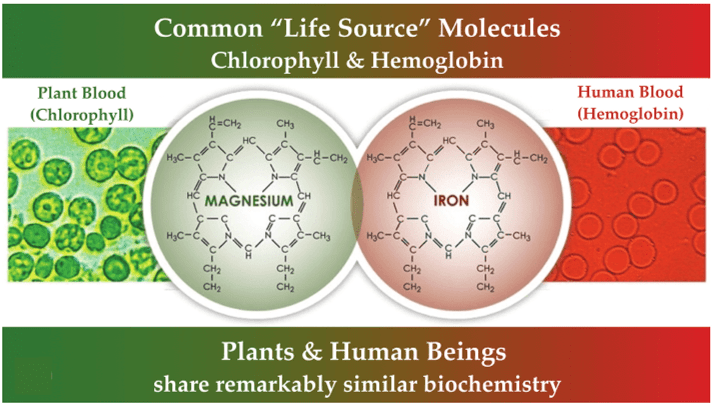
FIGURE 4.5 Other than their respective 2* cations (magnesium in chlorophyll, and iron in hemoglobin), these Kingdom of Life-defining molecules share remarkably similar biochemistries.
hemoglobin molecule is responsible for 02 exchange to derive energy. The mere substitution of magnesium (a 2[1] cation) at the core of chlorophyll with iron (another 2+ cation) dramatically changes that molecule into serving as hemoglobin. This similarity of molecular structure is most remarkable when one considers the resulting essential consequence of each molecule’s unique bioactive purpose (Figure 4.5).
The discovery process of identifying active plant compounds and then searching for the bodily system with which they interact has proven fruitful in many instances, although compiling the supporting evidence can often be time- and cost-consuming. Aspirin’s analgesic properties were commercially known for nearly a century before the discovery of prostaglandins and, of course, opium’s analgesic effects were known for thousands of years before endorphins and enkephalins were identified. In 1974 endorphins were discovered through plant-based phyto-opioids derived from the opium poppy and morphine. In 1992 endocannabinoids were discovered through phyto- cannabinoids produced by the cannabis plant, and in 1997 endovanilloids were discovered through phyto-vanilloids including the chili pepper and capsaicin (Figure 4.6).
Ethnobotanical observations of how plants affect pain have helped to identify these three distinct endogenous receptor systems, each of which has been revealed through their plants’ unique chemical contributions. These three receptor systems have complementary pathways that collectively may help treat pain more safely and effectively when used in a balanced therapeutic manner. Several decades before the discovery of any of these receptors particularly important to pain perception, major pharmaceutical companies had already attempted to mitigate side effects by combining only small amounts of all three plant substances for use as an elixir.
Some components of the cannabis plant, such as cannabidiol and cannabinol, were described by chemists in the 1940s, but it would take until 1964 before the definitive structure and biosynthesis of cannabis’ best-known bioactive molecule, Д-9 tetrahydrocannabinol (THC), were determined[1]
Complementing w'hat is known about the molecular structure of THC and CBD, elucidating these cannabinoids’ biosynthesis and breakdown revealed a single parent chemical—geranyl-pyrophos- phate—that derives not only other cannabinoids, but also the plant’s terpenes, chemical molecules
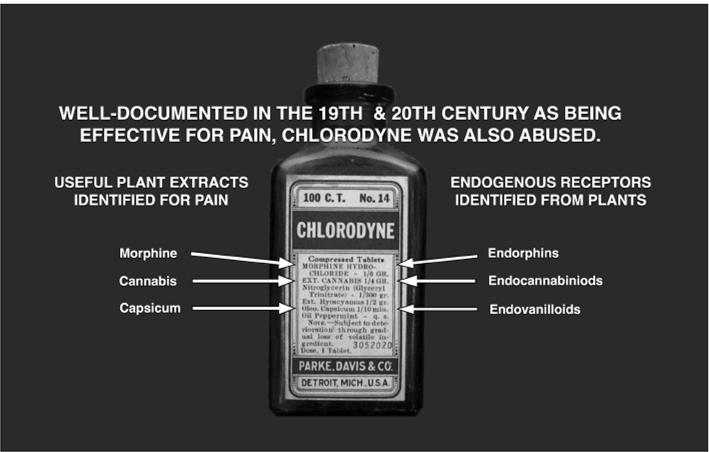
FIGURE 4.6 Pre-dating their respective receptors’ discoveries, pharmaceutical products containing combinations of plant-sourced chemicals were common in formulary.
that animals perceive as smells. Plant cannabinoids exist naturally in a non-psychoactive acid form, and each has its own unique bioactivity. Only upon exposure to air and heating does the loss of CO, by decarboxylation change the living plant’s precursor acid form known as THCA into THC, cannabis’ only psychoactive molecule. The consumption and digestion of THC allowing subsequent liver metabolism results in 11 hydroxy THC, a more potent psychoactive cannabinoid known to also have a considerably longer effective half-life than does its precursor molecule, THC (Figure 4.7).
The identification of the cannabis plant’s primary psychotropic phytocannabinoid enabled a search for the receptor system within which it interacts. It took nearly 30 years until THC was revealed to engage CB receptors as a unique stereo-specific isomer, fitting a natural receptor’s “lock-and-key” analogy, and giving its plant family name to this newly discovered “endocannabinoid” receptor system. This led to a far more essential discovery: the endogenous receptor-activating ligand that THC mimics. Not simply one, but two different endogenous ligands were discovered in 1994. Each of these endogenous cannabinoids, N-arachidonylethanolamine (AEA) and 2-arachidonylglycerol (2-AG), can attach to either of the CB receptors. Since then, many other minor lipid metabolites having molecular structures similar to anandamide and 2-AG have been identified that also may exert effects on the two cannabinoid receptors.
Endocannabinoid receptors:
- • CB,
- • CB,
Endogenous ligands:
- • 2-arachidonylglycerol (2-AG)
- • N-arachidonylethanolamine (AEA or anandamide)
For all of the importance of plant-human interactions in identifying endogenous mechanisms and targets for analgesia, future therapeutic applications will have less to do with the plant’s chemicals, and more to do with other pharmacological ways to manipulate the ECS. This integrating system

FIGURE 4.7 Several natural and physiologic conditions influence the primary phytocannabinoids’ biosynthetic pathways (Smokereports.com).
appears to be the body’s key regulatory mechanism, particularly in the brain, where it is known to affect memory, pain perception, and mood among other things.
Cannabis Modulates Opiates as Endocannabinoids Modulate Endorphins
Opioid medications are important tools in the treatment of pain, but their well-known central nervous system (CNS) and gastrointestinal side effects are often poorly tolerated. As opioid overdosing frequency has become epidemic in the United States, their use has come under intense scrutiny. Among the proposed alternatives to opioid and other pharmaceutical pain treatments is medical cannabis (marijuana). The emerging evidence indicates that cannabinoids can exert opioid-sparing effects seen at both pharmacological and behavioral levels,17-22 although a recent Australian 4-year cohort study failed to confirm changes in opioid effectiveness.23 While the scarcity of clinical evidence for the medicinal use of cannabis poses a challenge for treatment decision-making, the expansive scope of chronic pain and frequency of opioid abuse suggest conventional treatments are insufficient.
Clinical decisions are based on our knowledge of the risks and benefits of available treatments, including those that have yet to receive full acceptance. For all of the limitations on clinical research utilizing plant-derived cannabinoids, a wealth of insight derives from understanding the supporting basic science. Appreciating the mechanism of action can inform decisions about where future benefits may lie for patient care. The evidence for the efficacy of cannabis as an analgesic includes a wealth of anecdotal patient reports, human clinical trials, experimental animal studies, and laboratory research. The preclinical findings on comparative safety and potential efficacy have thus far found limited confirmation in clinical trials for chronic pain. Studies indicating the efficacy of cannabis in the treatment of pain have been well-summarized in the consensus conclusions of expert reviews conducted by the Institutes of Medicine (IOM) in 1999 and again in 2017 by the National Academies of Sciences, Engineering and Medicine (NASEM).24*25 These meta-analyses of randomized clinical trials and other research studies found “substantial evidence” that cannabinoid medicines are effective in the treatment of pain. Importantly, the NASEM report also finds evidence of opioid substitution with cannabinoid use consistent with initial survey data of medical cannabis users and statistical analyses of opioid prescription reductions in states where medical cannabis is available.26-28
Before considering those findings and clinical recommendations, an understanding of what has been established about how endogenous receptors and their natural ligands function helps to illuminate why several plant-derived or “phyto-”cannabinoids—key active components in the cannabis plant—hold such promise for treating a startlingly broad range of conditions, including pain. As the 1999 IOM report notes, “basic biology indicates a role for cannabinoids in pain and control of movement, which is consistent with a possible therapeutic role in these areas.”
The experience of pain is a complex phenomenon involving the interaction of a number of biological systems having psychological and social aspects. Of course, pain in and of itself is not a “diagnosis” per se, but a symptom of many diseases and injuries. Because pain is a subjective state for which there are no reliable objective measures, caution is required in assessing the validity and reliability of data. Researching its amelioration presents a significant challenge, particularly in assessing a substance such as cannabis, which generally produces obvious psychoactive effects that make assessing a placebo difficult.
Physiologically, pain processing is mediated through the central, autonomic, and peripheral nervous systems, all of which are potential targets for cannabinoids. Cannabinoids act on pain through mechanisms that are distinct from opioids, and it appears that these overlapping pathways may explain their synergistic and opioid-sparing effects. Cannabinoid receptors have been identified in peripheral, spinal, and supra-spinal sites and play a clear role in CNS pain signaling. Brain sites involved in cannabinoid analgesia reflect the role of descending pathways of neural connections from the brain to the spinal cord. Research indicates that both CB, and CB2 receptors play independent roles in controlling peripheral pain.
Pain is also one of the oldest documented reasons for which people have traditionally used cannabis therapeutically—from the role of cannabis in traditional Chinese medicine and Ayurvedic practices, to its introduction in Western medicine in the 1840s. Chronic pain has the most robust scientific evidence for the effectiveness of cannabinoids in its treatment and is the qualifying condition for the vast majority of patients enrolled in state medical marijuana programs that recognize pain and the condition(s) with which it may be associated, constituting in some states more than 90% of registrants.1
- [1] Israeli biochemist Rafael Mechoulam’s lab is credited with not only the discovery of THC’s structure and biosynthesis,but also of the CB receptors’ natural ligands. The importance of his life’s work validates his being regarded as the "Fatherof Cannabinoid Medicine.”
- [2] Israeli biochemist Rafael Mechoulam’s lab is credited with not only the discovery of THC’s structure and biosynthesis,but also of the CB receptors’ natural ligands. The importance of his life’s work validates his being regarded as the "Fatherof Cannabinoid Medicine.”

