Summer
Astronomy and Astrology
Summer begins at the Summer Solstice as the Sun reaches the Tropic of Cancer—the apogee of its annual northward journey—and enters the sign of Cancer. In the Julian calendar, that event usually occurs between
June 10th and 12th; the red-letter holy day commemorating the Apostle St. Barnabas, on June 11th, was often identified as the longest day of the year (as in Spenser’s Epithalamion). The Sun enters Leo approximately a month later, in August, and Virgo in early September.
The most notable astrological phenomena of the Summer were the dangerous, choleric Dog Days, thought to be caused by the ascendancy of the Great and Little Dog Stars: Sirius (in the constellation Canis Major) and Procyon (in the constellation Canis Minor). The actual start and duration of the Dog Days varied depending on the method of calculation, but generally they were thought to begin in the second or third week of July and run until late August or early September. The effects of the Dog Days are described in greater detail in the overview of July below (3.3). In addition to Sirius and Procyon, the star Arcturus (in the constellation Bootes) and the constellation Orion were believed to influence the weather and sublunar organic matter during the Summer quarter.
Allegory
The yeere from springtyde passing foorth to summer, wexeth strong, Becommeth lyke a lusty youth. For in our lyfe through out There is no time more plentifull, more lusty whole and stout.
(Ovid, Metamorphosis, fol. 189v)
Though the passage on the Four Ages of Man from Ovid represents Summer as “a lusty youth,” most of the literary and visual allegorical figures representing Summer show the figure as a man in his prime, as in the Summer engraving in the series by Philips Galle after Maarten van Heemskerck of 1563 (Figure 3.1.3). There the central figure is notably more mature than the youth representing Spring in the same series (Figure 3.1.1). The pose suggests the commanding power of the season he represents, which is associated with wealth, plenty, and vigor, represented in the human form at maximum strength. Summer holds a sheaf of wheat, material which also comprises his crown—appropriate for the season in which the corn is reaped.
Summer was alternatively identified with the Roman goddess of agriculture, Ceres, who often appears as the central figure in allegorical representations of this season, usually surrounded by the bounty which she symbolizes. For example, in both the Summer print from the Collaert after Maerten de Vos series (Figure 3.1.4) and the Hatfield House version of this composition (Plate 12), Ceres sits on a bale of wheat with a wheaten crown, under a fruit tree laden with ripe fruit, holding a sickle in her hand. Alternatively, Ceres is sometimes identified not with Summer but with Autumn, the period when the harvest is fully in, as in George Whitney’s A Choice of Emblèmes where “CERES doth in all her pompe appeare” as “autumne ripes” (1586, 23).
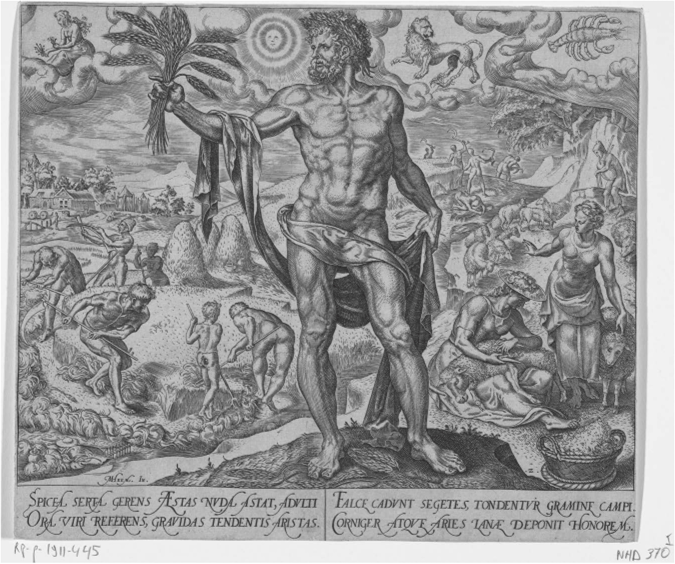
Figure 3.1.3 Zomer (Summer), Engraving, Philips Galle, after Maarten van Heemskerck, 1563. Rijksmuseum, Amsterdam.
Pastimes, Activities, and Labors
Whereas Spring is primarily associated with pleasure, Summer is a time for work, and images of the season emphasize the intense agricultural tasks also represented in the labors for the three months of June, July, and August: sheep-shearing, mowing, and harvesting the corn.
In the Philips Galle engraving of Summer (3.1.3), mowing takes place to the left of the central figure, with workers brandishing long-handled sickles and gathering the hay into hayricks; reaping (using short-handled scythes) occurs in the right background, and sheep-shearing in the right foreground. These three tasks are also represented in the Collaert engraving of Summer (Figure 3.1.4), and the Hatfield tapestry (Plate 12). Despite the hard work associated with Summer, this season, like Spring, is often idealized, as in Nicholas Breton’s description of a Summer landscape in which the “Hony-dewes perfume the Ayre,” the “Sunny-showers are earths comfort,” Flora brings forth her full “wardrobe,” and animals such as the bull, the hare, and the greyhound both cavort and work together in harmonious bliss (Fantasticks, B2r-B2v).
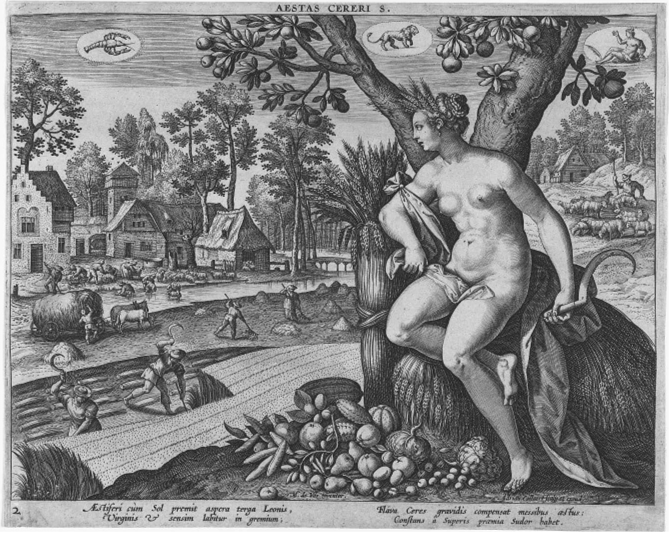
Figure 3.1.4 Zomer (Summer), Engraving, Adriaen Collaert, after Maerten de Vos, 1570-1618. Rjksmuseum, Amsterdam.
Complexion, Qualities, and Disease
Bright Soli having got his highest grade, lookes downe on earth with hot aspect:
Parching the ground and Corny blade, ripening all things with good effect.
(Frende 1622, B3v)
Summer is not only the hottest season but also the most productive, as its heat brings “all fruits to their ripenesse, cattell to their fatnesse, and men to their wealth” (Hopton, Concordancy, 99). In Summer, as noted in a 1555 version of the pseudo-Aristotleian Secretum Secretorum, “The myghtes of mannes body be fortyfyed. And all ye worlde is full of welth, as the fayre bryde that is goodly stature and in perfyte age” (Aristotle, Here begynneth, C4r).
But representations of the season in almanacs also stress the dangers attendant on Summer’s heat. The dominant humor is choler, hot and dry, which ripens fruit but also causes illness and disease. These perils are exacerbated by the influence of the Dog Star. Stomachs are delicate in these conditions: “Mans stomacke now more weaker is,” Frende reports, “than earst it was before: / To gormandize it is not good, / take heed, twill make thee poore” (1622, B3v). Digestive troubles predominate in Summer because, as Thomas Cogan puts it in The Haven of Health,
the poares of the bodie are more open, whereby the spirites and natural heat are the more resolved and wasted, and by that meanes the vertue digestive is infeebled, so that the stomacke and inner parts are not then so well able to digest as at other times.
(1584, 179)
Medical advice is unanimous on the best preventative behavior: “therefore eate and drinke moderately, least that you surfet and bring your selves into desperate and dangerous diseases” (Frende 1622, B4r). Other diseases and disorders prevalent in the Summer, many associated with heat and compromised digestion, include
hot burning leavers, giddines in the head, Laskes [loose bowels], Pluri-sies, Jaundis, hot Impostumes, Inflammations of the liver, scalding of the Urine, vomitings, head ach, purse [scrotum] ach, which is like to breed the hart ach or consumption, with other infirmities proceeding of hot and chollericke humors.
(Frende 1622, B4r)
Medical interventions should be avoided in Summer—guidance reiterated in the more specific proscriptions for the months—with all bleeding, bathing, purging, or taking medicine put off until September. Sexual activity, spicy food, and wine-drinking are also not recommended.
The weather in the Summer is, of course, hot, and thought to be primarily dry (in keeping with the dominant humor of choler.) As John Dade notes, sometimes Summer will “vary from his kinde, and be mixed with sweet and pleasant shewers” (1602, B3r). Hopton provides an astrological explanation of such variations, noting that in June and early July, the heat is mitigated by the effect of the moist star Asellus in Cancer, but the later ascendancy of Syrius and Procyon in Leo causes the heat to “groweth most vehement” (Concordancy, 98).

