Change Management
No man ever steps in the same river twice, for it's not the same river and he's not the same man.
Heraclitus, Greek philosopher
Learning Objectives
The learning objectives of this chapter are:
- • The Concept of Change Management
- • A Systems Perspective and Change
- • Kotter's Change Model
The Concept of Change Management
Change management is much more than maintaining control over the changes to a project. Many people might consider that the extent of change management, but that is a limited and inadequate view of the power of change management. Change management is about how to plan, facilitate, empower, and achieve a desired state of change within an organization. Change management involves as much work as the actual change initiative (i.e., project).
While the achievement of a change initiative will, or at least should, contribute to the enhancement of organizational goals and the bottom line, change management is a more complex concept than it appears. Change is a process of moving from a current state of existence to a new state of existence. Lewin (1951) described the change theory in his classic model of unfreezing-changing-refreezing. The model expresses a behavioral evaluation of a situation that allows for the desire to change, the actual change, and the willingness to accept the new state (Lewin, 1951). Lewin's model is the foundation of change theory. However, the complexity of change is perhaps best described in Kruger's (1996) iceberg model.
Figure 1.1 is adapted from Kruger's (1996) model and presents a visual depiction of Kruger's (1996) diagram. The iceberg model of change describes the apparent aspects of change implementation, such as project scope components, allotted project time, and project cost - these are the visible portions of the iceberg (Kruger, 1996).

Figure 1.1 Change Management Iceberg Model - Adapted from Kruger (1996).
The exciting part of the Kruger (1996) model is the portion hidden beneath the visible surface, such as communication dynamics, resistance to change, the perceptions of those involved in the change, hidden supporters and opponents to the change, and the involvement of leadership. It is common for managers involved in a change initiative to focus on the visible implementation issues because those issues result from practical project experience. However, ignoring or failing to recognize the hidden aspects of the project will doom the initiative to failure.
Decker et al. (2012) examined the implementation failure rate of projects and concluded that while studies have indicated dubious rates as high as 93% and as low as 28%, the failure rate is likely between 50% to approximately 70%. Hughes (2011) indicated that there is no empirical data to support the popular claim of 70% initiative failure. The association between a poor understanding of the "hidden" elements noted in Kruger's iceberg model, the lack of a systems perspective throughout the change initiative, and a partial or complete disregard of Kotter's 8-step model (1996, 2012) ensure the failure of the intended change. Conversely, there is a higher chance of success if a change practitioner applies the concepts of change management, Kotter's change model, and reliable project management techniques to any change initiative. Failure of many projects is associated with a lack of understanding of the nature and dynamics of organizational systems. Organizations are complex systems, and a change initiative must become part of the organization through an acceptance of a systems perspective.
Systems and Change
Since organizations consist of systems, it is essential to understand the nature and complexity of a system. An organizational system consists of the formal and informal structure (e.g., an organizational chart and working relationships), the processes that constitute the work of the organization (e.g., the internal and external interdependent activities), and the culture of the organization (e.g., the interrelated internal and external interdependencies of the people). Busby (2017) indicated rightly that any change initiative is inextricably connected with the culture of the organization.
Change is about working to involve people in making changes in an organization and in their behaviors to the extent of the change. For instance, consider a security project involving the implementation of photo ID cards and the use of the cards to enter a facility. The security department expects everyone to show their ID card upon entry to a building. However, the employees never had to show their IDs before. It is essential to realize the influence the change initiative will have on the organizational culture, and the influence the culture will have on the change initiative (Busby, 2017).
The organizational system always operates and may have a hidden influence on the outcome of a change initiative. An organizational system has interrelated and interdependent processes that work together to achieve organizational goals. One process might require inputs from another function and produces an output that is used by another process; the more complex the organization, the more complex the system.
Figure 1.2 illustrates a high-level perspective of a fundamental organizational system. The board of directors interacts with senior leadership to develop the high-level goals that impact the industry and the strategic
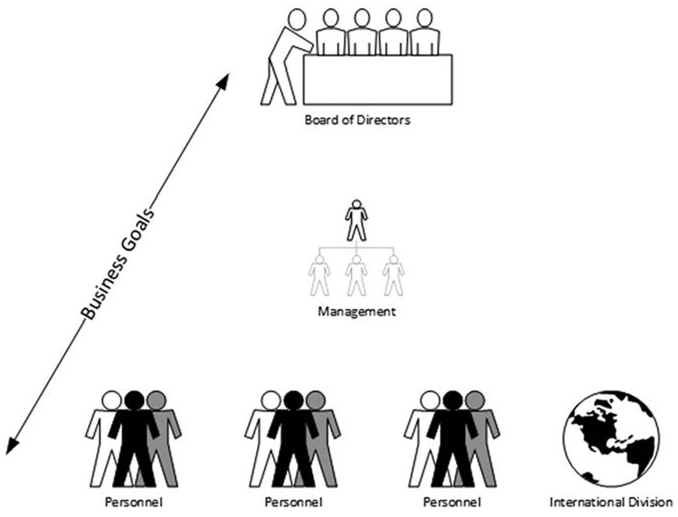
Figure 1.2 High-Level Organizational Systems Perspective.
vision of the organization. Senior leadership works with middle management to develop achievable business goals to facilitate the achievement of the market goals of the organization. The middle managers work with the employees to establish the enabling goals to promote the business unit goals that facilitate the high-level organizational goals. Each level of the organization is interrelated and interdependent upon the other levels. In addition to domestic business relations, the organization must include any international business considerations. An effective organization will ensure that all levels of the organization, along with the various major components, work together well to achieve the business goals.
Since an organization does not operate within a vacuum (i.e., the internal environment), the external environment is a critical component of the systems perspective of the organization. Figure 1.3 provides a basic

Figure 1.3 Business Relationship with External Environment.
view of the relationship between the internal or company environment and the external environment involving the customers and any necessary financing for the company. For instance, the company develops plans and goals to achieve a product(s) that will interest the customers. The company borrows money from various financing sources to allow the company to operate and produce the desired outcome. The product is created and distributed to the stores or outlets that would enable the customers to purchase the product. Public opinion and external regulators also interact with the organization influencing the viability of the product. The external environment has a significant impact on any product that a company offers to the public. The cycle continues as new goals and products are developed and sold.
While the business relationship of the internal and external systems indicated in Figure 1.3 highlights the prominent business system, Figure 1.4 focuses on the internal organizational system that makes the organization function. Figure 1.4 does reflect all the possible departments in an organization; the figure is illustrative for the discussion.
Risk professionals must understand the internal systemic perspective. Each department presented in Figure 1.4 interacts with the other departments exchanging inputs and outputs to create and achieve various goals throughout the organization. Each business unit is dependent upon other business units to operate. For instance, marketing promotes a product that the sales team sells to customers. The manufacturing department creates the product, and quality assurance verifies the quality. Packaging ensures the product is packaged safely based on feedback from customer service. The finance and legal departments perform critical roles to ensure success. At the same time, IT and telecom provide the infrastructure so that the employees can perform their respective jobs.
The supplier icon represents the supply chain system, which is often as complex, and sometimes more so than the organization's complexity. All of the departments and processes function as part of the system to ensure the organization achieves the functional and strategic goals - this is an excellent example of synergy; the sum of the system is more significant than any single process.
Several teams are not reflected in Figure 1.4 but play critical roles in the success of the entire system, the risk professionals. Security, risk management, business continuity (BC), disaster recovery, and facilities

Figure 1.4 Internal Systems Perspective.
management are some of the examples that allow the business operation to function with the necessary protective measures to safeguard the people and the property assets of the organization. The risk professionals must understand the organizational systems that operate and the impact that change might have on the system. A change initiative designed to affect a single process within a department might have considerable influence on another process in a different department.
A change initiative proposed by the security department intended to mitigate the risk of release associated with personally identifiable information of customers (e.g., financial applications for a car) could have unforeseen negative consequences. For instance, the security team installs a series of new security cameras covering an area where loans are processed. The security team failed to provide proper notification beyond the processing team leadership. The employees see the latest cameras and believe their respective managers are watching them for work productivity and break documentation. The cameras were intended to increase security, but instead created a labor relations issue because the initiative was not appropriately communicated; one business unit created problems for another business unit(s) because of poor change management practices.
Another example of a negative impact involves the new technician in a small IT department making changes to the accessibility of programs (i.e., limited permissions to an application, thereby removing access to the program for some people) without notifying everyone using the programs. While the action could have been a mistake or an oversight by the new employee, the result has systemic implications within the organization. Change the example to an email server interacting with the active directory; the change could result in hundreds of people not having email access (Figure 1.4).
Figure 1.5 illustrates the external interdependencies and interrelatedness of organizations. The high-rise building in the center represents an organization with connections to the surrounding business. The surrounding companies provide food, dry cleaning services, transportation, office supplies, and many other resources upon which the central organization depends. The surrounding businesses rely on vendor relationships as indicated by the arrows (i.e., Figure 1.5) - it is a societal dependencies system. The example depicted in Figure 1.5 is appropriate at the local, regional, state, country, and international levels.
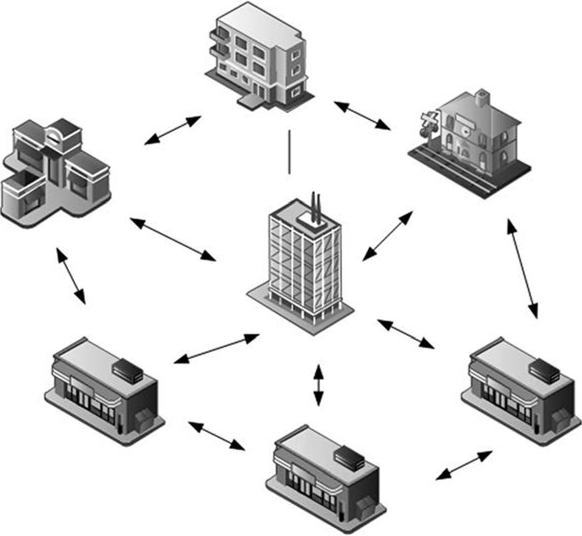
Figure 1.5 External Systems Perspective - The Influence of Societal Involvement.

