Data and method
In this analysis we use data from three sources. In the multiplier analysis, we use data from the already prepared symmetric input-output table of the Statistical Office of Republic of Slovenia (SORS) from 2014 (latest year of publication available). For the estimation of macroeconomic effects, we use municipality-level data of Statistical Office of Republic of Slovenia, database Si-Stat, and data from the yearly reports of Ministry of Culture of Republic of Slovenia in years 2008-2017. The latter provide detailed
84 Andre/ Srakar and Marilena Vecco statistical assignment of the given funds for digital transformation of cultural heritage (budget line item: Digital transformation, available only for the studied years 2008-2017) to each organization to the municipality of its location. We exclude the funds provided to libraries, due to ambiguous reporting (some years have no data on this budget line item, while in many it is reported differently, either only for public libraries or also for other organizations). This provides us with a possibility to assign libraries as a control group in our analysis.
In the third part of the analysis we use data of ENUMERATE survey, in three waves, for years 2012, 2013, and 2015. ENUMERATE started in 2011 as an EC-funded project, led by Collections Trust in the UK. As of 2014, the project became part of Europeana v3 led by Collections Trust and the DEN Foundation in the Netherlands. The primary objective of ENUMERATE is to create a reliable baseline of statistical data about digitization, digital preservation, and online access to cultural heritage in Europe. The first ENUMERATE project brought about major improvements in the quality and availability of intelligence about digital heritage. Again, we also use data from the yearly reports of Ministry of Culture of Republic of Slovenia and assign libraries as control group.
Figure 6.1 shows the short illustration of sample used in our study. For Slovenia, the sample of organizations is represented by 56 organizations (classified into museums; archives; libraries; and other organizations1) for 2012, 57 for 2015, and 54 for 2015. A brief visualization of the distribution of those organization types is shown in Figure 6.1 (top right part of the figure).
According to the summary of the last Slovenian National Programme for Culture 2014-2017, the chapter on digitization envisages, besides the digitization and safe storage of content, the provision of on-line accessibility to all digital cultural content, with particular care devoted to content adapted to young users, cultural minorities, and other vulnerable groups. An optimal
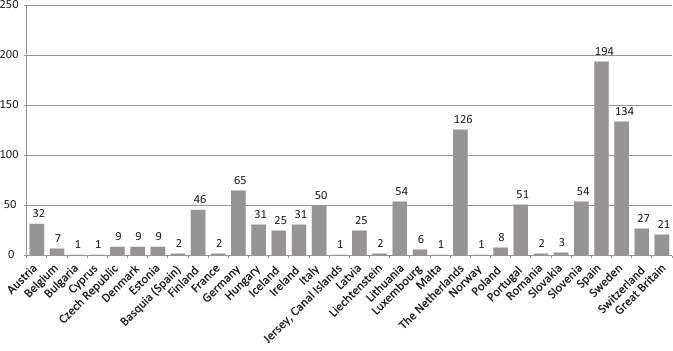
Figure 6.1 Number of participating organizations in ENUMERATE, 2015.
Source: Lesjak and Vodeb (2016, p. 87).
A program evaluation approach 85 organization and free accessibility of digitized cultural content, created with public funds, is in the public interest, as in this way it serves educational, creative, research, and business purposes. In this context, we must not forget the issue of accessibility of work of contemporary authors, where the key challenge is to ensure adequate management and the protection of digital rights.
The following important measures and projects have been realized so far in Slovenia (Copic & Srakar, 2015):
- - In 2005, the Slovenian Music-Information Centre (SIGIC) in Ljubljana was established with an ambition to serve as a basic information center for accessing information on Slovenian musicians, music, musical heritage, and activities in this area. In 2007, a web portal with presentation of the Slovenian theatre SIGLEDAL was formed; since 2010, it has received acknowledgment and financial support from the ministry in charge of culture.
- - In 2005 and 2006, a network of 15 multimedia centers in all statistical regions across Slovenia was established. Later, another four were included. A sum of 1.3 million EUR was invested in these centers, of which more than half of the amount was obtained from the European Structural Funds. Additionally, a separate accounting entry for financing activities connected to the regional cultural centers was planned, with the goal to increase the number of cultural institutions and their activities that are presented in individual regional Internet portals; to provide information on cultural themes, events, and activities in the regions; and to enable connection to the national cultural portal.
- - The portal KAMRA—with the intention to include libraries, archives, museums, associations, local study centers, and multimedia centers— started in 2005 with ten Slovenian regional libraries. The portal is especially intended for knowledge of a specific geographical area and it therefore includes digital information created at the regional and local level.
- - The National and University Library (NUK) developed the Internet portal “Digital Library of Slovenia” (d-Lib.si) and connected its digital content to the European Digital Library. It was placed on the Internet in 2006. It has the ambition to act as the national knowledge management portal and it offers free searches by source and access to digital content—magazines, books, manuscripts, maps, photographs, music, and handbooks. Access to the collection on the portal is free.
- - The improvement of ICT equipment in public libraries is very much connected with the development of the Co-operative Online Bibliographic System and Services (COBISS), which functions as an integrated and shared bibliographic tool of the Slovenian library network where all kinds of libraries in the country cooperate and participate. Libraries are already changing into information nodes and digital content providers.
- - The priority of digitizing cultural heritage suffers from a lack of coordination, although the need to set up an inventory of ongoing digitalizationprojects has been recognized. The leading institutions are the national library and state archives, the first with digitized library materials, such as manuscripts, newspapers, and other periodicals as well as non-book materials, like postcards, pictures, graphic art, maps, and music (the biggest project of digitization is a collection of articles of older Slovenian authors which includes 100,000 scans), and the second with old archival documents of different public sources (the most extensive project is the scanning of the Emperor Francis Cadastre, which included 28,000 recordings or 2,800 recorded cadastral municipalities with 28,000 cadastral maps). National radio and television are expected to become another competence center for digital transformation of cultural heritage. However, digital transformation of radio-diffusion broadcasting presents a problem and Slovenia is in the last position of the European states in this area.
- - A new portal Culture.si was set up by the Ministry of Culture in 2010. It is intended as a presentation of all relevant data in the field of culture in Slovenia to foreign visitors. It offers four major services: an up-to-date address book, logo, and logo banks for downloading and use according to their specific licenses, calendar of international events, and reference articles on Slovene culture.
- - In the framework of European Capital of Culture 2012 a program module LIFETOUCH devoted to digital presentation and experimentation of the art events has been formed. The part of the Maribor 2012 cyber space, intended for the program section LifeTouch, should become a place, where a sort of media experiment is unravelling, and an experiment that connects and gathers contents related to the ECOC Maribor 2012 from other media sources. The second part of the program cycle LifeTouch was the publication of (auto) reflections.
Although the acceptance of three important legal documents for digital culture (in 2006 the Legal Deposit Act; and Protection of Documents and Archives and Archival Institutions Act and in 2007 the Cultural Heritage Protection Act) could be considered as the realization of the strategic documents, legislation is just an instrument like the strategic documents and not the end in themselves. These acts revise previous legislation or bring new legal foundations to libraries, archives, and museums for collecting, manipulating, preserving, and use of digitized and digitally produced publications and archival documents which are of long-term importance. In their regulative capacity, they offer important legal grounds for positive developments of the information society in these fields.
Assignment of the ministry funds to digitalize cultural heritage (excluding libraries) in Slovenia is presented in Table 6.2. The bulk of the funds was assigned to Ljubljana-based organizations and some other larger cities (Celje, Maribor, Koper, Ptuj, Nova Gorica).
Figure 6.2 presents basic descriptives for some of the main variables from ENUMERATE survey, shown only for Slovenian organizations
Table 6.2 Assignment of funds, ministry budget item line “digitalization” (libraries excluded), 2008-2017
|
Obcina/leto |
2008 |
2009 |
2010 |
2011 |
2012 |
2013 |
2014 |
2015 |
2016 |
2017 |
|
Ljubljana |
253,454.92 |
516,766.22 |
465,818.84 |
515,166.44 |
475,263.87 |
401,690.30 |
364,446.00 |
288,812.00 |
265,407.78 |
262,086.78 |
|
Grosuplje |
36,954.96 |
|||||||||
|
Velike Laste |
4,920.00 |
|||||||||
|
Vrhnika |
24,780.00 |
20,600.00 |
23,000.01 |
15,099.97 |
9,600.00 |
9,500.00 |
7,779.97 |
|||
|
Celje |
112,000.00 |
55,471.00 |
42,421.61 |
27,331.06 |
18,513.99 |
16,248.00 |
14,040.00 |
14,040.00 |
9,449.00 |
11,449.00 |
|
Maribor |
76,000.00 |
51,854.98 |
39,462.57 |
34,865.12 |
22,485.99 |
18,552.00 |
17,280.00 |
20,280.00 |
14,811.00 |
17,091.00 |
|
Köper |
41,500.00 |
48,670.00 |
25,236.77 |
22,542.00 |
11,207.01 |
9,276.00 |
18,639.97 |
8,640.00 |
5,670.00 |
7,046.00 |
|
Ptuj |
41,500.00 |
43,716.95 |
196,236.77 |
190,542.00 |
157,916.25 |
158,076.00 |
108,640.00 |
108,640.00 |
105,670.00 |
97,046.00 |
|
Kostanjevica na Krki |
49,600.00 |
40,000.00 |
9,999.98 |
|||||||
|
Murska Sobota |
12,750.00 |
932.80 |
4,000.06 |
|||||||
|
Slovenj Gradec |
18,600.00 |
3,932.80 |
4,000.06 |
|||||||
|
Kranj |
3,000.00 |
932.80 |
2,000.03 |
|||||||
|
Nova Gorica |
16,200.02 |
19,582.83 |
6,417.00 |
7,766.25 |
4,668.00 |
4,320.00 |
4,320.00 |
2,835.00 |
3,523.00 |
|
|
Skofja Loka |
1,000.00 |
932.80 |
2,000.03 |
6,500.00 |
6,500.00 |
|||||
|
Kamnik |
1,100.00 |
932.80 |
2,000.03 |
|||||||
|
Idrija |
2,000.00 |
932.80 |
2,000.03 |
|||||||
|
Ivancna Gorica |
14,600.00 |
1,800.00 |
1,800.00 |
7,225.00 |
6,399.97 |
(Continued)
|
Ohcina/leto |
2008 |
2009 |
2010 |
2011 |
2012 |
2013 |
2014 |
2015 |
2016 |
2017 |
|
Velenje |
700.00 |
932.80 |
2,000.03 |
|||||||
|
Radovljica |
1,600.00 |
932.80 |
2,000.03 |
|||||||
|
Postojna |
800.00 |
932.80 |
2,000.03 |
|||||||
|
Piran |
9,000.00 |
932.80 |
4,000.06 |
|||||||
|
Ajdovscina |
9,000.00 |
2,000.03 |
||||||||
|
Brezice |
800.00 |
932.80 |
2,000.03 |
|||||||
|
Tolmin |
4,000.00 |
932.80 |
2,000.03 |
|||||||
|
Moravce |
2,400.00 |
|||||||||
|
Zagorje ob Savi |
680.00 |
|||||||||
|
Metlika |
932.80 |
2,000.03 |
||||||||
|
Novo mesto |
932.80 |
2,000.03 |
||||||||
|
Koievje |
932.80 |
2,000.03 |
||||||||
|
Trbovlje |
932.80 |
2,000.03 |
||||||||
|
Jesenice |
2,000.03 |
Source: Ministry of Culture of Republic of Slovenia, own elaboration.
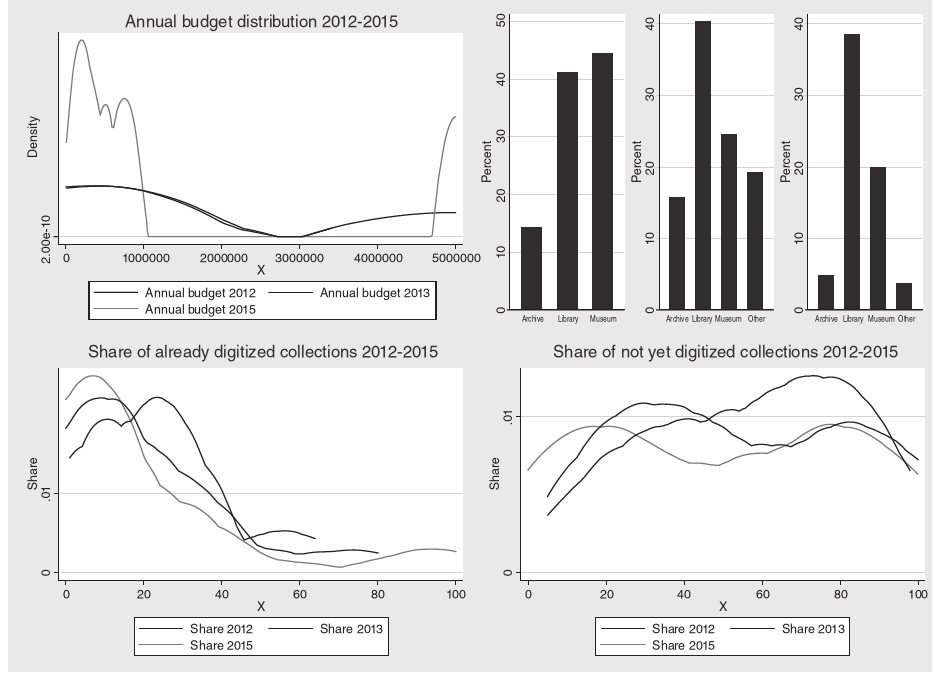
Figure 6.2 Visualization of basic descriptives of ENUMERATE data for Slovenia, 2012-2015. Source: Own elaboration.
participating in the study. Organizational budget is clearly bimodal, with one peak in the bottom part of the distribution, and one for organizations with budget, larger than 4,000,000 EUR. We avoid distributional problems of this variable by using non-parametric corrections in our models. While in 2012, there were slightly more museums than libraries participating in the survey, in 2013 and 2015, libraries predominated over museums, with archives lagging back in all studied waves of the survey. The variable of share of already digitized collections has the longest “right tail” for year 2015, i.e. in this year there were more organizations with almost completely digitized collection than in, respectively, 2013 and 2012 (with the latter having the least share of such organizations). Reversely, in 2015 there was the lowest number and share of organizations with almost no collections not yet digitized, with 2013 and 2012 following in respective order.
Figure 6.3 shows the total volume of investments in the digital transformation of cultural heritage over the studied period 2008-2017. The dynamics of the funds follow the general budgetary trends in public budget for culture in Slovenia (analyzed in detail in Srakar, 2015): they reach their peak in years 2009-2011 and drop ever since, with stabilization only in years after 2015.
Our empirical strategy follows two strands. In the first we present a simple input-output-based multiplier analysis, using production multipliers, calculated previously in studies of Srakar (2015) and Crnigoj, Bartolj, and Srakar (2018). Based on the multidisciplinary character of investments in the digital transformation of cultural heritage (being on the bound of cultural and compute-related investments), two possibilities of sectorial multipliers are used: either sector “Creative, arts, entertainment, library, archive, museum, other cultural services; gambling and betting services”
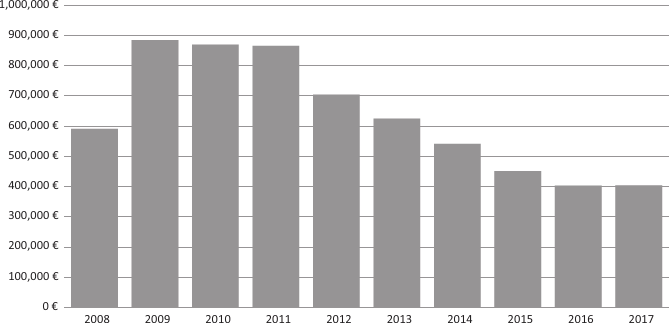
Figure 6.3 Investments in digitalization of cultural heritage, Ministry of Culture, 2008-2017.
Source: own calculations based on Ministry of Culture's data.
A program evaluation approach 91 or “Computer programming, consultancy and related services; Information services.” Additionally, we use as third possibility, a simple linear combination of the two. The two multipliers in year 2014 amount to 1.4162 (first sector) and 1.5280 (second sector).
In the second strand we use models of dose and response continuous treatment assignment (Hirano & Imbens, 2004; Bia & Mattei, 2008; Ce-rulli, 2012), described shortly below to derive causal estimates of the ministry investments and based that we have continuous treatment in the form of a specific amount assigned in specific year.
In many socioeconomic and epidemiological contexts, interventions take the form of a continuous exposure to a certain type of treatment. From a program evaluation perspective, indeed, what is relevant in many settings is not only the binary treatment status but also the level of exposure (or dose) provided by a public agency. Compared with similar models—and in particular the one proposed by Hirano and Imbens (2004)—this model does not need a full normality assumption, and it is well suited when many individuals have a treatment level of 0. Moreover, it may account for treatment endogeneity by exploiting an instrumental-variables (IV) estimation in a continuous treatment context.
Consider a policy program where a binary treatment is assigned not randomly (i.e., according to a structural rule). The program provides a different “level” of treatment (or dose t) to treated—ranging from 0 (absence of treatment) to 100 (maximum treatment level).
Two groups of units are thus formed:
i untreated, whose level of treatment (or “dose”) is zero, and
ii treated, whose level of treatment is greater than zero.
We are interested in estimating the causal effect of the treatment variable t on an outcome y by assuming that treated and untreated units may respond differently to observable confounders (x). The objective is to estimate a dose-response function of y on t.
Suppose we have two exclusive outcomes, when a unit is treated, y, and when the same unit is untreated, yo- tv is the treatment indicator, taking value 1 for treated and 0 for untreated units, gi(x) and go(x) are the unit responses to the vector of confounding variables x when the unit is treated and untreated, p and po are two scalars, e and cq two random variables with zero unconditional mean and constant variance, and h(t) is the response function to the level of treatment t.
We can define the Dose-Response-Function simply by averaging AT£(x, t) on x:
92 Andre) Srakar and Marilena Vecco
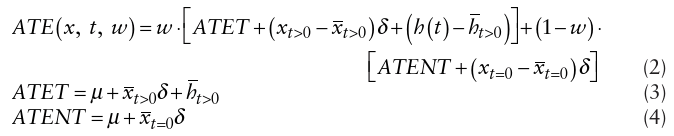
Under previous definitions and assumptions, the baseline randomcoefficient regression can be obtained (Wooldridge, 1997, 2003):

Where tj, = eQi + w(eu
Equation 5 provides the baseline regression for estimating the basic parameters (Ho, Hi, So, Si, ATE) and then all the remaining ATEs.

