Evidence of human T. cruzi infection in pre-Colombian civilizations
For more than a century, examination of skeletal tissue from ancient human remains has demonstrated information useful for the understanding of some diseases in antiquity.18 Unfortunately, only a minority of human diseases leave a detectable impact on bone. Hence, during the past few decades, efforts have been made to evaluate whether other diseases could be detected by examination of the soft (i.e., nonskeletal) tissues in mummified human remains.
One of the first reports related to Chagas disease in human remains from South America was from Rothhammer et al.,44,45 which describes cardiac lesions compatible with the chronic clinical picture of the disease. The evidence was obtained from 35 bodies dating from 470 BC to 600 AD that were mummified in the desert of Atacama in Chile.
A Peruvian Inca mummy was studied by Fornaciari et al. in 1992,21 who showed evidence of Chagas disease in the lesions described; additionally they demonstrated the presence of amastigote nests in the heart muscle of the mummy.
In 1997 and 1999, molecular studies of mummies from the Atacama desert was performed. For the first time, they isolated T. cruzi DNA from 4000-year-old mummified tissue.16
Ferreira et al.46 published an article on mummies from San Pedro de Atacama, which confirmed chagasic infection in specimens up to 2000 years old. All of these reports confirm the hypothesis discussed in this chapter on human migration and Chagas disease.
Most of these studies have taken the form of individual case reports. These are valuable and will remain so for a long time; however, the study reported herein represents an effort to determine whether examination of such mummified human soft tissues can reconstruct the behavior of a disease in entire ancient populations.19
We selected American trypanosomiasis, more popularly known as Chagas disease, as an appropriate candidate because of its high prevalence in the area of our study.
Initially, we attempted to detect the presence of T. cruzi using molecular biology methods that targeted a segment of the parasite’s DNA in excess of 300 base pairs. Although we succeeded in that effort, the target segment proved to be too long for the sensitivity needed for a study involving a large number of specimens. A shorter segment involving a probe had the necessary sensitivity, but required considerable manipulation of the amplified product.17
Our final effort, described in detail in this report, used a short segment of kineto- plast DNA with less handling of our amplicon. This technique proved to have the sensitivity we needed with minimal manipulation to bring about the hybridization reaction. This was then applied to extracts of tissue specimens from 283 mummified human remains from a South Andean coastal zone. The results enabled us to construct the paleoepidemiology of Chagas disease in that area over a period of 9 millennia, from the appearance of the first humans in that region to the near
present.19
Members of the Chinchorro cultural group were the first to settle this coastal segment. The oldest body from this group was radiocarbon-dated to about 9000 years ago. Stable isotope reconstruction of their diet indicates that approximately 90% of their diet was of marine origin, consistent with some of their grave artifacts. We have only a few samples of their housing because of lack of rain, which meant they did not need a waterproof shelter. Reconstruction of several of these shelters indicates that a series of slender wood poles were arranged in a circular pattern, and the top ends were gathered together in the form of a wooden tepee. The cover of the pole skeleton did not survive, but was most probably composed of intertwined reeds harvested from the brackish water at the river mouth. Such a dwelling would be ideal for nesting by the Chagas insect vector.
After more than 5000 years of residence with this type of a marine-based strategy, the Chinchorros were replaced by highland migrants, who we call Alto Ramirez. Arriving at the coast in about 1000 BC, they introduced agriculture. Their shelters were slightly larger than those of the Chinchorros, with walls of cane and reeds; however, because they still employed plant products in parts of their structures, these remained attractive for insect nesting.
By 4000 BC, the rapidly expanding highland population called Tihuanaco extended their territory to the sea, where it remained the dominant force until their empire crumbled in about 1000 AD. Emerging from the resulting politicocultural chaos of small, fragmented groups, were the people now known as Maitas Chiribaya. By this time, they had drifted from a mixture of marine and agricultural strategies more toward the latter, and this remained the case until the Incas arrived, preceding the Spanish.
Beginning at the end of the Chinchorro period the trend in these societies was one of progressive technology development, particularly in textile production. Their shelters also slowly increased in sturdiness. However, local resources were limited, so opportunities remained available for insect vectors to move in permanently. The arrival of the Spanish initiated the historic period. The following cultural and societal chaos rarely offered the native populations improvements with respect to living quarters.
Thus, the picture painted by archeological findings of events in the past nine millennia begins with primitive dwelling structures that were altered by the succession of cultural groups until historic times, but not to a degree that would prevent infestation by the Chagas disease’s insect vector.
Our results corroborate the high genetic diversity of the T. cruzi taxon and demonstrates the ancient pattern displayed by this pathogen, suggesting that bats are the key reservoir in understanding the diversification of this microorganism. The rise of whole-genome sequencing for ancient genomes allows a better understanding of the evolution of the pathogens and to determine whether or not there is a coevolution process within T. cruzi and its human host (Fig. 2.7).
The intervention of the pre-Hispanic cultures in their environment over time resulted in different types of housing and land management, which led to the emergence of new T. cruzi genotypes in the transmission cycles of the parasite.20
Another interesting study of T. cruzi was in human remains dating back 4500—7000 years obtained from a Brazilian archeological site. From these remains the analyses of an aDNA sequence corresponding to the T. cruzi I was recovered. The mummy was a woman of ~ 35 years of age from a hunter-gatherer population. She was found in the Abrigo Malhador archeological site, Peruacu Valley, Minas Gerais State. In this region, the semiarid ecosystem is predominant, thus it has a dry climate, and soil with a basic pH. These conditions have contributed to the preservation of specimens.
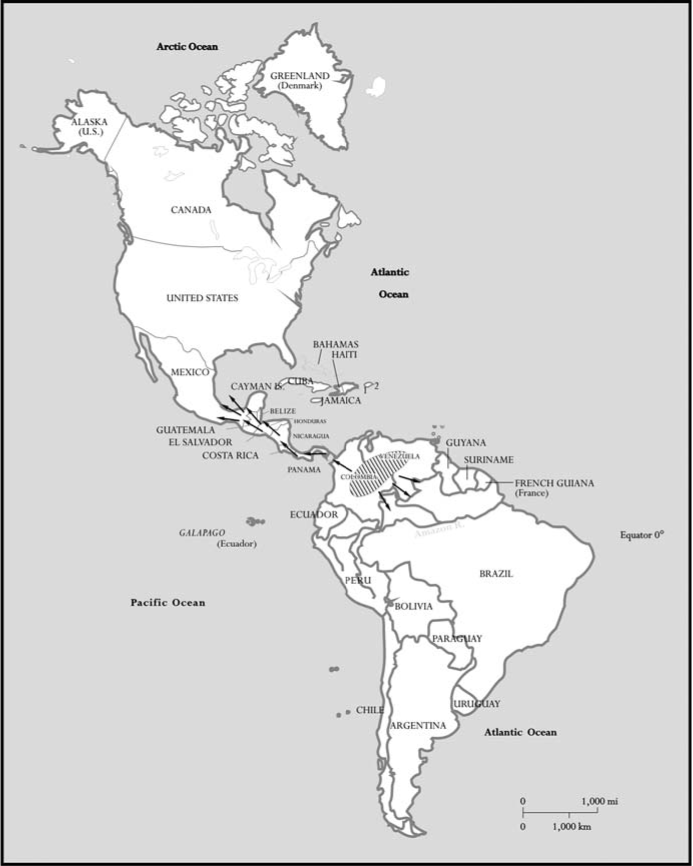
Figure 2.7 T. cruzi DTUs association with human natural history in the past 9 millennia. Source: After Guhl F, Aufderheide A, Ramirez J.D. From ancient to contemporary molecular eco-epidemiology of Chagas disease in the Americas. Int J Parasit 2014;44:605-12.
This report47 showed that T. cruzi human infection in Brazil is ancient, dating back at least 4500 years and therefore occurring in hunter-gatherer populations largely preceding T. infestans domiciliation. The presence of the T. cruzi I in humans 4500-7000 years ago in Minas Gerais State, where this genotype is currently absent, suggests that the distribution pattern of T. cruzi genotypes in humans has changed over time. Moreover, the recovery of an aDNA sequence and the possibility of genotyping parasites from human remains make it possible to reconstruct the early dispersion patterns of T. cruzi subpopulations. On the basis of these results, one may speculate that the current outbreaks of human T. cruzi infection, independent of triatomine domiciliation, are reemergences of the ancient epidemiologic scenario of Chagas disease in Brazil.
Paleoparasitological studies of Chagas disease may clarify the antiquity of this disease in the Americas through extraction and amplification of T. cruzi aDNA from human remains, other animal hosts, and vectors fragments found in archeological findings.
Phylogenetic analysis of this material would also shed light on different aspects of host—parasite coevolution and parasite transmission cycles.

