Experimental Results and Discussion
Data mining techniques are applied to identify the patterns existing in the data and to get a better understanding of it. The employed data is attained through a technical research website, Data Tang. It holds a total of 1,200 records and the representation of the attributes takes place in Table 6.1. Here, the drug names are denoted by the use of uppercase alphabets, namely А. В, С, X, Y. The numeric attribute represents that attribute values are frequent, whereas the discrete attribute denoting the binary attribute includes a set of tw'o values. The data comprises medical diagnosis data, including age, sex, potassium level, sodium level, blood pressure, cholesterol level, and drug. Fundamentally, a doctor could take care of the patient and offer the drug based on the patient’s details.
Correlation analysis is a major process of data preparation, because correlation represents the prediction relativity that can be utilized. The employed data includes numerical and discrete attributes. Therefore, the Chi-square test is dependent upon the comparative analysis of the correlation among the attributes. The associated outcome present in Table 6.2 demonstrated that every attribute apart from sex has a correlation with the drug.
TABLE 6.2
The Result of Correlation Analysis
|
Attribute Name |
Target Attribute |
Correlation Status |
|
Age |
Drug |
Correlated |
|
Na |
Drug |
Correlated |
|
К |
Drug |
Strongly Correlated |
|
Sex |
Drug |
Irrelevant |
|
BP |
Drug |
Strongly Correlated |
|
Cholesterol |
Drug |
Correlated |
TABLE 6.3
Result Analysis of Proposed b-ELM with Existing Methods
|
Methods |
Accuracy |
Running Time |
|
b-ELM |
9S.54 |
0.15 |
|
SVM |
95.00 |
0.74 |
|
BPNN |
97.00 |
1.70 |
|
Decision Tree |
89.00 |
0.26 |
Table 6.3 portrays the results offered by the presented b-ELM-based MRS model in terms of accuracy and running time. Fig. 6.6 shows the accuracy analysis of the presented model over the compared methods. The figure clearly demonstrated that the decision tree (DT) model has offered ineffective recommendations by offering a minimal accuracy of 89%. It is also observed that the SVM model has led to a slightly higher accuracy of 95%. In the same way, it is depicted that the BPNN model has resulted in a manageable outcome with an accuracy of 97% whereas the proposed b-ELM-based MRS leads to a maximal performance with the highest accuracy of 98.54%.
Fig. 6.7 performs a comparison of the response time analysis of the presented model over the compared methods. The figure clearly demonstrated that the BPNN model has offered ineffective recommendation by offering a maximum response time of 1.70 ms. It is also observed that the SVM model has led to a slightly lower response time of 0.74 ms. In the same way, it is depicted that the DT model has resulted in a manageable outcome with the response time of 0.26 ms, whereas
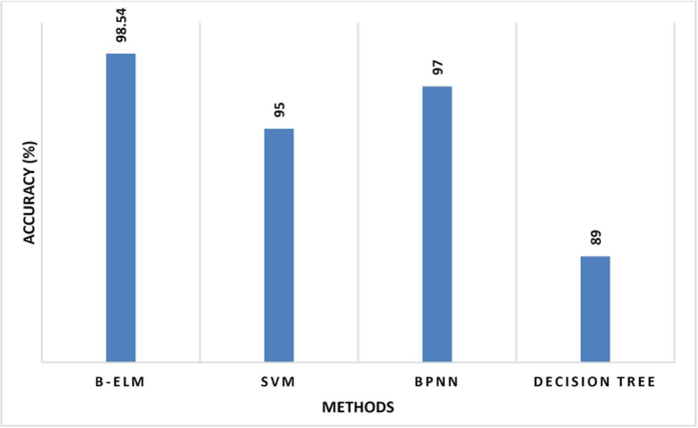
FIGURE 6.6 Comparison of different models in terms of accuracy.
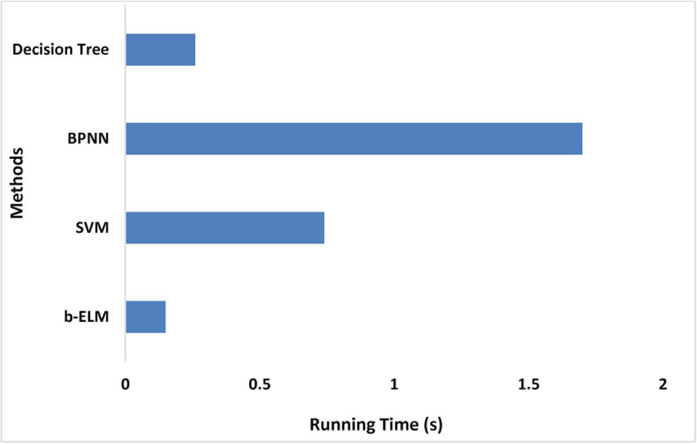
FIGURE 6.7 Comparison of the response time analysis.
the proposed b-ELM-based MRS leads to a maximal performance with the least response time of 0.26 ms.
Conclusion
This chapter has introduced an effective MRS by the use of the b-ELM model. The presented MRS involves a set of components, namely database system, data preparation, RS model, model validation, and data visualization. Besides, a mistake-check process has also been applied for ensuring diagnosis accuracy and service quality. Data mining techniques are applied to identify the patterns existing in the data and to get a better understanding of it. The employed data is attained from a technical research website. Data Tang. It holds a total of 1,200 records. The obtained simulation outcome indicated that the MRS model has offered an effective recommendation of drugs with a maximum accuracy of 98.54% with a minimal response time of
0.15 ms.
References
[1] Santos, M. A., Munoz, R., Olivares. R„ Rebougas Filho, P. P.. Del Ser, J. and de Albuquerque. V. H. C., Online heart monitoring systems on the internet of health things environments: A survey, a reference model and an outlook. Information Fusion, 53, 222-239, 2020.
[2] Shankar. K., Lakshmanaprabu, S. K., Gupta, D., Maseleno, A., and De Albuquerque, V. H. C. Optimal feature-based multi-kernel SVM approach for thyroid disease classification. Journal of Supercomputing, 1-16, 2018.
[3] Elhoseny. M.. Shankar, K., and Uthayakumar, J. Intelligent Diagnostic Prediction and Classification System for chronic kidney disease. Scientific Reports, 9 (1). 1-14, 2019.
[4] Raj. R. J. S., Shobana, S. J.. Pustokhina, I. V.. Pustokhin, D. A., Gupta. D.. and Shankar, K. Optimal Feature Selection-Based Medical Image Classification Using Deep Learning Model in Internet of Medical Things, IEEE Access, 8, 58006-58017, 2020.
[5] Khamparia, A.. Gupta, D.. de Albuquerque, V. H. C„ Sangaiah, A. K. and Jhaveri,
R. H., Internet of health things-driven deep learning system for detection and classification of cervical cells using transfer learning. Journal of Supercomputing, 76, 1-19, 2020.
[6] Fernandez-Carames. T. M.. Froiz-Mfguez, I., Blanco-Novoa. O. and Fraga-Lamas, P., Enabling the internet of mobile crowdsourcing health things: A mobile fog computing, blockchain and IoT based continuous glucose monitoring system for diabetes mellitus research and care. Sensors, 19 (15), 3319, 2019.
[7] Kantor, P. B.. Ricci. F„ Rokach. L., and Shapira. B. Recommender Systems Handbook, Springer: Heidelberg. Germany. 2011.
[8] Adomavicius, G., and Tuzhilin, A. Toward the next generation of recommender systems: A survey of the state-of-the-art and possible extensions. IEEE Transactions of Knowledge and Data Engineering, 17, 734-749, 2005.
[9] Sezgin, E.. and Ozkan, S. A systematic literature review on health recommender systems. in E-Health and Bioengineering Conference (EHB), IEEE. 2013, 1-4.
[ 10] Graber, F.. Beckert. S., Kuster. D„ Schmitt. J.. Abraham. S., Malberg. H„ and Zaunseder,
S. Neighborhood-based collaborative filtering for therapy decision support. Journal of Healthcare Engineering, 8, 2017.
[11] Adomavicius, G., and Tuzhilin, A. Toward the next generation of recommender systems: A survey of the state-of-the-art and possible extensions, IEEE Transactions of Knowledge and Data Engineering, 17, 734-749, 2005.
[12] Ramakrishnan. N.. Keller. B. J.. Mirza, B. J.. Grama. A. Y., and Karypis, G. When being weak is brave: Privacy in recommender systems, arXiv preprint cs/0105028, 2001.

