Deductive Versus Inductive Logic
Two types of logic are used in research: deductive and inductive. Deductive logic relies on a top-down approach that starts with the more general and moves to the more specific. You first develop a theory' on your topic based on your research question(s). To test that theory, you then develop one or more hypotheses. The hypotheses simply present the theory in an operational, testable form.
Through data collection that addresses these hypotheses, you can narrow the focus even further by testing each hypothesis. Through this hypothesis testing, you can confirm or disprove your original theory.
The main theory underlying our first dataset, the UZA dataset, is the theory of highway induced traffic and highway' induced development. The theory states that additions to highway capacity' generate additional traffic and sprawl development (Ewing, 2008; Ewing, Hamidi, Gallivan, Nelson, & Grace, 2014). Highway building precedes growth. The alternative theory is that of induced highway investment, that is, that departments of transportation are simply responding to growth that has already occurred. Highway building follows growth. Each theory has its proponents.
The main theory underlying our second dataset, the Household Dataset, is that the built environment, or specifically, the D variables mentioned in Chapter 1, affect individual travel behavior. This is sometimes referred to as environmental determinism (Ewing & Cervero, 2010; Ewing, Hamidi, & Grace, 2016). The alternative theory is that of residential self-selection, that is, that people chose to live in places that support their preexisting lifestyle preferences. These people would drive more, or use alternative transport modes more, wherever they lived.
All of these theories lead to testable hypotheses, such as that households living in compact areas produce less vehicle miles traveled (VMT) than those living in sprawling areas, measured in terms of density or compactness indices. Of course, based on a correlation between the two variables, you cannot distinguish between the two theories—environmental determinism and residential self-selection. That requires longitudinal data (Ewing & Cervero, 2010). The deductive process is probably the main process at work in quantitative research.
In contrast to deductive logic, inductive logic involves a bottom-up approach. In inductive reasoning, you begin with specific observations, detect patterns, formulate hypotheses that you can confirm from your observations, and finish by drafting a general theory' (Trochim, 2006). The inductive process creates a grounded theory and is probably the main process at work in qualitative research. The theory of environmental determinism, which is tested over and over in the planning literature, ultimately harkens back to the great works referenced previously (Jacobs, 1961, etc.). Qualitative research is beyond the scope of this book.
Timeframe
Within the research design itself, there are two basic timeframes: cross-sectional and longitudinal. A cross-section occurs at a single point in time, whereas a longitudinal study analyzes data over several discrete periods. A cross-sectional study provides
Types of Research 49 insights on what occurred at a particular time, whereas a longitudinal study reveals trends and is more definitive if the research goal is to infer causality.
Let us explain. Everyone has heard the expression “Correlation doesn’t equal or imply causation.” In Chapter 9, on Correlation, we set forth four conditions for causal inference. One condition for causal interference is theoretical plausibility. The theoretical basis for induced travel is economic. Additional highway capacity reduces the generalized cost (price) of travel in the short-term by reducing travel time. More travel is “consumed." In the longer term, improved accessibility near the highway facility attracts additional highway-oriented development, which increases VMT on the facility' and in the corridor (see Figures 3.1 and 3.2).
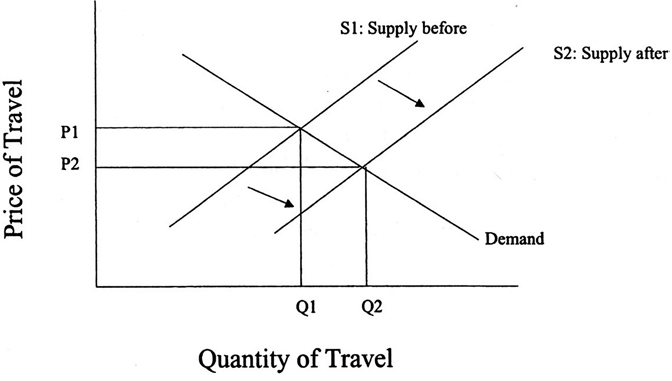
Figure 3.1 Short-Term Response to Added Highway Capacity
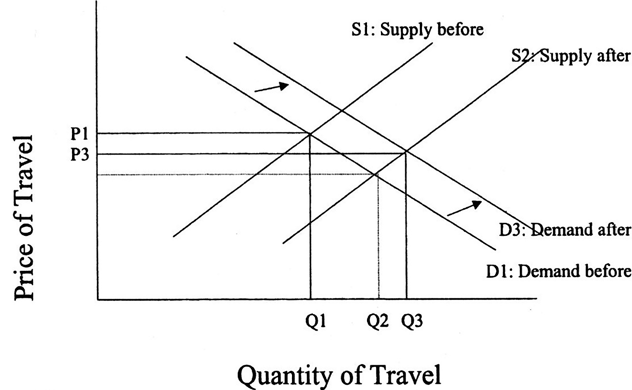
Figure 3.2 Long-Term Response to Added Highway Capacity
Another condition for causal inference is a strong association between variables. That can be established with cross-sectional data. We can and will, later in the book, show a strong association between lane miles of highway capacity and VMT.
The third condition for causal inference is the elimination of rival explanations for a given relationship. This can be partially accomplished with cross-sectional data by controlling statistically for confounding variables. The problem, of course, is that one can never measure and control for every possible influence on an outcome. The fact that Portland has lower VMT per capita than Atlanta may be due in part to less highway capacity, but may also be due to immeasurable and uncontrollable influences such as a different political culture, which may confound the relationship between highway capacity and VMT in a cross-sectional study. The beauty of longitudinal data is that these immeasurables may be relatively constant over time, and hence cancel out when one model changes in VMT over time.
The fourth condition for causal inference is a time sequence, with the cause always preceding the effect. We can say nothing about the time sequence from cross-sectional data since they are collected at a single point in time. Even structural equation modeling, which explores causal pathways, cannot establish a time sequence. SEM is described in Chapter 8 of Advanced Quantitative Research Methods for Urban Planners.
Only with longitudinal data can we be sure that the cause precedes the effect. Using the example of induced traffic and induced development, there have been studies that monitored traffic and development levels in highway corridors after highway widenings (Cervero, 2002). By comparing traffic in a corridor just before the widening, to traffic immediately after the widening, and in later years, researchers can estimate the short, medium, and long-term effects of the widening. To account for general trends in traffic growth, such studies often pair treated corridors with untreated control corridors. The time sequence is established by the fact that the treatment, that is, the widening, occurs between the before and after observations.

