Minimising cost and maximising effectiveness
Are policies complementary or redundant (the inaterbed effect)?
It is likely that a jurisdiction will not rely on a single instrument to address the emissions problem. A jurisdiction will often use several polices, all of which, hopefully will lower emissions. For example, a country might impose a ticket tax and also subsidise the use of biofuels. If several different policies are to be used, it is important to determine how these policies act together. Will they be additive, in the sense that implementing two policies will lead to a greater overall reduction on emissions? Or are these policies inconsistent, in that when one policy is implemented, such as an ETS, adding another policy, such as a ticket tax, will not have any additional effect on emissions (or indeed, could even make things worse)?These are important questions to answer,since several policies, especially ETSs and the proposed CORSIA, will not work as expected if other policies are being implemented.
If there is a single objective of a policy, such as reducing carbon emissions, then the easiest solution is to determine which is most efficient in achieving that objective, and simply implement that one - there is no point in adding other policies. It may be argued that the most efficient policy is a carbon fuel tax, which would directly address the emissions externality - provided the latter is straightforward to monetise. In any case, there should be a preference for trying to implement the most effective and efficient policy.
However, things may not be quite so simple. It could be that the preferred option is too difficult to implement, and that second best approaches will have to be used. This is especially so when there is uncertainty about how policies will work, or about the external cost/damage that would have to be internalised,
Review and further directions 241 and it may be advisable to use a mix of two or more policies (assuming that they are not inconsistent). In the literature on climate change policies under uncertainty, hybrid models have been suggested to get close to efficiency (Pizer, 2002).
It is also quite possible that there will be more than one objective, such as that of reducing emissions at minimum cost.There may be a concern about not imposing too high a cost on the passenger or keep the cost burden on the air transport industry low. Thus, a mixture of policies could be the best approach. For example, a government may choose to implement a ticket tax on the airlines, coupled with a subsidy on biofuels. This could be budget neutral, with the proceeds of the ticket tax being used to finance the cost of the subsidy. This combination of policies would also lessen the cost to the passenger.
If more than one policy is to be implemented, it is critically important to analyse how the policies interact. This is not often done. Once one policy is in operation, it is easy to suggest additional policies, with the objective of further increasing the reduction in emissions. Sometimes this is likely to work — for example, when a ticket tax is added to a fuel tax or when making airlines liable for VAT. However, in some important cases, this will not work.
These cases rely on quantitative constraints, rather than prices, to lower emissions — the most important of these are ETSs.The new CORSIA mechanism, to come into operation in 2021 for international air transport, also poses problems when coupled with other policies. The workings of quantitative policies are described in the chapter by Fichert, Forsyth and Niemeier and in the chapter by Maertens, Grimme and Scheelhaase in this volume. An ETS sets a physical limit on the allowable (usually CO,) emissions from the air transport industry, or a group of industries, and as a result, imposing additional policies has no additional effect on these emissions. Thus, if there is an ETS in operation in a given geographical market, a ticket or carbon tax, or a biofuel subsidy, will have precisely zero effect on emissions of CO, in this market, or may even be counter-productive if flights or aircraft are shifted to other, emerging markets outside the ETS s scope. These additional instruments are redundant, unless other mechanisms are introduced to counteract this result (see later in this chapter), or there are other objectives (such as revenue raising).This point has been recognised in the analysis of emissions reduction policies, and there is some literature on it (see Forsyth, Dwyer and Spurr, 2007; Fankhauser, Hepburn and Park, 2011), and it is sometimes termed the “waterbed” effect.2
This effect is explained in the chapter by Fichert, Forsyth and Niemeier in this volume. Figure 13.1 is taken from that chapter and deals with the case of an ETS. For simplicity, it is assumed that emissions vary in proportion to air transport output and that marginal and average costs are constant. The ETS limits the amount of emissions which may be produced by the air transport industry to an amount K.With a demand of D, and long-run average (and marginal) cost of LAC, emissions permits will be valuable.The price which passengers pay will be P , which adds the price of the permits to the costs of the airlines. Suppose the government imposes an additional policy instrument to reduce emissions, namely a tax set at t. This will have no effect on the quantity of emissions.
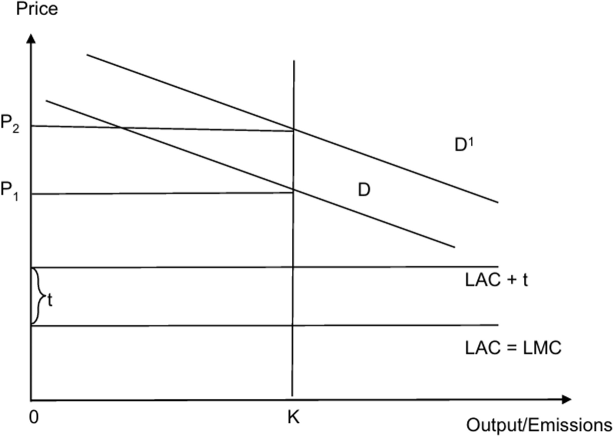
Figure 13.1 Interaction between ETSs and taxes.
The price of emissions permits will fall, in this case by the amount of the tax. The ticket tax will raise revenue for the government, but it will do nothing to reduce emissions of CO,. Under an ETS, the amount of emissions is fixed, no matter what additional measures (e.g. biofuel subsidies or voluntary offsets) are imposed.These additional policies are redundant.
Suppose that there is an ETS which targets the CO, emissions of a number of industries including air transport, and that trading between industries is permitted. Suppose that aviation is a net buyer of permits. If the government imposes an additional policy, such as a ticket tax, what is the impact on emissions in the regulated region? Airline prices will rise, but all this will mean is that other industries will take up the slack - the total CO, emissions will remain unchanged (the waterbed effect). Aviation emissions will fall, and this may be of relevance if these other emissions, such as those of NO ., are of concern. A ticket tax may will reduce the emissions of non-carbon emissions in the regulated market, but not carbon emissions?
The waterbed effect can be avoided if, at the same time as the aviation tax is implemented, the total allowances in the ETS are reduced by the same amount as the likely reduction in emissions as a result of the tax. With the present form of the European ETS, individual countries have been taking action to reduce emissions - this is one of the reasons why the prices of allowances have been remaining unexpectedly low (the waterbed effect in action). However, in 2019 a market stability reserve (MSR) was introduced to lessen volatility in allowance
Review and further directions 243 prices. As part of this change, a mechanism has been introduced which will result in allowances being permanently removed from the market under certain conditions. To the extent that the additional tax triggers a reduction in allowances on the market, there will be something of a reduction in the waterbed effect (on the MSR, see Hepburn et al., 2016). As of 2019, it was not clear how effective this mechanism will be in addressing the waterbed effect, nor whether in future aviation will still be included in the EU ETS or handled by CORSIA.
It might be wondered why the additional action, such as an aviation tax, is needed since the avoidance of the waterbed effect requires a reduction in allowances to accompany it — why not reduce allowances without introducing the tax? For many industries this is a pertinent question, but there is an answer in the case of aviation. In the regulated geographical market, the aviation tax reduces both CO, emissions, and non-CO, emissions. Even if a tax is not effective in reducing regional CO, emissions, it still will be effective in reducing non-CO, emissions. There is also the fiscal effect, since the tax raises government revenue while the ETS will not raise much revenue if allowances are partly free, as is the case with the European ETS. Revenue raising is not just a matter of a transfer — see Section 3.4. However, inclusion of non-CO, emissions in the ETS may be another option, which could eliminate the need for additional taxes (for some discussion, see Scheelhaase, 2019).
CORSIA-type mechanisms have some of the same properties as ETSs, though in some ways they are similar to taxes which must be spent on offsets. There is a quantitative switching point to emissions, set at 2020 emissions for the system coming into being for international aviation. Airlines can generate more emissions, but only if they purchase offsets for the excess emissions they create. Taking the actual emissions and the offsets required into account, the airlines are limited to the 2020 emissions levels. In effect they are achieving zero carbon growth if offsets work perfectly — something which is strongly questioned by critics (see Hemmings et al. in this volume).
Suppose an additional policy is implemented — for example, a ticket tax. This will increase the cost to the passengers (airline average cost, plus offset cost, plus tax), and the amount of air transport will be reduced. The actual amount of emissions will fall, but so too will be the number of offsets purchased by the air transport industry. The net un-offsetted emissions will be the same. There will be no change in offsetted emissions if offsets are genuine and priced correctly. The net global emissions will be unchanged. In this sense the tax is redundant (though it increases government revenue, and it will have an effect on noncarbon emissions).
What has been shown here so far is the interaction between an ETS or CORSIA mechanism and other policies such as airline taxes. What happens if both a CORSIA scheme is combined with an ETS? In the EU, it may be that air transport still remains subject to the ETS, and CORSIA, though it also may be that only one mechanism will be used.
The answer is quite straightforward if both schemes impose fixed constraints -either the ETS determines emissions and CORSIA is redundant and has noeffect on emissions, or the reverse happens, and the CORSIA scheme determines emissions and the ETS is redundant. Things are different, though, when trading with other industries is permitted.This is shown in Figure 13.2.
In Figure 13.2 the case of a tight ETS (air transport only) combined with a slack CORSIA constraint is shown initially. Airlines are permitted to create emissions up to a level C, beyond which they are required to purchase offsets for all the extra emissions beyond C. However, the ETS sets an allowable maximum K. This constraint is binding, and the CORSIA constraint is redundant. Alternatively, the case of a tight CORSIA could be shown.
Things become more interesting when air transport is part of a wider industrybased ETS. In this case, there is no strict constraint on air transport emissions, though there is a constraint on overall multi-industry emissions. Airlines will need to obtain permits/allowances for emissions which will be available at a set market price. Suppose that, initially, demand is shown by D .. If the price of permits is a, the price to the airlines will be P,, and the CORSIA constraint will be redundant.
Over time, the demand will increase to D„ and the CORSIA constraint will become effective. If the airlines’ emissions exceed the CORSIA constraint C, they will also be required to purchase offsets, in addition to ETS permits. At this stage, both CORSIA and the ETS constraints have some effect. The price of ETS permits, a, and the price of offsets, b, will be added to the LAC, to yield a total price of P In this case, the combination of the two policies will have the effect of reducing overall net emissions of CO ,. Airlines are required to buy ETS permits, but the overall industry-wide emissions will remain at Z (not shown) if the waterbed effect is not addressed. Thus, if CORSIA is imposed when there is already an ETS in operation, the net effect is that airlines will
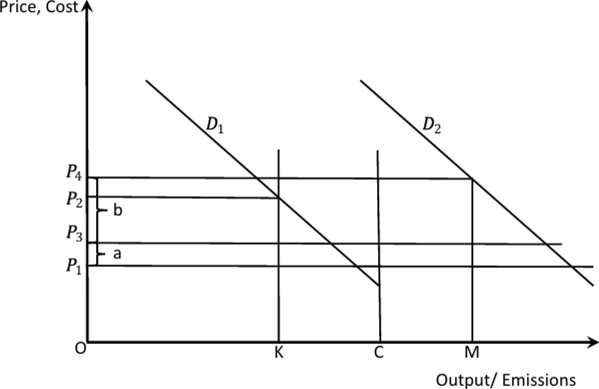
Figure 13.2 Interaction between ETSs and CORSIA.
be required to buy offsets for M—C emissions - air transport emissions will be reduced since the price has risen from P, to P , but this is matched by an increase in the same amount of emissions in other industries (the non-carbon emissions will be reduced). If the waterbed effect is addressed, there will be net fall in emissions in addition to the offsetted emissions.
It is not clear exactly what the rules governing a combined system of ETS and CORSIA will be in, for example, the EU, where the introduction of the market stability reserve which will reduce or eliminate the waterbed effect. Here, it has been assumed that airlines will be required to buy ETS allowances and CORSIA offsets. It might be regarded that this involves “double taxation”. If so, airlines might be required only to buy either ETS permits or CORSIA offsets, not both. In this case, only one of the schemes is effective, and the impact on emissions will be less than if both schemes are in operation. In the case of the EU, the ETS covers only domestic and intra-European flights, and CORSIA only international flights; intra-European international flights might be — in theory - covered under both systems, though this has yet to be determined.

