Example 1: Maurice
Maurice the beast
Onjanuary 24, as we have seen in Chapter 1, Tyisha and her classmates discussed selections from Aristotle’s Politics in which he argues that “the state is by nature clearly prior to the individual since the whole is of necessity prior to the part” and that “he who is unable to live in society, or who has no need because he is sufficient for himself, must be beast or god.” Discussion focused on a “beast in the woods,” a term that they interpreted to mean a person who refuses to make the sacrifices necessary to live successfully with others. Before discussing the example that included Tyisha and her cat, Mrs. Bailey nominated another student, Maurice, as a hypothetical beast in the woods.
Segment 1: Maurice in the woods
315 T/B: I mean think of what- he’s saying
there, he’s saying if Maurice went out and lived in the wo:ods (4.0) ((some laughter))
FST: “they’re talking about you“
T/B: and never had any contact with the rest of us,
320 he would be- uh- like an animal.
The example of Maurice the beast disappeared from the discussion relatively quickly at this point. Much later, a few minutes after the discussion of Tyisha and her cat, Mrs. Bailey returned to the example of Maurice as a beast.
Segment 2: Maurice the beast in the woods
T/B: now we put Maurice out in the woods. Maurice,
when would you get up? and go to bed.
915 MRC: when I was ready to.
T/B: when you were ready to. Maurice, if you had
your druthers what would you be eating all day long, [liver=
MRC: [whatever I want.
920 T/B: =or ice cream? you going to eat liver? or are
you going to eat ice cream.
STS: ice cream.
MRC: with what?
FST: I eat liver.
925 STS: ice cream, ((students echo ice cream and
comment on the choice of ice cream or liver))
MST: druthers
T/B: you have a choice.
FST: “every day“
930 MRC: ice cream.
T/B: ice cream, ummm.
FST: “be healthier if you ate the liver“
T/B: shhh. (2.0) the- the water where you are is
very, very cold, and it’s [not very warm outside. =
935 MRC: [((3 unintelligible syllables))
T/B: =how often are you going to- to- to clean
yourself off? ((laughter))
FST: Right Guard
MRC: depends when we’re talking about.
940 T/B: okay, so you might go the whole winter and well into the summer, right? without ever getting clean.
By making Maurice an example at line 913, Mrs. Bailey may be putting his actual identity in play. With Tyisha, we saw that discussion of the example about her and her cat had implications for her own position in the narrating event. The same thing might happen with Maurice. Teachers and students could infer something about Maurice himself from their discussion of him as a hypothetical beast in the woods. Is Mrs. Bailey implying that there is something beast-like about Maurice?
Figure 3.1 represents the discussion of this example, mapping the narrated events early in the conversation. In the first narrated event, Aristotle makes the distinction between gods, beasts, and humans—with humans living together in society and beasts unable to do so. In the second narrated event, the example, Maurice is a hypothetical beast who lives apart from the teachers, students, and other humans who live in society, and he does not follow social norms like bathing. In the narrating event, teachers and students are discussing Aristotle. We
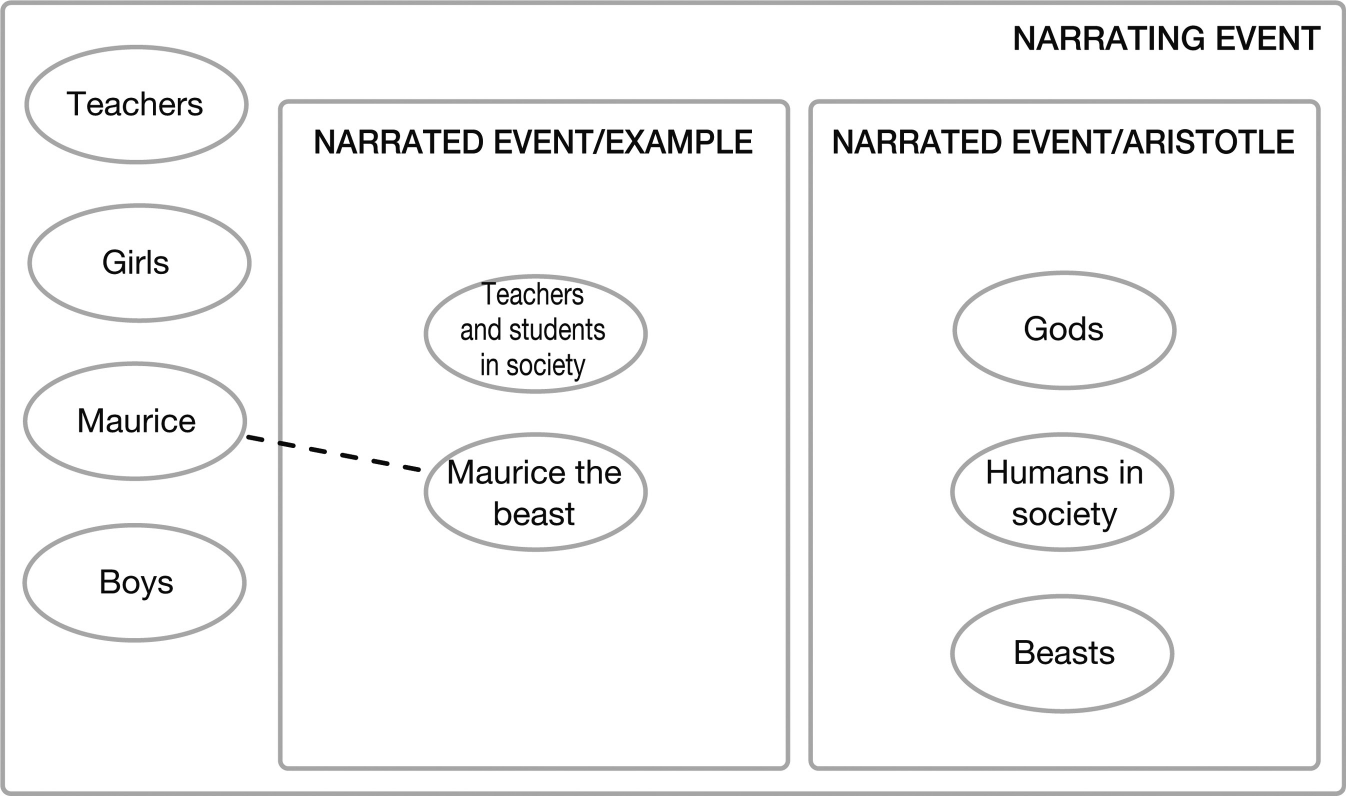
FIGURE 3.1 The example of “Maurice the beast.”
have separated girls from boys in the figure because, as described more extensively later, in this classroom the distinction between girls and boys is especially salient. The girls dominate conversation throughout the year, and Maurice is the only boy who willingly speaks. We have separated Maurice in the narrating event, because the example with him as a character turns out to have implications for Maurice himself. Focusing for the moment on this discrete speech event, our discourse analytic question is: what implications does discussion of these narrated events have for the positioning and social action occurring in the classroom interaction? Figure 3.1 represents this as-yet-undetermined relationship as a dashed line between the narrated character Maurice the hypothetical beast and Maurice himself, the student participating in the narrating event.
The next step is selecting indexicals. We must identify salient indexicals and the relevant context they presuppose and then construe those indexicals, inferring what types of action may be taking place through the discourse. Mrs. Bailey describes the hypothetical Maurice not eating liver (line 918) and not bathing (line 936). Both of these are stereotypical caricatures of American children and youth, who are often seen as picky about food and resistant to their parents’ desire that they eat healthy foods and bathe regularly. By choosing topics that are likely to elicit laughter from teenagers, the teacher may be signaling that she is joking while also pursuing the academic discussion. Other students act as if they and the teacher have in fact been joking with Maurice when they laugh at line 937, and a student makes another joke by referring to a brand of deodorant at line 938.
So far, it seems that the teacher is jokingly putting Maurice into the role of a hypothetical beast at the same time as she explains Aristotle’s argument to the students. But the characteristics that Mrs. Bailey attributes to Maurice the beast are not merely funny. They also index typical behaviors of what we might call “difficult” children. Such children stereotypically want to eat only ice cream, refuse to eat healthy food (lines 917—921), resist bathing (lines 933—937), and refuse to go to bed on time (line 914). The hypothetical Maurice the beast does not follow social norms, and this may imply that he is difficult. At lines 915, 919, and 930, Maurice readily makes the appropriate choices to take on the role of a beast in the narrated event. Our question becomes: do teachers and other students index this other potentially relevant context—the cultural model of “difficult” children—in order to position Maurice himself, in the narrating event, as difficult in some way? In our approach to discourse analysis, we answer this question by looking for other indexical signs that might make the model of difficult children salient. We ask whether other signs cohere into a configuration of indexicals that establishes this model as relevant, or not. We cannot answer the question based only on the segment given. We must examine signs that come later in the conversation to see whether they presuppose the same things and thus form a more robust configuration of indexicals that supports a particular construal. Table 3.1 represents the different components of our analysis so far, noting that we do not have sufficient evidence yet to describe a configuration of indexicals or to determine the social action being accomplished.
TABLE 3.1 Analysis of “Maurice the beast” early in the example

|
Aristotle: gods/humans/beasts Example of Maurice the beast |
|
Not eating liver, not bathing, refusing to go to bed on time |
|
|
Not yet fully formed |
|
|
Perhaps joking with Maurice Perhaps labeling Maurice as “difficult” |
|
|
Not determined yet |
As the discussion continues, it seems as if the teachers are not in fact positioning Maurice himself as difficult in the narrating event.
Segment 3: Maurice is civilized
990 T/B: what’s- what’s the difference between the two
aspects. Maurice in the forest and the Maurice that we know in this classroom, who doesn’t scratch when he itches.
FST: he’s civilized.
995 MRC: that’s what I said.
T/B: umm, he’s civilized, what did you say
Maurice?
MRC: that’s what I said.
T/B: you’re civilized.
At lines 990—993, Mrs. Bailey distinguishes between Maurice “in the forest’’ and Maurice “in this classroom.’’ Unlike the Tyisha case discussed in Chapter 1, in which the boundary between Tyisha the beast and Tyisha the student blurs, here Mrs. Bailey explicitly separates Maurice the beast from the real Maurice and positions Maurice himself as “civilized,” as part of society like the other students in the narrating event.
The teachers and students discuss this example for a few minutes, and they mostly maintain this clear separation between Maurice the narrated character and Maurice himself in the narrating event. There are only a few minor indications that Maurice himself might also be getting positioned negatively. At the end of the class, Mrs. Bailey characterizes Maurice as perhaps even more dangerous than a beast when she tries to explain another of Aristotle’s points. Aristotle says:
Segment 4: Quoting Aristotle
T/B: for man, when perfected,
is the best of animals, but when separated from law
1145 and justice, he is the worst of all, since armed
injustice is the more dangerous, and he is equipped at birth with arms meant to be used by intelligence and virtue, which he may use for the w- worst ends.
wherefore if he have not virtue, he is the most
1150 unholy and most savage of animals and the most
full of lust and gluttony, but justice is the bond of
men and states.
For Aristotle, the teacher explains, a self-centered human can be even more dangerous than a beast. Mrs. Bailey uses Maurice to illustrate this point.
Segment 5: Maurice could be sneaky
T/B: what
happens if you take someone like Maurice out in the
1105 forest is doing what he wants to do, for the
immediate pleasure of what he wants to do and then you add on to it the component that he can also think about future pleasures, doing what he wants to do. and he can have some planning mechanism
1110 there, to think in terms of the things in the future
that he can plan to do that will make him feel good. what happens to him? a lion is dangerous, but what about a Maurice?
1125 Maurice is somebody maybe you
don’t even see and you know, he can be doing what?
FST: ((2 unintelligible syllables))
T/B: the lion you see, you know he’s dangerous.
1130 Maurice you can see- "let me put it this way"
Maurice you can see now (1.0) and don’t perceive him as being dangerous, but what else could be happening?
FST: he could be sneaky.
1135 T/B: he could be plannin’ how to get somethin’ or do somethin’ that makes him feel good
This new hypothetical, narrated Maurice is a beast in some ways but not in others. The stereotypical beast is self-interested but unable to reason in complex ways. But this hypothetical Maurice is both self-interested and intelligent. Mrs. Bailey uses indexicals that presuppose the hypothetical Maurice is “dangerous,” out to get people and sneaking around unseen in a menacing way. He is intelligent, but he pursues what makes him “feel good.”
Table 3.2 is similar to Table 3.1, but it adds the new indexicals the teacher uses in this last segment. These signs presuppose a different voice for the narrated Maurice whom the teacher has identified as a hypothetical beast. Early in the example, Maurice the beast was self-centered and apart from human society. But teacher and students quickly made clear that this voice did not characterize Maurice the student himself. As Mrs. Bailey voices the narrated Maurice not only as selfish and antisocial but also as sneaky and dangerous, a discourse analyst might ask whether this new characterization of Maurice’s narrated character has implications for his position in the narrating event. We note this in the
TABLE 3.2 Initial elaboration of the “Maurice the beast” example

|
Aristotle: gods/humans/beasts Example of Maurice the beast |
|
Not eating liver, not bathing, refusing to go to bed on time Dangerous, sneaky, selfish |
|
|
Not yet fully formed |
|
|
Perhaps joking with Maurice Perhaps labeling Maurice as “difficult” or even resistant and dangerous |
|
|
Not determined yet |
“construing indexicals” line of the table. But no robust configuration ofindexicals has emerged to support this interpretation yet, so we cannot conclude that the “dangerous” narrated voice has any implications for Maurice’s own position in the narrating event. In order to discover whether he is in fact being positioned in some negative way, we need to consider other speech events he participated in across the year. By making him a participant example of a “beast in the woods,” the teacher has raised the possibility that Maurice is an uncooperative outcast like Tyisha, or perhaps even dangerous to the social order in the classroom. But if we attend only to the conversation in this one speech event, this possibility is not realized.

