Sustainable development
The concept of sustainable development as defined by the Brundtland Commission report titled Our Common Future as ‘the development that meets the needs of the present without compromising the ability of future generations to meet their own needs’ (UN, 1987). In the United Nations Conference on Environment and Development (popularly known as the ‘Earth Summit’) held in Rio de Janeiro in June 1992, delegates from 178 countries participated to discuss the course of sustainable development. The Rio conference came up with Agenda 21, the blueprint for sustainable development. Principles like intragen-erational and intergenerational equity, the ‘polluter pays principle,’ ‘precautionary principle,’ common but differentiated responsibilities, sustainable patterns of production and consumption, transboundary effects of the activities and many more (27 principles in all) were defined to guide the nations with their rights and responsibilities towards environment and development.
Sustainable development goals (SDGs)
In September 2015, 193 member states of the United Nations adopted the SDGs, 17 in number (UN, 2015). They came into effect from 1 January 2016 and are to be achieved by the year 2030. The SDGs are an extension of millennium development goals (MDGs) and include the MDGs that were not achieved. MDGs had focused more on health, poverty and education. Economic development and especially industrial development were not a constituent of the MDGs but became a distinct goal in the SDGs. SDGs are thus not opposed to economic growth and in fact, economic growth is an essential component of the SDGs (SDG 8). The SDGs have been able to generate a global discussion and elicit a response that MDGs did not.
The 17 SDGs strive to ensure economic growth, clean environment and sustainable cities, clean energy, improved health and well-being, eradication of poverty and hunger, promotion of gender equality and much more. The SDGs apply to all countries and citizens irrespective of their level of development. The SDGs consider the levels of development of different nations, their capacities and respect the policies and priorities of member countries. The SDGs have been founded on the three pillars of sustainable development—social, economic and environmental, with strong governance mechanisms to support their achievement. A diagrammatic representation of the SDGs is shown in Figure 1.1.
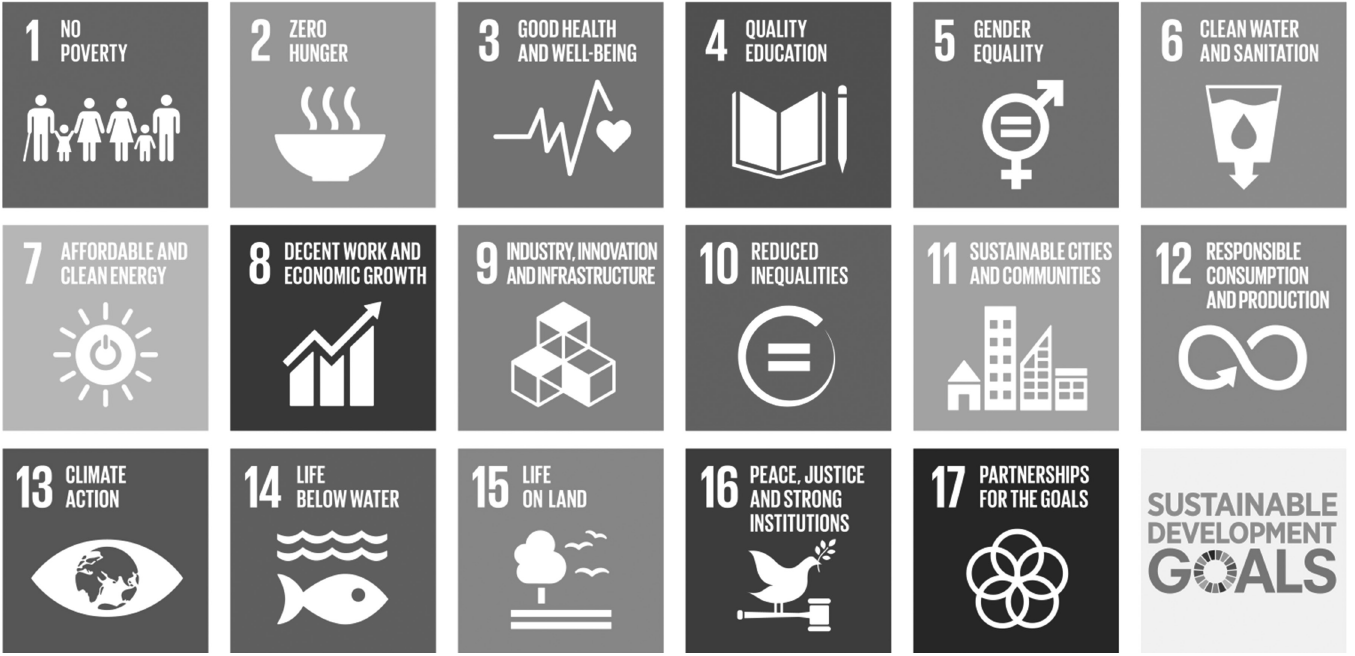
FIGURE 1.1 The sustainable development goals. Source: https://sustainabledevelopment .un.org/sdgs (accessed on 1 June 2019).
The Rio conference had promoted sustainable development as a concept and outlined the guiding principles required to achieve it. In comparison, the SDGs are much more specific. Each of the 17 SDGs is explained through targets, 169 targets in all. Each target is further explained through measurable indicators, 242 in number. There is a period attached to the achievement of the targets. The SDG framework allows the countries to define their indicators, based on their context, to achieve goals and targets. In response, India has defined in all 314 indicators to achieve the 17 SDGs.
Industrial development, water pollution and the SDGs: intersections
A closer look at the goals and targets reveals that there is a high degree of intersections between them and the achievement or failure to achieve a specific goal impacts the performance on achieving the other goals. Sustainable economic growth and industrialisation are part of the 17 SDGs (Goal 8 and Goal 9). Goal 8 aims to stimulate the economy, generate jobs, promote micro, small and medium enterprises (MSMEs) and, at the same time, separate economic growth from environmental degradation (Target 8.4). Micro, small and medium enterprises are considered critical for the early stages of industrial development and for generatingjobs in the non-agriculture sector. Goal 9 recognises that manufacturing is an important driver of economic growth and employment. Industrial diversification is another aspect that has been emphasised in Goal 9. In the process of sustainable development, the SDGs aim to address responsible production and consumption through Goal 12, where the target is to bring efficiency in resource consumption and produce lesser pollution. Environment protection is understood as central to the SDGs.
Target 12.4, environmentally sound management of waste, will influence the access to safe and affordable drinking water for all (Target 6.1), improve water quality by reducing pollution (Target 6.3) and protect and restore water-related ecosystems (Target 6.6). This would increase the proportion of the population with access to safe drinking water (Target 1.4) and would reduce the number of deaths and illnesses from pollution (Target 3.9). The impact of reduced waste generation aimed through Target 12.5 would be similar. The reduced waste generation and the sound management of waste will significantly reduce marine pollution of all kinds (Target 14.1) and will help in sustainable management and protection of marine and coastal ecosystems (Target 14.2).
The discussion highlights that the goals and targets are closely interlinked and nothing exists in isolation. Achieving one target positively impacts the other target and vice versa. Achieving the SDGs would, therefore, require an integrated and comprehensive context-specific approach. The intersections between the goals and the targets related to promoting economic growth through industrial development and preventing water pollution to minimise impacts on the environment, ecology and human health are represented in Figure 1.2.

