General and Chemical Perspectives and Studies on Tannins as Natural Phenolic Compounds for Some Ecoefficient Applications
ABSTRACT
Tannins belong to the phenolic classes of secondary plant metabolites and are widely distributed in nature. Their chemical structures may vary greatly consisting of simple, oligomeric, and polymeric compounds that have multiple structure units with multiple free phenolic hydroxyl groups. From the chemistry point of view, this review discusses and presents general definitions, classifications, chemical structures, significance, and some ecoefficient applications of tannins as well as the building units of tannins, which are mainly gallic and ellagic acids of hydrolyzable tannins, the first type of tannins. Also, in contrast, procyanidins and profisetinidins are converted into the second one, which is named as condensed tannins. Tannins as well as other natural phenolic products have found ascending interest in many scientific areas, and recently, more investigations and projects are carried out that are especially related to the pharmaceutical effects, environment, dyes, food industries, green adhesives, natural antioxidants, anti-inflammatory and antibacterial agents, cosmetics, biobased polymers additives, etc.
INTRODUCTION
NATURAL PHENOLIC COMPOUNDS
Naturally occurring phenolic compounds are a large and heterogeneous group of plant secondary metabolites that are distributed thr oughout the plant kingdom. They have been implicated in various bioactivities such as protective roles in plants and recently in human diet. The three most important plant phenolics are flavonoids such as anthocyanins (as plant pigments), phenolic acids such as coumaric and salicylic acids, and stilbenes such as resveratrol in red grapes. All of these phenolic products can be found and used as natural polyphenolic or oligophenolic molecules (Maestri et al., 2006).
Essentially, many polyphenols were found to have multiple functions mainly for the protection of plants from environmental hazards such as pollution, photo-oxidation, disease resistance, and pathogenic attacks and they also provide pigments and flavors. Furthermore, natural phenolic compounds have been found interesting in many scientific areas, and more investigations and scientific projects are carried out in these directions, especially that are related to pharmaceutical effects, environment, dyes, food industries, adhesives, antioxidants, antiinflammatory and antibacterial agents, cosmetics, etc. (Mamta et al., 2013; Jin and Russell, 2010).
TANNINS: DEFINITIONS, STRUCTURES, AND CLASSIFICATIONS
Tannins, also known as plant polyphenols, are a group of natural polyphenols that are found in numerous different plants, often in high concentrations in the outer bark of hardwood. Basically, they have been known and utilized by man for centuries even without full knowledge of their chemical structures and physical and chemical properties. Their name is derived from the French word “tan or tannin,” meaning the oak bark and other trees used in leather tanning; in other words, this name comes from the historical practice of extracting compounds from oak bark to tan leathers. This denomination is used for a range of natural phenolic compounds with a variety of molecular weights and complexities (Mohamed and Alessandro, 2008; Horvath. 1981).
The most persuasive general descript of the tannins was the one proposed by Horvath (1981): the tannins are defined as “any phenolic compound of sufficiently high molecular weight containing sufficient phenolic hydroxyls and other suitable chemical groups (i.e., carboxyl) to form effectively strong complexes with proteins or other macromolecules under the particular- environmental conditions being studied.” Comparable to other natural phenolic products, tannins are extremely found in the plant tissues and pertain to the phenolic molecules of secondary plant metabolites. With multiunits or polymeric structures, tannins having multiple building blocks with plentiful hydroxyl groups. According to the Bate-Smith definition, additing to the previous definition, tannins can be explained as Avater-soluble phenolic compounds having molecular weight between 500 and 3000 Da, and besides giving tire usual phenolic reactions, they have special properties such as the ability to precipitate alkaloids, gelatins and other proteins” (Versari et al., 2013; Bate-Smith and Swein, 1962).
The first classification of tannins depends on their chemical structure, which was made in the 1920s by Freudenberg, who split it into two types: hydrolyzable tannins (HTs) and condensed tannins (CTs); the first type received then- name from the fact that they can be hydrolyzed in acidic or basic medium to sugar units, simple phenols, and their carboxylic acids as other components, whereas the second class of tannins has been referred to as proanthocyanidins in many scientific journals related to healthy aspects. They obtained their name from the fact that in an acidic medium they break up to form anthocyanidins, which appear as red compounds or pigments (Nonhlanhla, 2011).
Some works such as Takuo and Hideyuki (2011) and Mamta et al. (2013) divided tannins according to their final chemical structures and characteristics into four major groups: gallotannins, ellagitamiins, complex tannins, and CTs, as mentioned in Figure 6.1.
- 1. Gallotannins belong to HTs and include all those tannins in which galloyl units or their wefa-depsidic derivatives are bound to diverse polyol-, catechin-, or tri-teipenoid units. Generally, they are made from polyester of gallic acid with sugar (Mamta et al., 2013).
- 2. Ellagitamiins are one class of HTs in which at least two galloyl units are C-C coupled to each other and do not contain glycosidically linked catechin units.
- 3. Complex tannins, such as camellia tannins, have a catechin unit bound glycosidically to agallotannin or ellagitannin units. In other words, the structures of the complex tannins are made of a gallo- tannin unit or an ellagitannin unit and a catechin unit, designated as number 3 in Figure 6.1.

FIGURE 6.1 Chemical structures and main classes of tannins.
4. CTs are referred to as polyflavanols or proanthocynidines; they are all oligomeric and polymeric proanthocyanidins formed by linking catechin (or epicatechin) with the other monomeric catechins (or epicatechins) units.
“The chemical complexity and heterogeneity of plant tannins means that they do not lend themselves to ready quantitative assessment, and this has produced a confused picture of their real significance—both evolutionary and ecological...” (Haslam, 1988).
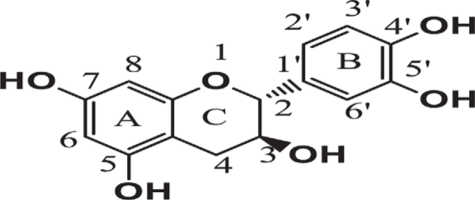
FIGURE 6.2 Basic building block of flavonoids and flavan-3-ol unit.

