Overview
Combining the references to the minimal degree of creativity required for originality and to the creative spark below the requisite level of creativity is informative (Figure 3.5). The clause, ‘more than a de minimis quantum of creativity’ (Feist Publications, Inc. v. Rural Tel. Service Co., Inc., 1991, p. 363) can be read as a whole to refer to a minimal degree of creativity, and a part of it, ‘a de minimis quantum’ (p. 363), to correspond to the creative spark ‘so trivial as to be virtually nonexistent’ (p. 359), with ‘creativity’ (p. 359) as a common term. The strongly implied equivalence between creativity in a minimal degree of creativity and in the ‘creative spark ... so trivial as to be virtually nonexistent’ (p. 359) is, then, confirmed. The totality of the combined references includes all instances of the terms creativity and creative, in the direct text of the decision (Figure 3.5). The references are thereby exhaustive of creativity, for the purposes of the decision.

Figure 3.5 All references to at least some minimal degree of creativity, the creative spark utterly lacking or so trivial as to be virtually nonexistent, and to creativity in the direct text of the decision
Note-. References are given in bold and the primary' evidence for the reference in italics.
The treatment of creativity in the decision within the exhaustive set of references contrasts significantly with the treatment of other crucial terms in the decision. Creativity is nowhere assigned a meaning specific to copyright, unlike originality, nor is it explicated, unlike independent creation. It must then be understood to default to consistency with ordinary' discourse. Creativity is not disaggregated, in contrast to a minimal degree of creativity. It is not connected to semantically similar or overlapping terms, contrasting with other parts of the judgment, such as the characterization of the absence of creativity, as ‘an age old practice, firmly rooted in tradition and so commonplace that it has come to be expected as a matter of course’ (Feist Publications, Inc. v. Rural Tel. Service Co., Inc., 1991, p. 359). An understanding of creativity cannot then be obtained by referral to subordinate or related terms.
The place of creativity in the decision can be fully revealed, by combining all previous considerations, including the implication of creativity from the creative spark utterly lacking (see Figure 3.6). The implication of creativity from the ‘creative spark ... utterly lacking’ (p. 359) is, then, the only means for generating an understanding of creativity, from within the decision.
Conditions for the understanding of creativity generated can be derived from its inclusion in originality, in a minimal degree of creativity, and in the creative spark ‘so trivial as to be virtually nonexistent’ (Feist Publications, Inc. v. Rural Tel. Service Co., Inc., 1991, p. 359). From its inclusion within originality, it must be applicable to all works. Such works would exhibit very high and historically rare levels of creativity and creativity must then also comprehend a range from the minimal to the very highest level. From its inclusion in a minimal degree of creativity, creativity must give rise to level and to level and amount in combination. It must also occupy the ‘extremely low’ level required for a minimal degree of creativity. It must be sufficiently knowable to be incorporated into the possibility of obtaining knowledge of the level of creativity required for a minimal degree of creativity. Creativity must also occupy the level ‘so trivial as to be virtually nonexistent’ (p. 359). From the absence of the assignment of a meeting specific to copyright, it
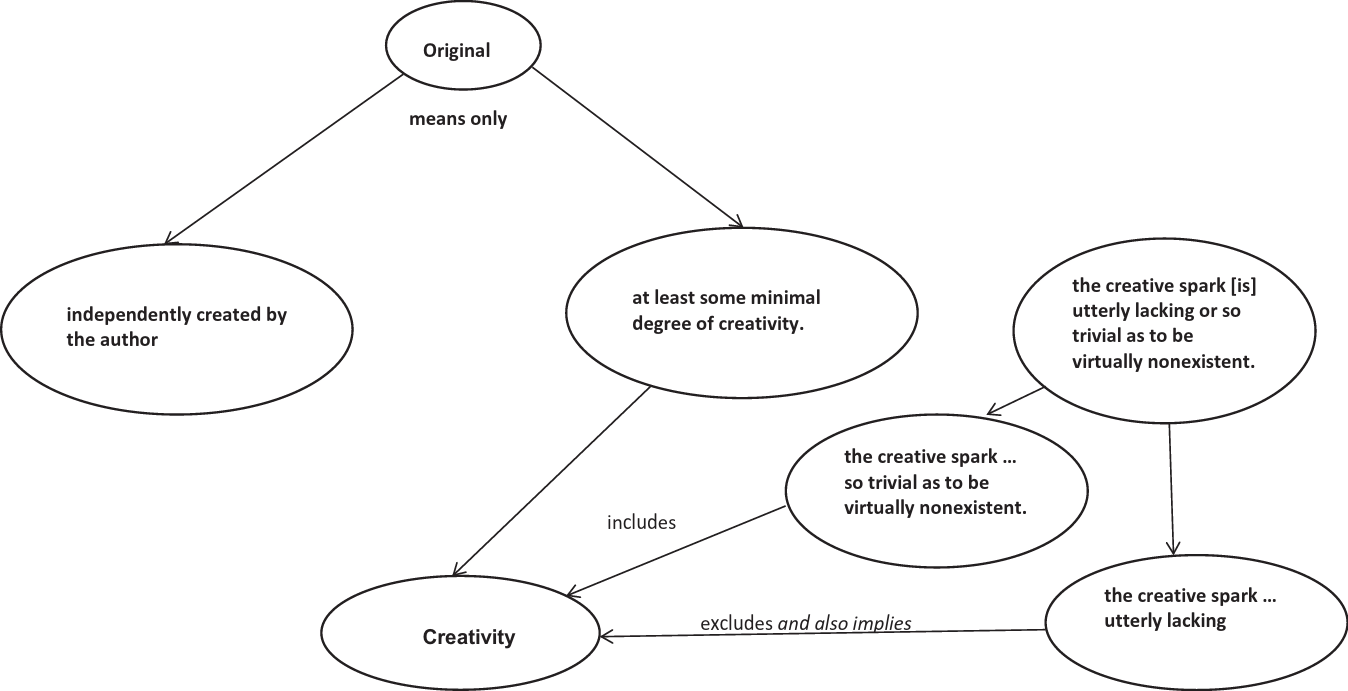
Figure 3.6 The place of creativity' in the decision
Note-. Bold is used for terms and phrases directly derived from the decision.
must be consistent with ordinary discourse. In summary, then, creativity should be applicable to all works, range from the highest possible level, through an ‘extremely low’ (p. 345) level, to a ‘virtually nonexistent’ (p. 369) level. It should give rise to level and amount in combination, be knowable, and consistent with ordinary discourse.

