Trade Cycles and Equilibrium
In our view, Dennis Robertson’s main claim to fame as an economist lies, first, in his analysis of fluctuations in real factors, innovation, technical progress, the return on capital, investment, and so on, as the fundamental drivers of the trade cycle, and, second, in his emphasis on the accelerator principle, whereby an increase in overall demand, from whatever source, can generate an increased demand for investment, though with characteristic modesty, Robertson attributes his discovery of this to Aftalion (Robertson 1954b: 183). As Robertson liked to say: ‘Dogs [consumption] wag tails [investment], as well as tails wag dogs’; n.b. business investment over the cycle is vastly more volatile than consumption. In A Study of Industrial Fluctuation, monetary considerations do not enter until page 211 (out of a total of 254 pages), and then in a purely supporting role, the idea that trade cycles are primarily monetary in character is roundly dismissed. Robertson later argued in a paper on ‘The Monetary Doctrines of Messrs. Foster and Catchings’, from Economic Essays and Addresses, that even a Robinson Crusoe, or a pure barter economy, would/could exhibit cycle-like misallocations of real resources (Robertson 1929 [1931]: 141).
He developed his business cycle theory over a long period, from the Study of Industrial Fluctuation to the third volume of his Lectures, published two years after his retirement from Cambridge. Robertson’s best-known contribution is probably Banking Policy and the Price Level (Robertson 1926 [1949]), where he attempted to extend the real analysis of the Study to establish the notion of forced savings as a key concept in the business cycle. Nevertheless, he usually referred to his 1934 Economic Journal article on ‘Industrial Fluctuation and the Natural Rate of Interest’ as the core of his interpretation of economic fluctuations. This piece introduced a diagrammatic representation of the market for loanable funds and established the twin notions of a natural rate of interest and a natural (or normal) rate of unemployment, which equilibrate the market for goods and for labour, respectively. That article grew out of another piece published earlier in the Economic Journal, where Robertson (1933) introduced the effects of unexpected price level changes on the level and distribution of output and on the savings curve in his loanable funds diagram. Whereas Friedman (1974: 40) regarded the determination of the natural rate of interest and the study of the saving-investment sector as ‘unfinished business’, this was precisely the business of Robertson in the 1930s.
Robertson’s dynamic method was based on period analysis, a ‘step-bystep approach’. He assumed a period of time, called a ‘day’, which is finite but nevertheless so short that income received on a given day can only be spent or saved in the next period—the ‘Robertsonian lag’. Furthermore, he assumed that output is given in the current period, so price level changes clear the market for goods during the ‘day’. (Problems with this approach, that later arose with Keynes and his followers, are discussed later in Section 3.) Unforeseen price changes affect real wages in the short period, since money wages (assumed contractually to be given during the ‘day’) are decided on the basis of the previous price level. Besides the effects of price fluctuations on the demand for labour, Robertson advanced the notion—later developed by Phelps (1969) and Lucas (1972)—that producers may temporarily mistake changes in the price level for changes in relative prices and adjust their supply of effort accordingly. In long-period macroeconomic equilibrium, defined by the equality between saving and investment at the natural rate of interest, price level expectations of workers and firms are correct and wages and profits are at their ‘normal’ level (see Robertson 1934: 651). The normal, equilibrium, rate of unemployment is positive because of changing economic conditions interacting with search in decentralised labour markets and heterogeneity of workers and jobs.
Keynes (1936 [1973]: 180-183, 242-243, 327) rejected Robertson’s concept of a normal rate of unemployment, leading to Robertson’s criticism that Keynes had overlooked workers’ reaction to market real wages distinct from their long-run expected values. Disequilibrium in the labour market is accompanied by disequilibrium in the market for loanable funds, with ensuing pressures on the market rate of interest. Robertson dismissed the Keynesian concept of liquidity preference and what Robertson named the ‘liquidity trap for saving’ (unless the only interest rate that could equate saving and investment at normal unemployment was negative). Robertson explained the short-run oscillation of the level of employment around its normal value by the effects on output of unanticipated price changes. Rising prices affect the long-run rate of economic growth positively through forced saving, whereas changes in the price level have only short-run effects on employment and output. So, in the Robertsonian framework, money is neutral, but not ‘superneutral’.
Robertson (1915 [1948]) criticised the ‘monetary’ school of the trade cycle for overlooking the ‘inelasticity, in times of slump, of the demand for certain important things which are being relatively over-produced’, especially capital goods. Hence, ‘any attempt to expand output on the part of these trades would, even under barter, furnish an inducement to other trades to restrict output’. So ‘general overproduction’ (in this sense) will cause the ‘business classes’ to reduce their effort to a larger extent than the ‘working-classes’, who ‘tramp the streets striving to rid themselves of the blessings of leisure’ (Robertson 1923 [1931]: 133; italics in original). Robertson approved of the description of unemployment during the depression as ‘involuntary’, since overproduction of capital goods causes an inelastic effort-demand for all commodities (including instrumental goods), which is greater for businessmen than for workers, since the latter do not demand capital goods: ‘For those reasons it is plain that the scale of production which commends itself to the business class may be smaller than that which commends itself to the working classes’ (Robertson 1915 [1948]: 209-210; see also Robertson 1926 [1949]: 21-22).
In Figure 25.1, equilibrium is illustrated by the intersection between the curves of demand for investment DD' (‘representing the declining marginal productivity of new lendings in industrial use’) and of supply of saving SS' (‘representing the rate of new available savings per atom of time’), at the natural rate of interest PM (Robertson 1934: 651). Following Marshall (1890 [1920]: 533) and Ramsey (1928), Robertson usually assumed that the aggregate curve of savings is upward-sloping and positive if the rate of interest exceeds the pure rate of time discount. Should there now occur a shift upwards of DD' to DiD^, via an exogenous increase in the marginal productivity of investment through, for example, technical progress, and the banking system keeps the market rate of interest at its initial level, the rate of lending will exceed the flow of new savings to the extent MM1, through newly created bank money.
Given the ‘Robertsonian lag’, real disposable income is then reduced by rising prices, and consumption falls below its expected value, which Robertson called ‘automatic lacking’ (Robertson 1926 [1949]: 48). Furthermore, additional saving may be ‘induced’ through the rise in prices, since individuals will seek to restore the real value of their money balances by reducing consumption (ibid.: 49). So, with monetary disequilibrium, developments in the
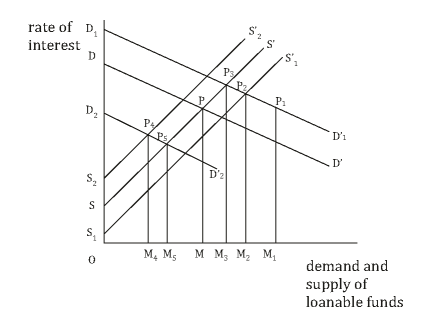
Figure 25.1 The natural rate of interest (Source: Robertson 1934: 652)
goods market decide the rate of change of the price level whereby lacking (in its voluntary, automatic, and induced forms) equals investment.
In his 1933 article on ‘Saving and Hoarding’, Robertson introduced yet another form of forced saving, brought about by a reduction of real wages to the extent that prices in the current period exceed the level expected when money wages were initially set. This followed from his distinction between ‘two classes, “the public”, whose rates of money income are prevented by contract or custom from varying during such short periods of time.. .and “entrepreneurs”, of whom this is not true’ (Robertson 1933: 401). While automatic and induced lacking only take place during the process of rising prices, forced saving which results from the ‘distortion of contracts occasioned by a rise in prices which has already occurred’ continues even after inflation stops; that is, the curve of voluntary lacking shifts to the right because of a change in income distribution in favour of the ‘entrepreneurs’ (ibid.: 411). The displacement of the savings curve SS' to S1S'i is also explained by the effects of the decline in real wages on labour demand, which will ‘progressively increase total incomes and redistribute them in favour of entrepreneurs’ (Robertson 1934: 652).
Robertson (ibid.) coined the phrase ‘quasi-natural rate’ to describe the rate of interest P2M2 which would equilibrate investment and saving under the new conditions. Assuming that the actual rate of interest rises towards its quasi-natural level, the economy will settle at the level of savings (and investment) OM2, with stable prices and a rate of unemployment lower than its long-run average value. However, as pointed out by Robertson (ibid.: 653), this ‘quasi-equilibrium is temporary, since excess demand for labour at real wages which are lower than expected by workers will bring about an increase in money wages in the next period, raising real wages back to their long-period equilibrium level and shifting the savings curve back to its initial position. Meanwhile, capital accumulation made possible by the forced saving process will reduce the marginal productivity of the stock of capital goods. Robertson (ibid.) describes this as ‘saturation with existing instruments’ (italics in original), displacing downwards the marginal productivity of 'new lendings’ (italics in original) to D2D'2. The ensuing falling prices then causes automatic and induced ‘dislacking’ (an unanticipated increase in consumption by the public at lower prices, followed by a reduction in real money balances to their planned level (cf. Robertson 1926 [1949]: 48-50), as well as an increase in real wages involving ‘the shrinkage of income and its redistribution in favour of non-savers’ (Robertson 1934: 653). Hence, the savings curve shifts downwards to S2S'2, intersecting D2D'2 at the new quasi-natural rate of interest P4M4. If the bank rate of interest is also reduced to P4M4, the new position of quasi-equilibrium in a depression will feature a flow of savings OM4 (equal to the demand for investment) and a rate of unemployment higher than its average value over the business cycle. Such a quasi-equilibrium lasts longer than the quasi-equilibrium position in a boom since, because the ‘short period is not of the same length at both ends’ (the length of life of durable capital goods is usually longer than the time taken to build them), the curve D2D'2 is more stable than D1D'1 (Robertson 1934: 654, 1957-1959 [1963]: 140). Moreover, owing to the partial downward rigidity of real wages, S2S'2 will not easily return to SS'.
Robertson (1934: 655) stressed that
if, in a society which has already become a prey to fluctuation, full employment of the factors of production, in their existing distribution between consumption and construction trades, is taken as the objective of policy, there seems a virtual certainty that normality will be overstepped, and the ball of cyclical fluctuations set rolling again.
Robertson probably had in mind a reduction of the bank rate of interest to such a level as to reduce real wages to an extent that D2D'2 would intersect a savings curve at the level of investment OM and a rate of unemployment lower than ‘normal’.
Some of the controversy between Keynes and Robertson following the publication of The General Theory should be read against the background of Robertson’s 1934 article. According to Keynes (1936 [1973]: 327), ‘Mr D.H. Robertson assumes, in effect, that full employment is an impract- ible ideal and that the best that we can hope for is a level of employment much more stable than at present and averaging, perhaps, a little higher’, a position he described as ‘defeatist’. Keynes’s rejection of Robertson’s view of monetary policy was preceded (ibid.: 180-182) by a strong criticism of the analysis of the determination of the rate of interest in the 1934 diagram (Figure 25.1), which Keynes adapted from Robertson (incidentally the only diagram used in The General Theory). In Keynes’s view, Robertson’s diagram could not be used to determine the rate of interest, since the savings function is not independent from the investment curve as a shift in investment causes a change in income and, therefore, a displacement of the savings curve. There are, therefore, not enough equations to decide the rate of interest, which should be solved by bringing in liquidity preference to determine the rate of interest from outside the savings-investment mechanism.
The question is whether a change in real income caused by a shift of the investment function, and the Keynesian multiplier, can displace the savings curve to such an extent that the quasi-natural rate of interest is pushed all the way back to the original level of the natural rate of interest. This has been discussed by Axel Leijonhufvud (1981: 165-169; see also Kohn 1981: 859-860), who argued that, in the case of a downward shift in investment, the market rate of interest would remain at its initial level PM (above the new natural rate P5M5) without any excess supply in the market for loanable funds (because of the corresponding shift of the savings curve through the multiplier) and, therefore, with no pressure towards the appropriate adjustment of the market rate of interest. In such a state of ‘unemployment equilibrium’, the price that is ‘wrong’ is the rate of interest, not the money wage.
Although Leijonhufvud successfully captured some elements of the Robertsonian approach, his general conclusion of unemployment equilibrium is not that of Robertson, except if money wages are fixed. Robertson’s usual assumption was that money wages are ‘relatively sticky’ (Robertson 1957-1959 [1963]: 440; see also Robertson 1928a: 11 and Robertson 1933: paragraph 4), that is, not flexible enough to clear the market within a single unit period. Under these conditions of ‘wage flexibility with a lag’, if the bank rate of interest is above its natural level, the economy will suffer from continuous and steady deflation accompanied by constant (not rising) unemployment. Keynes’s claim that a reduction in investment would cause unemployment to ‘grow and grow until, as a result of the consequent reduction in real income and therefore in saving, a stable position is again reached at a very low level both of money income and of employment’ is acceptable only under the assumption of fixed money wages (Robertson 1957-1959 [1963]: 442-443). As explained by Robertson (ibid.: 443), the money wage will be falling at the same rate as the price level, with a constant real wage rate (above its long-run market clearing value) and a constant (but below long-period equilibrium) level of employment. So there will be continuous excess supply in the loanable funds market and downward pressure on the rate of interest caused by falling prices and wages, contrary to Leijonhufvud’s interpretation (see also Kohn ibid.: 873-874).
Robertson’s insight that a rate of unemployment below (above) its normal equilibrium level is accompanied by a continuous increase (fall) in money wages and prices is behind his criticism that Keynes did not contemplate the notion that a high level of employment in the transition to minimal unemployment could be associated with a positive rate of change of prices and money wages—that is, the notion of a Phillips curve. As put by Robertson (1936a: 436, b [1940]: 109; cf. Keynes 1936 [1973]: 303-304) on ‘true inflation’, in Keynes’s view ‘not until unemployment is conquered can inflation in any damaging sense be said to begin’. However, it was only in his Lectures (Robertson 1957-1959 [1963]: 437-438) that Robertson explicitly reacted against Keynes’s (ibid.: 327) criticism as quoted above:
On p. 327 of the General Theory you will find that I am subjected by Keynes to mild reproof for having in the 1930s set my sights too low. That may or may not have been; certainly I thought—apart from all my criticism of detail—that the general tenor of that famous book, with its dramatisation of the contrast between general and mass unemployment on the one hand and ‘full employment’—a phrase I have always mistrusted—on the other, over-simplified the problem of objectives as it then presented itself (see also Robertson 1948: 204-205).
Robertson did not change his views about the concept of a ‘natural’ or ‘normal’ rate of interest after the publication of The General Theory. However, Keynes’s criticism led him to discuss aspects that were not explored in his 1934 article, for example, the effect of expected changes in the price level on the rate of interest. Robertson (1936: 178-179) pointed out that, with rising prices caused by excess investment, ‘any given proportion of wealth or income idle in the form of money is being diminished by the expected depreciation of money, and dishoarding takes place’. Furthermore, an expected rise in prices tends to increase the rate of interest through its effects on the demand and supply of loanable funds—the so-called Fisher effect, which Keynes (1936 [1973]: 142) dismissed. The important point, made by Robertson in a letter of March 1935 to Keynes, is that the rate of interest will not rise in equilibrium to the full extent of the expected rise in prices. As explained by Robertson (see Keynes 1973: 522; italics in original), the rise in the rate of interest will be damped down by the tendency of the owners of stores of money (a) as interest rises, to take money out of store and lend it thus increasing the supply of loanable funds, (b) as prices rise, to take money out of store and invest it themselves in labour or commodities, instead of adding to the demand for loanable funds for those purposes.
Both factors (a) and (b) contribute to diminish the Cambridge K and to reduce the long-run value of the ‘real’ rate of interest.
The Fisherian real rate of interest falls under anticipated inflation because of the reduction in real money balances. Investment and saving are both higher than in equilibrium without steady, anticipated inflation—money is not ‘superneutral’. Such an analysis fits very well with Robertson’s notion of ‘induced lacking’ as an equilibrating mechanism able to turn initially involuntary (‘automatic’) saving into a voluntary decision in the course of the business cycle (cf. Laidler 1999: 96). As pointed out by Robertson in his letter, Keynes’s discussion of the Fisher effect was marred by his habit of expressing liquidity preference in nominal terms instead of in real terms. Hence, contrary to Keynes, there is nothing contradictory about people holding a larger nominal amount of money at a higher (nominal) rate of interest, since they are in fact holding a diminished quantity of real balances.

