Production, Capital, and Growth
According to Champernowne (1945—1946: 10), ‘the supreme merit’ of von Neumann’s (1945-1946; originally written in German in 1937) article about balanced growth ‘lies in the elegance of the mathematical solution of a highly generalised problem in theoretical economics’. Champernowne saw his role as translating von Neumann’s argument—written from the perspective and in the style of a mathematician—for economists, who, in contrast with mathematicians, were not used (in the 1940s) to reduce explanations to a minimum and to state assumptions as concisely as possible. Hence, whereas to the mathematician the most interesting part of von Neumann’s essay is the proof of existence of at least one equilibrium position, the economist is mainly interested in the properties of the system when it is in equilibrium (Chapernowne ibid.: 11).
Champernowne’s clarification of such mathematical properties led the way to interpreting von Neumann’s general equilibrium growth model as rooted in the tradition of classical political economy (Harcourt 1972: 206-207; Kurz and Salvadori 1995: 405-407, 421-423). In contrast to the ‘more traditional approach’, relative prices are determined in von Neumann’s model by supply conditions alone and not by the preferences of consumers (Champernowne ibid.: 12, 17). Champernowne advanced a view of the model as a growing (classical) system in which wages are kept at subsistence level, constant returns to scale prevail in all activities, labour supply is perfectly elastic, land is not scarce, and population is constant. The surplus is entirely in the form of profits, all of which is saved and reinvested. The production processes consist, from this perspective, of goods producing goods, where some are the wage goods consumed by workers. As pointed out by Champernowne, von Neumann’s assumptions lead to his conclusion that the rate of profit (or interest) is equal to the rate of economic growth, which depends on the rate of expansion of those goods that can be expanded least rapidly. Champernowne admired the model, but also provided criticisms concerning the unrealism of some of its assumptions, such as: (i) the requirement that every process requires as an input or produces as an output some amount, no matter how small, of every good; (ii) the absence of consumption, so that labour only gets amounts of goods as necessary inputs for production processes; and (iii) the requirement that overproduced goods should be free (see also Thompson 1987).
Champernowne’s ‘classical’ interpretation of von Neumann’s model has been challenged by a number of economists, who prefer to locate it in the tradition of Cassel’s (1918 [1932]) general equilibrium system of equations. Samuelson (1989: 100), for instance, despite praising Champernowne’s ‘brilliant interpretation for economists of the model’s mathematics’, criticized him for asserting that preferences play a minor role (if any) in the determination of equilibrium prices and for having fallen victim to ‘Kaldorian influences’ and ‘Sraffian dogmas’ (ibid.: 106). The matter has been examined by Kurz and Salvadori (ibid.), who provide textual evidence in support of Champernowne’s interpretation. Kurz and Salvadori have suggested the existence of what they call a ‘Champernowne connection’ (ibid.: 421) between Sraffa’s (1960) analysis and that of von Neumann. In his attempt to elucidate von Neumann’s model, Champernowne (19451946) advanced several concepts and raised issues which would be found again later in Sraffa. He used the Sraffian notion of a ‘system of production’ where all goods help to produce other goods, that is, are ‘basics’ in Sraffa’s terminology. Champernowne’s interpretation of the rate of interest as decided by technical processes of production, as well as its inverse relation with the real wage rate, also anticipated aspects of Sraffa’s framework. Indeed, Champernowne (ibid.: 10, fn. 1) acknowledged discussion with
Sraffa while preparing his introduction to von Neumann. As Kurz and Salvadori (2001) have documented in detail (on the basis of Sraffa’s diaries), Champernowne and Sraffa met regularly during the very long gestation of Production of Commodities by Means of Commodities, in the 1940s and especially the 1950s. In a preliminary version of the Preface, drafted in 1959, Sraffa thanked Champernowne amongst his ‘mathematical friends’ (Kurz and Salvadori ibid.: 254) who had been consulted throughout the book’s elaboration. But, for reasons that are still unknown, he dropped Champernowne’s name from the published Preface. Anyway, Sraffa’s diaries make clear that Champernowne read and commented in the 1950s on the analytical structure of Sraffa’s famous book.
Champernowne’s main contributions to production and capital theories are contained in his extended comment on Robinson’s (1953-1954) well- known article about the production function and the theory of capital. As put by Harcourt (1972: vii), ‘a thorough understanding of Champernowne’s (1953-1954) comment.. .illuminates, as no other preparation could, the basic points of the subsequent controversies in the double-switching debate’ that dominated what Harcourt dubbed the ‘Cambridge controversies in the theory of capital’. However, despite the fact that Champernowne (1953-1954) was the first to discuss double-switching and capital-reversing phenomena, using the same model later deployed by participants in the Cambridge controversies in the mid-1960s, it remained with no or little influence, which prompted Harcourt’s (1969: 372-373, 1972: 29-34) quoted remark and careful account of that article’s contributions. Jack Birner (2002: 4, 38-41, 53-54, 168-169) has examined how Champernowne’s results were independently ‘rediscovered’ in the Cambridge controversies, particularly his proof that a specific hidden assumption in neoclassical production theory was the cause that these phenomena (called ‘anomalies’) had not been predicted by the orthodox model. Champernowne clarified that the anomalies were only so if a comparative static model was used to represent processes in time, a notion that would only start to become familiar in the 1970s.
As is well known, Joan Robinson (1953-1954) complained about the ambiguity concerning the unit of measurement of capital in the neoclassical aggregate production function, the disregard of factor supplies and technical progress in the explanation of distribution and growth, and the ambiguities in the neoclassical concept of equilibrium (see Prue Kerr’s chapter on Joan Robinson in this volume). The major puzzle was to find a unit in which capital could be measured, independent of distribution and relative prices. Her solution was to measure capital in terms of wage units. In the process, she noticed the phenomena of double-switching and capital-reversing, but regarded them a ‘curious possibility’ (ibid.: 106), ‘apparently paradoxical’ (ibid.: 96) and ‘perverse’ (ibid.: 94). In the end, Robinson did not insert them in her critique of orthodox neoclassical capital theory. Double-switching is associated with the possibility that the same method of production may be the most profitable at more than one rate of profit; capital-reversing means the value of capital moving in the same direction as the rate of interest. They imply that the same (physical) capital goods will have more than one value (see Harcourt 1969, 1972).
Champernowne (1953-1954) objected to Robinson’s solution to measure the quantity of capital in wage units, since it cannot guarantee a strict correspondence between output and capital, which prevents obtaining the rewards of factors of production by partial differentiation of the production function. More importantly, it brings about two anomalies: (i) the same physical capital may have a different value as between two equilibrium positions that differ ‘only’ (ibid.: 112) with respect to the wage and interest rate (the production function is not single-valued); and (ii) output and capital employed per worker may be negatively correlated. Champernowne’s criticism is that Robinson’s unit of measurement entails a negative bias due to the fall in interest rate, called ‘interest effect’ by her. In order to avoid this ‘index number problem’ (ibid.), Champernowne constructs an alternative chain index measure that links the amounts of capital in equilibrium positions. A ‘natural method’, argues Champernowne (ibid.: 115; italics in original)
by which to construct an index of quantity of capital in a historical sequence would be to form a chain index, increasing the index at each step by the proportion in which the cost of capital at current wage and interest rates at the end of the step exceeded the cost of capital at the beginning of the step, calculated at the same wage and interest rates. By shortening the steps, the distortion due to choosing wage and interest rates at the end of each step could be made as small as we please.
Hence, the amounts of capital in all equilibria are multiples of that measure (see Harcourt (1972: 29-34) for the mathematical argument).
However, Champernowne observes that a model using his chain index is not in fact free of the anomalies it was devised to circumvent as the production function may still be multiple-valued: ‘Contrary to intuitive expectations, our assumptions do not ensure that a graph [of the production function] is a single-valued curve sloping upwards to the right’ (Champernowne 19531954: 118). Champernowne’s Figure 1 shows that as the interest rate falls, the same value of the capital-labour ratio is realized more than once, a phenomenon later named ‘capital-reversal’. The ‘further assumption’ (ibid.) needed to eliminate this possibility is that of each pair of capital goods that is the most profitable at a particular rate of interest, the capital good that is the most profitable at a lower interest rate has a higher labour productivity: ‘Under this assumption, a gradual fall in the rate of interest would entail increases in both productivity and the quantity of capital per head. But, although this may fit well with our preconceived notions, there is no logical justification for the assumption’ (ibid.).
Nevertheless, Champernowne (ibid.: 129) did not consider a multivalued production function paradoxical or problematic while dealing with stationary state equilibrium positions, when production factors receive their marginal products. Matters differ, however, if the production function is used to analyse a dynamic time sequence, which brings in the possibility of (what would be later called) ‘double-switching’ or ‘reswitching’:
The outcome of this discussion is that, although our method of measuring quantity of capital provides us with a production function satisfactory for describing the family of stationary states, formidable difficulties arise when we consider a sequence of states in time in a developing economy, unless we rule out cases in which a lowering of interest rates can cause the introduction of techniques with a lower productivity than those used up till then. A numerical example has shown that these cases cannot be ruled out merely on logical grounds (ibid.: 130; italics in original; see also 119).
Hence, without this assumption—that is, absence of reswitching— Champernowne’s chain index does not remove the main ‘inconvenience’ (ibid.: 130) of Robinson’s unit of measure. Champernowne’s concludes that, against his own expectation, it is not the measure of capital which is to blame. In the process, he discovers that all models yielding the prediction that no previously eligible production technique returns as the rate of interest changes are built on the (hidden) premise that ‘the ordering of techniques according to labour productivity is inversely related to the rate of interest that makes them the most profitable technique’ (Birner 2002: 53).
Apart from his comment, Champernowne added a mathematical note to Robinson’s article, written with Kahn (Champernowne and Kahn 19531954). This dealt with the effect of the rate of interest on the value of capital involved in the use of a given technique of production under equilibrium conditions, a problem first tackled by Wicksell. The Champernowne-Kahn formula was used by Robinson (1953-1954) and also in her 1956 book, where the Champernowne-Kahn article is reproduced as an appendix (see Harcourt 2001). In the Preface to The Accumulation of Capital, Robinson (1956: vii-viii) thanked Champernowne for helping with ‘the heavy artillery of his mathematical expertise’ and in the formulation of the theory of accumulation in a given state of technical knowledge.
Champernowne (1958, 1961) carried into his growth models the view that aggregate production functions—constructed according to his chain index— are warranted so long as their use is restricted to a comparison of a set of alternative possible stationary states. But as
soon as we depart from such a comparison of stationary states, the innocentlooking assumption [of a reduced production function] begins to land us in difficulties. The production function, like Alice’s flamingo, will not keep still but wriggles about and regards us with an injured expression so soon as we attempt to use it (Champernowne 1961: 223—224).
Champernowne claimed that provided accumulation is ‘slow’ (ibid.: 224) and capital goods are not very durable, the errors caused by using the reduced form of the production function should be of the ‘second order’ (ibid.) only. In any event, Champernowne’s cautious attitude is well illustrated by a passage in a new chapter added to the 1973 edition of his King’s dissertation. Champernowne (1973: 188) recanted his 1936 discussion of income from particular qualifications, based on the ‘crudest marginalist assumptions, which almost no reputable economist would take seriously today’. He referred to his original claim (ibid.: 70) that ‘accumulation is a force tending to lower the rate of interest, by lowering the relative value of those qualifications which can be constructed’. Champernowne remarked that ‘to claim this is Cambridge, England, today would be tantamount to suggesting that capital accumulation reduces the rate of profit, a lapse which would invite banishment to Cambridge, Massachusetts’ (ibid.: 188).
Champernowne’s (1961) Corfu conference paper introduced into the literature the first growth model in which technological change takes the form of machines (‘robots’) replacing tasks formerly performed by labour. Champernowne went further than models of bias of technological change towards capital versus labour: ‘Capital accumulation takes the form not of the gradual modification of production techniques to embody more and more machinery, but the one-for-all mechanization in turn of each of a great many different processes’ (ibid.: 225). Champernowne’s approach has been adopted by some growth theorists, who refer to his 1961 paper in that connection (see e.g. Acemoglu 2010; Zeira 1998). By assuming that robots (producing consumption goods) are made by men alone and their efficiency is unimpaired forever, ‘we side-track all the difficulties of measurement of capital. We can, without a blush, use J.R. [Joan Robinson] units of capital’ (Champernowne ibid.: 227). At any one time, the degree of mechanization determines the rate of interest, which in turn gives the proportion of income saved. This determines the rate of investment, the rate of accumulation, and the rate of growth.
Interruption of economic growth (‘stagnation’) (ibid.) occurs if the margin of mechanization reaches its limiting position as the cost of robots increases and the rate of interest falls. However, if there is population growth, the demand for robots increases. Moreover, a lower rate of interest (or rate of profit) is accompanied by a fall in the propensity to save, with an ensuing surge of workers from the robot-making sector to the consumption sector. If the population growth rate is sufficient, a dynamic equilibrium may be reached with profit just low enough to keep savings down to the level required to balance the need for new robots. The model assumes that eventual stagnation is not foreseen, otherwise the demand for new robots would be reduced at an earlier date (ibid.: 228). As pointed out by Champernowne in the recorded discussion that followed his presentation at Corfu, the model is ‘dominated by savings, not investment ... To illustrate the real world, one would have to bring in...the demand for investment goods’ (Hague 1961: 377).
The conditions for the maintenance of full employment along the growth path were discussed by Champernowne (1958) in a model that adopted a Kaldorian saving function, but otherwise differed from Kaldor (1957) in many aspects. Kaldor (ibid.: 591, fn. 1) had acknowledged his debt to Champernowne, particularly in the development of the mathematical argument. Instead of Kaldor’s full-employment assumption, Champernowne (1958) investigated the mechanism by which the supply of savings may be utilized for increasing productivity in such a way as to allow employment to remain full and avoid a stagnation crisis. He made clear that his results differed from many of Kaldor’s in that ‘we do not find any reason to expect an easy passage to an age of uniform progress with a constant capital-output ratio and a constant rate of growth of productivity’ (ibid.: 233). Champernowne (1971) would come back to the mathematical properties of Kaldor’s model (which he had helped to set up), this time with a focus on the stability of its steady growth path. He then established the model’s stability if reformulated in terms of non-linear differential equations in continuous time. The stability conditions are shown to be more stringent than the limits prescribed by Kaldor (see also Gandolfo 1980: 506-516).
Another area of growth economics that attracted Champernowne’s attention was optimal growth. He was one of the co-discoverers of the ‘golden rule’ that consumption along a balanced growth path is maximized if the rate of interest is equal to the rate of growth, which he demonstrated in terms of the condition that the savings rate must equal the rate of profit (or interest) (Champernowne 1962). Champernowne’s interest in this issue may be traced back to his study of von Neumann’s model in the mid-1940s. He also investigated the mater from the perspective of Ramsey’s famous essay on saving (see Pedro Duarte’s chapter on Ramsey in this volume). As reported by Robertson (1958: 79; see also Hicks 1965: 258), in an unpublished paper Champernowne deduced the following formula for the proportion of income saved:
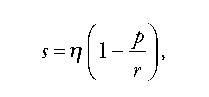
where h is the elasticity of the agent’s marginal utility function, p is the rate of discount, and r the rate of interest. Ramsey’s results can be derived from Champernowne’s formula: (i) if there is no time preference, then s = h , so that the proportion of income saved along the optimal path is independent of the rate of interest; and (ii) ifp is positive, saving will be zero when r = p, while if r > p, the propensity to save will increase with r, up to a maximum at r = h .

