Types and Interpretation of Evidence
Any attempt to evaluate diet must investigate both prehistory and history if it is to be relevant. Yet no account of diet can be comprehensive because of gaps in our knowledge. Where evidence is scant or absent, diet cannot be reconstructed. But the situation is not hopeless. Although no one can hope to know what everyone who ever lived ate, this limitation does not justify despair. At a minimum, diet may be inferred from three sources, preferably in combination so that one line of evidence can reinforce the others: skeletons and their teeth, middens (trash heaps), and coprolites (fossilized feces).
Skeletons and teeth, particularly when abundant and from numerous age ranges, reveal much about growth, height, and nutritional deficiencies. When pathogens and parasites can be ruled out, subnormal growth usually signals inadequate nutrition. Stunting is most apparent in childhood when growth is normally rapid, making juvenile skeletons invaluable markers of undernutrition, which this book defines as insufficient calories, nutrients, or both. In premodern societies, children were most vulnerable to undernourishment at weaning, when they transitioned from mother’s milk to solids of lesser quality. Later chapters indicate that children who died between ages two and five tended to manifest undernutrition severe enough to have killed them. In other cases, they succumbed to contagion or parasitism.
When nutrients are adequate in adulthood, the body may grow to average heights, compensating for childhood deficiencies. Undernutrition evokes images of emaciation. Genesis recounted a dream of “gaunt cows” and “ears of grain, thin and blasted by the east wind ,”69 Orthodox Christian icons depict slender ascetics on the path toward sainthood. Insufficient calories, protein, vitamins, and minerals arrest growth. Too few nutrients thin enamel, a condition known as hypoplasia and evident in skeletons with intact teeth. As noted above, the body may compensate for childhood deficiencies if nourishment is adequate in adulthood. Bones, though not teeth, regain density, forming marks known as Harris lines after British anatomist Henry Albert Harris (1886-1968). These lines, apparent in X-rays of skeletons, memorialize the position of growth plates when nutrition was inadequate, infection or parasitism severe, or their combination stopped growth. Adult skeletons with small head circumferences may reveal food scarcity in childhood. Head and brain normally grow rapidly early in life, but insufficient nourishment arrests growth, preserving dearth into adulthood. Small vertebral width also indicates undernourishment during infancy and childhood.
Skeletons may betray nutritional deficiencies in other ways. Curvature (bowing) of leg bones signals rickets, a condition that Chapter 2 examines. Such deformation reveals paucity of vitamin D, calcium, phosphorus, or their combination. Inadequate calcium or phosphorus implicates diet, but not enough vitamin D indicates sunlight deprivation more than dietary deficiency because the sun’s ultraviolet radiation is the chief source of the vitamin. Chapter 2 notes that instances of rickets increased during the industrial revolution, when people moved from countryside to city and from work outdoors to factories. The fact that urbanites were often indoors led researchers to posit that vitamin D deficiency weakened Austrian composers Wolfgang Amadeus Mozart (1756-1791) and Gustav Mahler’s (1860-1911) immune system such that they could not fight the infections that killed them.70

FIGURE 1.6 Wolfgang Amadeus Mozart. (Photo courtesy of Library of Congress, https://www.loc.gov/ pictures/item/2016816928/.)
Refocusing on diet, the skull yields evidence of anemia when parietal bones or the roof of eye orbits appears porous or spongy. The first is known as porotic hyperostosis and the second as cribra orbitalia. Absent pathogens or parasites, undernutrition causes these problems. When diet is to blame, porotic hyperostosis or cribra orbitalia may result from iron deficiency, deprivation of vitamin B9 (folate, folic acid, or pteroylmonoglutamic acid), B12 (cobalamin), C, or D, or inadequate iron and B9 or Bl2.71 When iron and В vitamin are involved, neither shortage need be marked to produce the pathologies.
Adequate iron and vitamins may not prevent anemia when foods inhibit absorption. Plants have what is known as non-heme iron, which the body absorbs less than heme iron. Animal products have heme iron, named because it is in hemoglobin and other blood proteins. Moreover, vitamin C paucity, fiber including bran, coffee (Coffea species), tea (Camellia sinensis), soybean protein, peanuts (Arachis hypogaea), and some nuts may cause anemia by hindering iron absorption. Entanglement among diet, pathogens, and parasites is difficult to unravel because many parasites and pathogens deplete iron. The problem of assigning blame is marked at the transition from hunting and gathering to farming and livestock raising when people abandoned nomadism. Dense settlements enabled pathogens, insects, and parasites to multiply. Under these conditions, humans may have evolved anemia as protection against invaders.72 By rendering iron inaccessible—for example, by storing it in the spleen, liver, and bone marrow—and inducing anemia in the process, the body starved pathogens and parasites that needed the mineral to survive and reproduce.73 Agricultural societies may therefore exhibit anemia when diet supplies enough iron and vitamins.
Stunting may reveal dearth of calories, protein, vitamin A, or zinc.74 Chapter 2 details the chemistry and functions of these and other nutrients. Dietary deficiencies characterized the masses, who went hungry more than elites. Obviously, when parasites and diseases cannot be eliminated from consideration, the prudent course is not to speculate about nutrition.
In addition to skeletons and teeth and as in our own times, trash contains bones and other indicators of diet. Feces, what the body did not absorb during digestion, may contain seeds and other items. Beyond these sources, graves indicate diet whenever people buried food with the deceased, but only when these perishables resist decay. As a rule, communities added food and other items to graves whose deceased enjoyed wealth and prestige in life. Conversely, absence identifies commoners. By their nature, therefore, grave goods furnish information about elites, not the masses who populate society and toil to create the luxuries that pamper the fortunate few.
Chemistry reveals additional insights into diet. Information comes from photosynthesis because plants use carbon dioxide (C02) differently depending on their origins in temperate regions or the tropics. Temperate plants—for example, potatoes (Solanum tuberosum), wheat, rye, barley, oats, lentils, chickpeas, soybeans, and peas—transform the carbon dioxide they absorb into phospho- glyceric acid (C3H707P), a compound with three carbons, by a pathway known as C3. All fruit trees and some plants that arose in the tropics—for example, sweet potatoes (Ipomoea batatas), tomatoes, and Phaseolus beans—are also C3. In contrast, other tropical plants—for example, sugarcane, corn, millet, and sorghum—use carbon dioxide to make oxaloacetic acid (C4H405), a four-carbon molecule, by the C4 pathway. Corn’s tropical origins may surprise readers who know it is grown in Canada, but this hardiness resulted from selection by American Indians, who expanded the grass’ geography over innumerable generations. C, plants represent roughly 85 percent of florae.75
C3 and C4 pathways use different carbon isotopes. Isotopes of an element have identical chemical properties because the number of protons is constant but different masses because the numbers of neutrons differ. Most carbon, known as l2C, has 12 grams per mole, with a mole being a standard, huge number of atoms (6xl023). These 12 grams, the atomic mass, are the sum of carbon’s six protons and six neutrons in its nucleus. Carbon (l3C) with seven neutrons has an atomic mass of thirteen, and carbon (l4C) with eight neutrons has a mass of fourteen. Of these isotopes, l2C and 13C are stable and far more abundant in nature than l4C. Being unstable l4C decays into nitrogen. Being more numerous, l2C and l3C are available to form molecules, including the carbon dioxide that plants absorb, with other elements. Because C3 plants absorb more l2C than do C4 plants, whatever eats more C3 than C4 plants fixes more l2C in bones and teeth. Consequently, people who ingest more C3 than C4 plants or more animals with this pattern of consumption yield skeletons and teeth with greater ratios of l2C to l3C. Such information, for example, distinguishes barley from millet eaters.
Chemistry has the potential to yield surprises about the past. For example, Chapter 4 notes that in 2014 French Egyptologists and archeologists, using l2C to 13C ratios in bones, teeth, and hair from forty-five mummies, determined that these people, when alive, ate C3 plants such as barley, wheat, and peas.76 C4 plants such as sorghum and millet comprised under 10 percent of their diets.
Their hair had few animal proteins, indicating a largely vegetarian diet. This finding appears to contradict ancient Egyptian literature and art, which document fish’s dietary importance. Moreover, Egyptian and Greek literature, notably Greek historian Herodotus’ (c. 485-c. 420 BCE) Histories (c. 425 BCE), indicates that the wealthy beef, veal, pork, mutton, lamb, chevon, capretto (kid), rabbit (Oryctologus cuniculus), gazelle (Gazella species), oryx (Oryx species), goose (species in the genera Anser and Branta), duck (species in Anatidae family), quail (Coturnix coturnix), pigeon (Columba livia domestica), heron (species in subfamily Botaurinae), and pelican (Pelecanus occidentalis).77 These are the people who could afford mummification; yet the forty-five mummies in this study evince vegetarianism rather than carnivory or omnivory. (Herbivores and carnivores are specialists because they feed at a single tropic level whereas humans are omnivores because they feed at two levels by eating plants and animals.) Even more striking were discoveries of numerous pig (Sus scrofa domesticus) bones with cut marks that betray butchery and pork consumption. All these data highlight difficulties in investigating the remote past. Not only is evidence elusive, but it sometimes yields paradoxes.
Minerals in bones and teeth supply additional information about diets. Animals, including people, that eat plants ingest more calcium than barium or strontium than do meat eaters. Accordingly, a large ratio of calcium to barium or calcium to strontium in bones and teeth identifies an herbivore or, if not exclusively an herbivore, an animal that favored plants over insects and meat. By contrast, this ratio is smallest in bones and teeth of carnivores and smaller in omnivores that ate more meat and insects than plants.
Such uses of evidence support the view that skeletons, teeth, middens, coprolites, and other measurables supply the raw materials for assessing health. Factors germane to an assessment of health include height, diseases, and longevity. Previous paragraphs acknowledged that interpretation of such data is less straightforward than might be supposed. Chapter 3 notes that agriculture’s critics blame it for shortening farmers, stockmen, and the urbanites who consumed their surpluses. Detractors believe that domesticated plants and animals provided less nourishment than their wild counterparts, diminishing heights. There is, however, another explanation. Height reductions are part of a trend toward smallness that began before people farmed.78 This trend may have resulted from decreases in life’s arduousness. Existence may have required less brawn as our ancestors began to use their intellect to secure life’s necessities. Given competing interpretations, height may not provide unambiguous information about health when lifestyles and environments differ markedly.
Emphasizing the environment, Bergmann’s rule, named after German biologist Carl Georg Lucas Christian Bergmann (1814-1865), states that among individuals within a species, size tends to increase with latitude.79 This phenomenon is a function of heat radiation. Small individuals have a high ratio of surface area to volume. Another way to achieve this ratio is for the body to be lanky, with long, slender arms and legs. Lots of surface provides ample space for release of heat into the surrounding air. Heat dissipation aids individuals in hot climates near the equator. The reverse is true of large, stocky individuals, whose small surface area relative to volume allows them to retain heat, a benefit in cold climates distant from the equator. Interplay among diet, arduousness of life, and climate complicates attempts to pinpoint diet as determiner of height and size. This uncertainty means that these attributes do not always pinpoint dietary effects on health.
Height and mass are products of evolution in another way. As primates, humans are social animals. In primate societies that foster competition for mates, large males tend to outcompete small ones for access to females. In this system, large males pass more of their genes to the next generation than their smaller competitors whereas females of all sizes are available for mating. Consequently, males are bigger than females. Size differences, known as sexual dimorphism, are conspicuous among baboons (Papio species) and mandrills (Mandrillus sphinx), whose males are twice the size of females.80 Male orangutans (Pongo pygmaeus, P. abelii, and P. tapanuliensis) and male mountain gorillas (Gorilla beringei beringei) may more than double females in mass.81 Differences are less pronounced among chimpanzees (Pan troglodytes), whose males are about one-third larger than females.82 By contrast, gibbons (Hylobates species) display no dimorphism because, being primarily monogamous, most males have an opportunity to mate irrespective of size.83 The lineage leading to humanity must have behaved more like gibbons than gorillas because early fossils show little dimorphism.84 Humans display small differences in size, with men seldom over several centimeters taller than women.
Returning to diseases and diets, an earlier section, treating pellagra, acknowledged that nutritional deficiencies cause some maladies. Chapter 2 expands this discussion by examining night blindness, scurvy, rickets, and anemia. But, as noted, other factors may be involved. For example, parasites that infest the intestines may cause anemia. Where present, infectious diseases may implicate undernutrition, which tends to compromise the immune system.
In this context, Chapter 3 mentions that one of humanity’s worst calamities, the Black Death (1347-1351), followed repeated famines that left Europeans too weak to fight diseases.85 Crowding benefits contagion, which may kill even adequately fed urbanites who live and work near one another. No lone example should be pushed too far, though it is sobering that German composer Johann Sebastian Bach (1685-1750) lost his first wife to an unspecified illness at age thirty-five and ten of his twenty children as youths despite earning enough money to feed them all.86 Although cause of death was seldom pinpointed in the past, infectious diseases played a greater role than diet in Bach’s tragedies. This example fits the pattern that between Neanderthal prehistory and 1900 CE, half of all children died before puberty.87 Ignorance of these realities distorts the past by overstating health.88
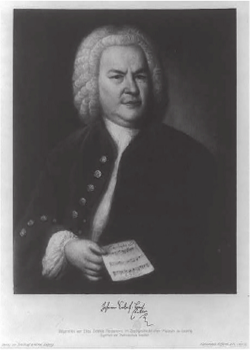
FIGURE 1.7 Johann Sebastian Bach. (Photo courtesy of Library of Congress. https://w'ww.loc.gov/pictures/ item/2004671945/.)
Lifespan may be the toughest parameter to interpret because so many variables affect it. For example, American historian Richard Slator Dunn (b. 1928) blamed tropical diseases, undernutrition, overwork, suicide, execution, accidents, and poor medical care for slaves’ brief lives in the Caribbean islands in the seventeenth and early eighteenth centuries.89 Interplay among these factors prevented him from attempting to gauge w'hich was most lethal. The situation is even more complex because recent research indicates that, independent of other variables, poverty shortens life.90 Moreover, upbringing, marital status, and hereditary factors like gender and ethnicity modify lifespan. This melange complicates attempts to pinpoint diet and nutrition’s roles in longevity.
Additionally, longevity’s treatment through calculation of life expectancy, usually at birth (e°), poses problems. Convention interprets life expectancy as a measure of mortality. This position is intuitive given that death fixes lifespan, allowing its averaging w'ith others’ age at death to derive a population’s life expectancy at birth or another age. In this scheme, increase signals improvement whereas decrease indicates a population in trouble.
Since the early twenty-first century, however, demographers have emphasized that e° reveals more about birthrate than mortality.91 A high birthrate diminishes e° because an increase in births raises the total number of youths, the pool of people subject to early death, and so increases the number of juvenile deaths even when infant mortality—usually defined as deaths before age five— is not enormous. A fertile population therefore tends to yield lower e° than a barren one even though an unfruitful group may be under greater distress than its fecund counterpart.
Another problem with treatment of life expectancy is the expectation of progress from short to long lifespans over time. For example, in 1965, American anthropologist Francis Clark Howell (1925-2007) reported lifespans between Neanderthal prehistory and the mid-twentieth century CE, showing an increase of forty years over the roughly 40,000 years that separate these periods.92
But this gain is not a trend. The remains of 12,520 people who lived in the Americas between roughly 4000 BCE and 1900 CE reveal the greatest longevity and overall health in the early millennia.93 Lifespan and health deteriorated with the rise of agriculture and animal husbandry, cities, and governments. An onlooker might hypothesize that the initial period promoted longevity because the first migrants into the Americas were few, and they encountered pristine lands rich in edible plants and animals. Over time, populations increased to the point of devouring food faster than nature could replenish it. Shortages truncated lives.
Yet this view conflicts with the understanding, noted above, that abundant food increases birthrate, a consequence of which is a larger number of deaths during infancy than results from low birthrate, all else being equal. But high infant mortality reduces e°, giving the impression of short lifespan and abysmal health. This scenario underscores the difficulties in attempting to interpret e° and questions the assumption that it increases over time as a function of progress.
The relationship between food and fertility, however, may not be straightforward. British demographers Edward Anthony Wrigley (b. 1931) and Roger Snowden Schofield (1937-2019) stated that birthrate decreases when calories and nutrients fall below subsistence.94 But above this threshold, nutritional improvements do not boast fertility. Whatever the merits of their argument, Chapters 13 and 14 demonstrate that potatoes and bananas (Musa x paradisiaca), respectively, increased birthrates.
At its most basic, discussion of longevity requires knowledge of age at death. Without writing, prehistory yields skeletons, teeth, and other tangibles as the only data. But age upon death cannot be pinpointed from remains, necessitating estimation. In approximating age, physical anthropologists and forensic scientists rely on developmental milestones. In rough terms, the skeleton develops until around age thirty, after which it deteriorates. At birth, the skeleton is least formed, softest, and has over 300 parts that fuse during maturation into the 206 bones of an adult. The rate of fusion is known and may be compared to skeletons in question. After about age thirty, deterioration may be visible as wear at joints. For example, the knees and spine bear the body’s mass and may evince osteoarthritis in the femur, tibia, and vertebrae. But because activity as well as age may cause osteoarthritis, its presence cannot pinpoint age at death. The number and type of teeth also provide information about age. The timing and order in which deciduous and adult teeth erupt help dental experts estimate age upon death. For example, absence of wisdom teeth implies death before age eighteen. Teeth develop into a person’s mid-twenties, after which severity of wear aids approximation of age at death. An optimistic opinion holds that estimates of children’s age at death are accurate within three years, though skeletons of individuals who lived beyond age thirty-five are subject to greater error.95 In 2001, Austrian historian Walter Scheidel (b. 1966) doubtless spoke for other skeptics in deeming such approximations imprecise.96
Remote times yield the least precision because the number and quality of skeletons sometimes formed too small and fragmentary a sample to permit generalizations. In distant eras, countless human remains perished, especially delicate newborn and infant bones that tended to decay quicker than those of adults, creating an illusion of low infant mortality and thereby inflating e0 97 E° was even more exaggerated whenever people did not inter dead youths.
Despite limitations, the remotest periods furnish unique evidence because, as implied earlier, skeletons and teeth from anatomically modern humans are not the only materials for analysis. Homo neanderthalensis (Neanderthals or Neandertals) also buried their dead, a practice that preserved hundreds of partial and complete skeletons for comparison with us. The above markers of development and deterioration allow anthropologists to estimate Neanderthal longevity. Among findings is American anthropologist Erik Trinkaus’ (b. 1948) conclusion that Neanderthals lived as long as modern humans during the last 100,000years.98
Prehistory is not alone in interesting demographers. By supplying written records, history presents other materials for determining age at death: government sources like census returns, tombstone inscriptions, and church and hospital records. Some societies furnished additional evidence. For example, ancient Egyptian mummies sometimes had a tag with age at death.99 But these sources are imperfect because written records tend to memorialize the affluent, ignoring the rest as debris. Like other societies, ancient Egypt harbored biases in favor of elites because only the wealthy could afford mummification such that mummy tags recorded birth and death years of only the rich. Today the wealthy outlive the poor, though this advantage was not automatic earlier, when contagion killed indiscriminately and affluent diets were sometimes worse than commoners’ plain viands.100 For example, Chapter 11 states that Belleville, Canada’s prosperous nineteenth-century sucrose consumers had an e° of only twenty-one years.101 Yet wealth correlated with lifespan in the seventeenth and eighteenth centuries Massachusetts.102
Written documents tended to underreport deaths during infancy, early childhood, and old age.103 The deaths that traumatized societies enough to be recorded were those of teens and vigorous adults: people between roughly ages ten and thirty-nine. Furthermore, written records tended to report urban deaths more than rural because governments had more control of city than countryside, allowing bureaucrats to practice demography in municipalities. Mortality is unlikely to have been identical in both because crowding made cities more prone to epidemics than rural districts. Being more prominent than women, men tended to be memorialized upon death in greater numbers. This prejudice exaggerated life expectancy in premodern societies because men did not face the hazards of childbirth that truncated women’s lives. Religious status also overstated longevity because monks, priests, and other devout people’s age at death was sometimes inflated to imply holiness, a practice as old as Genesis.104 All these biases introduced errors into computation of life expectancy.

