Vegetables
Definition
Imprecision and Confusion
Vegetables’ terminology frustrates the desire for precision. British archaeologist and botanist Jane Margaret Ewbank Renfrew and British botanist Helen Sanderson admitted that they are difficult to define.1 Gardening book authors are silent on this matter. I retrieved three such books from my collection and four from an Ohio public library.2 None of the seven, published between 1978 and 2018, defined the word “vegetable” or “vegetables,” even though two—one of which claimed comprehensiveness—have glossaries.3 This situation resembles an attempt to discuss triangles or another polygon absent geometric definitions. Curiously, National Gardening Association spokesperson and horticulturist Charlie Nardozzi defined “fruit” but not “vegetable” in Vegetable Gardening for Dummies, the opposite of what readers might expect from a book that purports to treat vegetables.4 The analog would be a book about triangles that defines rectangles but not triangles. Under such circumstances, onlookers deserve no blame for bewilderment. Not only are they unable to define a triangle, but they may also conflate it with other polygons, creating a muddle in the process.
The foregoing implies that such confusion attends the word “vegetable,” which has become a catchall for many types of plants just as an errant categorization of triangles might include several polygons. Imprecision afflicts even scientific treatment of vegetables. For example, Cornell University olericulturist Homer C. Thompson did not define them in the textbook Vegetable Crops but instead used the word “vegetable” or “vegetables” in three ways. First, he made “vegetables” a category in opposition to groupings of other crops.5 This method might have permitted identification of vegetables by eliminating plants pigeonholed elsewhere. But elimination fails because Thompson included but did not define the classification “other crops.” That this last category is unknown makes impossible vegetables’ definition because any attempt to name specifics may be countered by the possibility that Thompson intended them as other. Second, he constructed different lists of vegetables. Table 4 included, but Table 5 omitted, artichokes (Cynara scolymus), broccoli (Brassica oleracea var. italica), collard (Brassica oleracea var. viridis) and dandelion (Taraxacum officinale) greens, eggplants (Solanum melongena), and muskmelons (Cucumis melo) as vegetables.6 Table 4 excluded, but Table 5 included, brussels sprouts (Brassica oleracea var. gemmifera), okra (Abelmoschus esculentus), radishes (Raphanus sativus), and rutabagas (Brassica napus), also known as swedes. Table 4 divided corn (Zea mays) into yellow and white, whereas Table 5 specified only sweet corn. Table 4 included only beet (Beta vulgaris) roots, but Table 5 listed beet roots and leaves as separate categories. Third, Thompson multiplied ambiguities by listing five methods for classifying vegetables.7 Favoring the fifth, he nonetheless admitted to following it only “in a general way.”8
Perhaps wishing to avoid inconsistencies, American botanist Beryl Brintnall Simpson (b. 1942) and American botanist and science educator Molly Conner Ogorzaly never employed “vegetable” or “vegetables” as nouns in the textbook Economic Botany (2001). No chapter bears these terms as a title. The nearest they approached vegetables was a chapter on “foods from leaves, stems, and roots.”9 Even this formulation is unsatisfactory because the chapter included sugarcane (Saccharum officinarum), sugar beet (Beta vulgaris ssp. vulgaris), sorghum (Sorghum bicolor), dates (Phoenix dactylifera), sugar maple (Acer saccharum), and sucrose (С|2Н220ц), none a vegetable.10 Despite avoidance of “vegetable” as noun, Simpson and Ogorzaly used it as an adjective in opposition to the adjectives “animal” and “synthetic.”11 Such language makes vegetables plants, though failure to craft a narrow definition—or any definition in this case—leaves all florae as default members of this category.
Attempts to Define Vegetables
Unlike Thompson, Simpson, and Ogorzaly, American olericulturists Vincent E. Rubatzky and Mas Yamaguchi (d. 2019) attempted to define vegetables, considering them mostly herbaceous (non- woody) plants, either domestic or wild, whose edible portions may be roots, tubers, stems, leaves, flowers, fruits, or seeds.12 Vegetables usually contain ample water and may be cooked or raw.
This definition is concrete but broad. For example, inclusion of fruits from nonwoody plants seems to admit watermelon (Citrullus lanatus) as a vegetable, contradicting its conventional status as dessert fruit. Inclusion of seeds from nonwoody plants appears to make grains (cereals) vegetables, undermining the consensus since antiquity (c. 3000 BCE-c. 500 CE) that they form a separate category of edibles. Less controversial is inclusion of legume seeds because the public usually considers peas (Pisum sativum) and beans (Phaseolus vulgaris, Phaseolus lunatus, Phaseolus acutifolius, and Phaseolus coccineus), especially green beans (P. vulgaris), vegetables in the belief that anything green and edible qualifies. Less satisfactory is the opinion that wild plants may be vegetables because it undermines the conviction that vegetables are products of domestication. The stipulation that they may be cooked or raw appears to exclude the root cassava—which cannot be eaten raw because of toxins (see Chapter 13)—despite Rubatzky and Yamaguchi’s insistence that edible roots are vegetables.
Equally perplexing is Renfrew and Sanderson’s definition of a vegetable as an edible that tends not to be sweet, that accompanies savory foods such as fish, meat, cheese, or eggs, and that generally has little fat.13 Besides these criteria, Renfrew and Sanderson excluded roots, tubers, nuts, seeds, and legumes and included tomatoes (Solarium esculentum) and cucumbers (Cucumis sativus). This definition’s greatest defect is its subjectivity because the designation “sweet” depends on opinion. The parent who prizes fresh carrots (Daucus carota ssp. sativus) or beets for their sweetness may have children who abhor them as tasteless or worse. In this example, the adult’s judgment eliminates both as vegetables, whereas the child’s revulsion admits them. Renfrew and Sanderson excluded the two as vegetables, however, because they are roots despite public consensus to the contrary. Moreover, the criterion unsweet appears to exclude fresh, ripe tomatoes as vegetables even though Renfrew and Sanderson included them. Yet commercially raised tomatoes—picked green and exposed to ethylene gas (C2H4) to simulate ripeness—are unsweet. Depending on the method of cultivation, therefore, tomatoes are or are not vegetables despite having undergone no botanical change. In other words, the stipulation unsweet is too subjective and variable to define a vegetable.
Imprecision created an opportunity for the U.S. Supreme Court to define a vegetable as a precondition to deciding whether imported tomatoes should be subject to a tariff. In 1883, Congress assessed a tariff on imported vegetables but not fruits. Four years later, New York City grocer John Nix sued the city’s federal agent for refusing to exempt imported tomatoes. Nix contended that the agent had erroneously classified them vegetables rather than fruits. Writing for the majority in 1893, associate justice Horace Gray (1828-1902) admitted that tomatoes satisfied the botanical definition of a fruit but held that the public convention of categorizing them as vegetables trumped this scientific understanding.14 In articulating his opinion, Gray emphasized that vegetables were garden produce and were eaten with the main course rather than as dessert.
This opinion is unsatisfactory on three grounds. First, it did not resolve the issue of fruit versus vegetable. Despite Gray’s ruling, Tennessee and Ohio list the tomato as their state fruit.15 Second, an appeal to popular belief does not guarantee that the public can define fruits, vegetables, polygons, or anything else. Public opinion’s murkiness is a poor substitute for scientific exactitude. Third, intentional or not, deference to the public condones slavery, racism, xenophobia, sexism, and homophobia wherever such deplorables are in the majority. If these practices and prejudices are evils, then they must be wrong irrespective of public sentiment and behavior. In the same
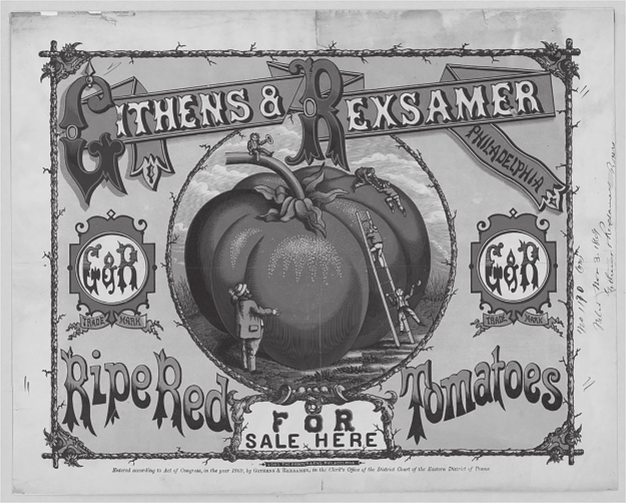
FIGURE 15.1 Tomato. (Art courtesy of Library of Congress, https://www.loc.gov/pictures/item/95509317/.)
manner, the definition of a vegetable, fruit, or any noun should be an absolute rather than an impulse. Because public opinion can change, it is relativistic. It seems perverse to erect a legal system on the principle that what is true today may be false tomorrow. The Republic’s (c. 380 BCE) first pages exposed the weaknesses inherent in conflicting, changeable definitions of justice.16 Its arguments should apply to vegetables.
The best definition of vegetable comes from New Zealand nutritionist and biochemist Meika Foster, who characterized it as any plant part except seed or fruit.17 Vegetables may be roots, tubers, bulbs, stems, leaves, and flowers. Although her formulation is broad, it has the virtue of simplicity while eliminating fruits and seeds, which deserve to be independent categories but which the public tends to conflate with vegetables where tomatoes, peppers (Capsicum annuutri), eggplants, okra, squashes (Cucurbita species), cucumbers, and legumes are concerned. Foster acknowledged but resisted the temptation to name tomatoes and mushrooms (Agaricus bisporus and other edible species) as vegetables. Indeed, mushrooms are fungi rather than plants.
Foster’s definition includes above- and underground plant structures as vegetables. The large number of edibles that results from this breadth defies treatment in one chapter. This book combats inordinate scope by assigning roots sweet potato and cassava and tubers potato (Solatium tuberosum) and yams (Dioscorea species) to Chapter 13. This maneuver leaves as vegetables among subterranean edibles the genus Allium and taproots such as carrot, parsnip (Pastinaca saliva), turnip (Brassica rapa ssp. rapa), radish, beet, and rutabaga. Foster’s rejection of seeds as vegetables accords with this book’s allocation of legumes, nuts, and grains to Chapters 8, 9, and 12, respectively. Elimination of fruits as vegetables is correct, but assignment of all to Chapter 14 would again create a behemoth. For this reason, Chapter 14 treated only the staple fruits dates and bananas (Musa xparadisiaca). Foster’s definition makes stems like asparagus (Asparagus officinalis)-, leaves such as spinach (Spinacia oleracea), lettuce (Lactuca saliva), cabbage (Brassica oleracea var. capi- tata), and swiss chard (Beta vulgaris ssp. vulgaris)-, and flower buds like broccoli vegetables. Celery (Apium graveolens) is classified as a stem or leaf structure known as the petiole depending on whom the reader consults.18 This chapter categorizes no other plant parts as vegetables.

FIGURE 15.2 Celery. (Photo from author.)

