Corn
Origins and Dispersal
Like prehistoric peoples in the eastern hemisphere, American hunter-gatherers ate wild seeds. Although several proto grains were domesticated, none rivalled corn over the long term. Mexicans in the Tehuacan Valley began cultivating the grass between 8000 and 5000 BCE.141 Fossilized cobs from New Mexico suggest that people in the American Southwest were growing corn around 4500 BCE.142 This northern migration took corn into Canada during pre-Columbian times, movement that required Amerindians to transform a tropical grass into a temperate plant through selection of hardy lines. From southern Mexico, corn also trekked south into Panama about 4900 BCE, Ecuador around 4000 BCE, and Peru by roughly 3000 BCE.143 At its full extent, corn spanned the Americas from roughly 50 degrees north to 50 degrees south.144
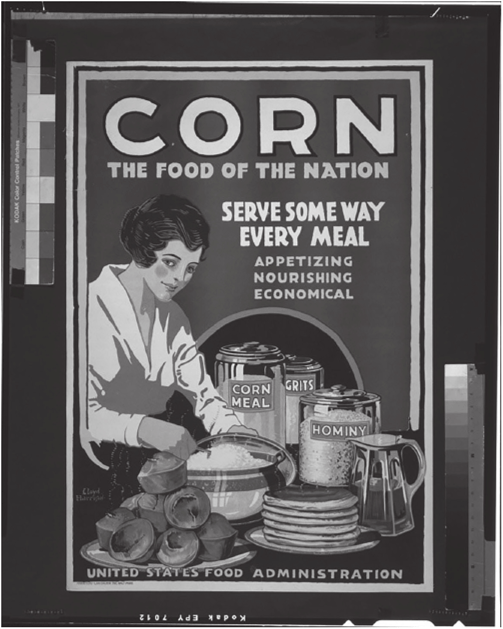
FIGURE 12.5 Corn. (Photocourtesy ofLibraryofCongress. https://www.loc.gov/pictures/itern/2002711987/.)
Corn in Amerindian Diets
Before the fifteenth century CE, corn was a staple from Chile to Canada. Mayan, Aztec, and, to a lesser extent, Incan civilizations depended on it. The grain fed Mesoamerica, South America, and the Caribbean. Hopi weddings treated guests to finely ground corn combined with squash (Cucurbita species), sunflower (Helianthus annum), or watermelon seed oil, whereas everyday life called for corn dumplings, pancakes, and grits. In contrast to squashes and sunflower, watermelon was an African rather than an American indigene; it reached the western hemisphere only in the sixteenth century. Hopi piki looked and tasted like unsweetened cornflakes. Whether as taco, burrito, tamale, empanada, torta, or another item, corn is basic to Mexican cuisine. Summarizing its importance, Hopi chief Don Talayesva remarked in 1942 that “Corn is life.”145
As succotash—the “most universal Indian dish, found almost everywhere”—corn and Phaseolus beans fed Native Americans and might have been part of the 1621 Thanksgiving.146 Great Plains’ Hidatsa baked cornbread known as naktsi.147 The Seneca and Cherokee added berries, beans, apples (Malus domestica), chestnuts (Castanea dentata), venison, or their combination to cornbread. Mesoamericans ate tortillas, beans, and squash seeds, which American anthropologist Ellen Messer (b. 1948) described a “nutritious and balanced diet.”148 A previous section and Chapter 8 discussed the benefits of combining beans or another legume with a whole grain. Depending on preferences, corn, beans, and squashes were consumed with leafy vegetables, chili peppers (Capsicum annuum) or chili sauce, meat, sucrose, or a mix of ingredients.
Hominy, whose preparation leveraged an intuitive understanding of chemistry, fed Mesoamerica. Its production necessitated immersing corn kernels in alkaline water. Such liquid, having a pH over 7—the number signifying neutrality—may be obtained by dissolving ashes in water. Another option is calcium hydroxide [Ca(OH)2], known as limewater, whose pH is also above 7. Numbers over 7 signify bases, whereas those below 7 are acids. The greater the pH, the more caustic the solution. Alkaline water is caustic enough to loosen the husk, whose removal increases digestibility of nutrients and calories. For example, the solution separates vitamin B, from indigestible hemicel- lulose, permitting the vitamin’s absorption. Greater availability of B, and amino acid tryptophan protects against pellagra. Husk’s removal eases grinding the rest of the kernel and forming dough. Lacking gluten, the dough does not leaven and is not hominy: the remains of kernels after alkaline water treatment, a process known as nixtamalization. Nixtamalization removes some bran, raising the issue of whether hominy is a whole grain. The USDA categorized nixtamalized corn as whole grain, specifying tortillas made from it as such but omitting reference to hominy.149 Boston, Massachusetts’ Whole Grains Council likewise withheld judgment about hominy.
Today, the average Mexican, Guatemalan, and Honduran consumes nearly 100 kilograms (220 pounds) of corn yearly, most of it as tortillas.150 The grass supplies up to 70 percent of their calories, though it has not eliminated deprivation.151 Mexican anthropologist Arturo Warman (1937-2003) described hunger and undernutrition as typical for poor peasants in Mexico, Central America, and many more parts of the world.152
Corn and Amerindian Health
Economists and other anthropologists provided prehistorical and historical depth to this reality by uncovering evidence of diseases and brief lives in skeletons of Amerindians who subsisted on corn. Chapters l and 3 documented life’s worldwide brevity during all but recent times. In the western hemisphere, diseases such as anemia worsened, heights diminished, teeth decayed, and infant mortality increased wherever people made corn their staple.153 For example, women shrunk 4 centimeters (1.6 inches) on average and men shortened 2 centimeters (0.8 inches) during the transition from hunting, gathering, and fishing to corn growing on Georgia’s coast.154 That women shrank more than men suggests that men monopolized animal protein, leaving corn for women.
Stunting is unsurprising because corn lacks essential amino acids lysine, tryptophan, and isoleucine.155 As with zinc discussed earlier, Chapter 1 indicated that humans cannot reach full stature without consuming complete proteins. Beans’ inclusion with corn restored adequate essential amino acid balance, but beans and squashes did not return health to preagricultural levels.156 Among pre-Columbian peoples, corn and anemia plagued southeastern North America’s Mississippian civilization between 1100 and 1300 CE, the American Southwest, and the Maya in Mexico’s Chichen Itza. For example, fourteen of twenty-one Mayan skulls from children aged 6-12years displayed porotic hyperostosis, which Chapter 1 described as evidence of anemia.157 Researchers have not documented the disease among precontact Americans w'ho subsisted on potatoes, sweet potatoes (Ipomoea batatas), cassava, or yams (Dioscorea trifida), all subjects of the next chapter.
Confirmation of corn’s limitations came from Amerindians along the Midwest’s Ohio and Illinois rivers. Initially hunter-gatherers, they relied increasingly on corn by roughly 1150 CE. These corn consumers suffered 50 percent more enamel hypoplasia—defined in Chapter 1—than their predecessors, three times more bone deformities from diseases, and four times more anemia.158 Osteoarthritis became more prevalent, implying that raising corn was more arduous than hunting, gathering, and fishing. Life expectancy at birth (e°) fell from 26 years before corn was the staple to nineteen afterward.
Yet Warman’s “botanical bastard” cannot shoulder all the blame for misery. Globally, the transition from hunting and gathering to farming and livestock raising stunted growth, shortened lives, and exacerbated diseases—Chapter 3’s critics charged—as people reduced dietary diversity and crowded settlements, in the process polluting their environment and hastening proliferation of rodents, insects, parasites, and pathogens.159 Warfare intensified as combatants fought over farmland and pasture.160 These factors operated among Mississippians, Southwestern peoples, and the Maya.161
For example, anthropologists suspect that yaws or syphilis—similar diseases though only syphilis can be venereal—may have caused anemia among Maya.162 Yaws may be eliminated from consideration if it arose only in Africa because Africa and the Americas had no contact before the sixteenth century. Moreover, Amerindians in the Southeast, Southwest, and Mexico ate more than corn. Dietary diversity, even if less than for hunter-gatherers, implies that iron and В vitamins may have been adequate and that other factors may have caused anemia. The interplay among nutrition, pathogens, parasites, and insects demonstrates that not every instance of anemia signified dietary distress.
Corn, Caribbean Slaves, and Health
In October 1492, Italian-Spanish mariner Christopher Columbus (1451-1506) observed corn on Caribbean island Hispaniola, now Haiti and the Dominican Republic.163 This encounter opened the Americas to Europeans, Africans, and others. Preferring wheat bread, Spaniards avoided corn, whereas necessity drove seventeenth-century English colonists to imitate Native Americans by growing and eating it. Africans’ acquaintance with corn may have begun aboard slave ships— where it was a common ration before 1800—and continued on plantations.164
For example, slaves ate corn throughout the Caribbean. Planting okra (Abelmoschus esculentus)— whose origins are disputed—on the islands, slaves combined it with corn to make coo-coo. Others added the grass to stews, making fungee. On Barbados, slaves ate corn, sorghum, vegetables, and sugarcane (Saccharum officinarum) juice, the last examined in Chapter 11. When food was scarce, slaves relied on cane juice for short durations. Besides these items, American anthropologists Jerome S. Handler and Robert Spencer Corruccini (b. 1949) mentioned “root crops.”165 Literally understood, this language should eliminate yams and potatoes, which Chapter 13 classifies as tubers. In contrast, sweet potatoes and cassava, being enlarged roots, satisfy Handler and Corruccini’s terminology. Columbus mentioned them in the Caribbean in 1492, unsurprising evidence for their presence on the islands because both originated in tropical America.166 Everyday use of the expression “root crop” includes tubers, of which yam species D. trifida fed Caribbean indigenes. Chapter 13 indicates, however, that potatoes need coolness and so cannot have thrived in tropical lowlands. Beyond these foods, slaves sometimes had rum and molasses, though meat, eggs, and dairy were uncommon. Infrequent salted fish supplied complete protein. Wild plants supplemented this fare.
These victuals, including corn and sorghum, were nourishing enough that slaves born on Caribbean islands Cuba and Trinidad were taller than West African arrivals.167 Statistics between 1751 and 1800 showed that Trinidad’s slaves were better nourished than London’s poorest adults and children.168 Moreover, data collected between 1810 and 1863 revealed that on the American South’s tobacco, rice, and cotton plantations, slaves who ate corn stood taller than those who did not.169
Nonetheless, Caribbean slaves’ nutrition was unenviable. Comparisons with West Africans exaggerated slaves’ vitality given poor diets in West Africa and appalling conditions aboard slave ships. Data collected between 1813 and 1815 contextualized Trinidadian slaves’ health, indicating that they were shorter than 99 percent of British laborers.170 Slave children suffered the severe protein deficiency disease kwashiorkor, which a later paragraph links to corn consumption. Chapter 8 acknowledged the difficulties of comparing slaves and free people.
Hunger and possibly nutritional deficiencies drove slave children and adults to eat soil, a practice known as geophagy. Nutritional shortfalls were acute when cane juice was the lone edible, stated Chapter 11. Deprivation emaciated slaves. Examination of 101 skeletons revealed abnormal growths on teeth roots, known as hypercementosis, which Handler and Corruccini attributed to undernutrition.171 Hypoplasia was severe in teeth from skeletons aged about 3 or 4years, implying starvation after weaning. Malocclusion (misaligned teeth) confirmed undernourishment’s magnitude.

