Chestnuts
Origins and Antiquity
In the Fagaceae family, Castanea species yielded the chestnuts that nourished Asians, North Africans, Europeans, and Amerindians since prehistory. The generic name may derive from Kastana in northern Greece or Kastanis, Turkey.25 C. sativa is the symbol of Castanea, Italy, another candidate for the generic name’s origin. Alternatively, these regions may have been named after the chestnut. The link between Castanea and these lands suggests the Mediterranean basin as an area of domestication. Researcher Georgina Pearman at the Eden Project in Cornwall, England, favored domestication in Turkey and between the Black and Caspian Seas, with later dispersal west throughout the Mediterranean.26
East Asia originated four species: Castanea crenata in Japan and Korea, and the Chinese chestnut (Castanea mollissima), the dwarf Chinese chestnut (Castanea seguini), and the Chinese chinquapin (Castanea henryi) in China. Southwestern Asia and northwestern Africa—an area known as the Maghreb—have Castanea sativa. North America was the cradle of the American chestnut (Castanea dentata) and the Alleghany chinquapin (Castanea pumila).
Greek physicians Pedanius Dioscorides (c. 40-90 CE) and Galen (130-210 CE) noted chestnuts’ importance as food throughout the Mediterranean, warning that excessive consumption caused flatulence.27 Because these doctors treated the wealthy, their concern indicated that elites ate the nuts, though from early times they fed principally the poor.
Pedology and Geography
Trees were numerous in mountains, hills, and soils unsuitable for grains, whose absence left chestnuts as sustenance. Mountains and hillsides tended to have soils—sandy or rocky but not clay, for example—that drained well, a necessity for chestnut roots, which rotted when wet. Where conditions dictated, transition to agriculture favored C. sativa rather than wheat (Triticum inono- coccum, T. dicoccon, T. aestivum, and T. durum), barley (Hordeum vulgare), millet (species in Eragrostideae tribe), grapes (Vitis vinifera), olives (Olea europaea), broad beans (Vicia faba), or other Mediterranean crops.
Beyond pedological matters, geography determined chestnuts trees’ utility. Because they seldom fruited above 52 degrees north, growers who wanted more than timber had to live below much of Canada, northern Europe, and Russia.28 Although trees survive without human assistance, plentiful nut production requires grafting and pruning. Without both, nuts tend to be small and trees are usually more vulnerable to the diseases that devastated American and European species after roughly 1850.
Chestnuts in North America
Before chestnut blight fungus Cryphonectria parasitica reached North America around 1900, the continent may have had 4 billion chestnut trees.29 Native to what is today southern Ontario, Canada, and the eastern United States, C. dentata was among the most numerous members of the region’s deciduous forests. One account held that before the fungus’ arrival, a squirrel could travel from Maine to Georgia without touching the ground, so ubiquitous were chestnut trees.30 Up to 40 meters (130 feet) tall, the species was conspicuous as “the king of trees,” “the queen of trees,” and the “redwood of the east.”31
Another label, “the farmer’s friend,” acknowledged rural reliance on the tree’s nuts and wood.32 American forester Harold Scofield Betts mythologized the chestnut’s “close association with the early home life of this country.”33 Dependence was evident in Appalachia, where C. dentata may have totaled one-quarter of trees.34 As elsewhere, Appalachia’s hillsides suited chestnut trees rather than grains. The region’s small farmers relied on the nuts for food and cash, selling them for transit to cities, where residents bought them from street vendors.35 In good years, chestnuts fetched more income than cattle (Bos taurus) in parts of Appalachia. Growers filled attics with the harvest’s remainder, eating nuts during winter.
This dependence predated European contact. For example, Iroquois near the Great Lakes ate chestnuts raw, boiled them, and added them to cornbread.36 Southeastern Cherokee created chestnut orchards by killing competing flora. C. dentata's small nuts disappointed Europeans, who planted C. sativa. Third U.S. President Thomas Jefferson (1743-1826) raised C. sativa at his home in Charlottesville, Virginia.37 At the continent’s western end, American horticulturist Luther Burbank (1849-1926) used C. crenata to breed new chestnut varieties. By 1886, his nursery had some 10,000 chestnut hybrids.38
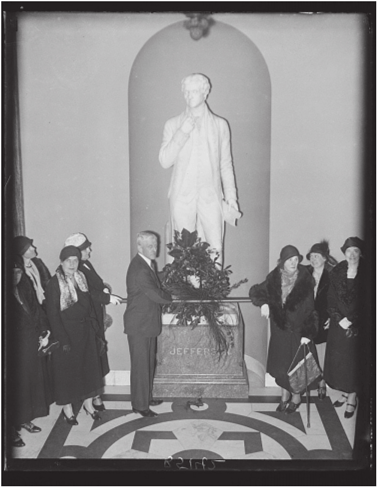
FIGURE 9.1 Thomas Jefferson. (Photo courtesy of Library of Congress, https://www.loc.gov/pictures/item/ 2016879561/.)
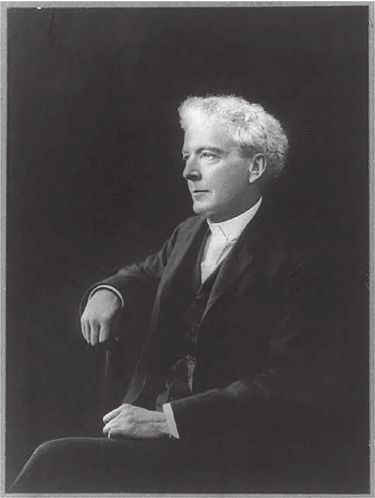
FIGURE 9.2 Luther Burbank. (Photo courtesy of Library of Congress, https://www.loc.gov/pictures/item/ 2016879561/.)
So important were chestnuts that they sustained North America’s fauna. Not only humans, but also bears (Ursus americanus), elk (Cervus canadensis), squirrels (Sciurus carolinensis), raccoons (.Procyon lotor), mice (Peromyscus leucopus and Mus musculus), wild turkeys (Meleagris gal- lopavo), and passenger pigeons (Ectopistes migratorius) ate the nuts. Chestnut blight’s destruction of C. dentata may have hastened wild turkeys’ extinction.39 Besides these animals, European introduction of livestock into the Americas added another layer of chestnut consumers. Rather than feed them, stockmen expected pigs (Sus scrofa domesticus) to forage for nuts. The result was tender pork, though the flavor was stronger than meat from cornfed hogs and counter to American and Canadian preferences.40 Where chestnuts were adequate for livestock, farmers did not need land for pasture.
Chestnuts in Europe
Across the Atlantic Ocean, C. sativa grew from Portugal and Spain in the west to Iran in the east.41 During the first millennium BCE, Europeans began cooking chestnuts, likely by roasting 42 Romans ground chestnuts into flour to mix with barley, wheat, rye (Secale cereale), or another grain to extend bread, a custom that persists in southern Europe. Rome planted chestnut trees wherever they would grow in the provinces as part of an effort to integrate disparate peoples into the empire; its dissolution in the fifth century CE did not diminish reliance on the nuts.43 In the sixteenth century, French anatomist and physician Charles Estienne (1504-1564) and French agronomist and physician Jean Liebault (1535-1596) wrote that “an infinity of people live on nothing else but this fruit [the chestnut]”.44 Dependence extended to hilly Tuscany, Italy, where a nineteenth-century Italian agronomist stated that “the fruit of the chestnut tree is practically the sole subsistence of our highlanders.”45 In 1879, French economist Pierre Guillaume Frederic le Play (1806-1882) remarked that “chestnuts almost exclusively nourish entire populations for half a year.”46
This duration was not hyperbole. With less fat than other nuts, chestnuts were slow to turn rancid. They lasted about three months fresh and two or three years dried.47 Collected in October, fresh chestnuts endured through mid-January, sustaining peasants during winter’s lean months. Because farmers ate most of w'hat they gathered, few nuts entered trade. For example, in 1872, Paris imported only around
5.4 million kilograms (6,000 tons) of France’s 453.6 million-kilogram (500,000-ton) harvest. Because C. sativa did not drop nuts at once, the harvest typically lasted over three weeks and involved an entire family. Ten hours’ exertions yielded from 50 to 150 kilograms (110.2 to 330.7 pounds) of nuts. A family sold the largest, fed the smallest—about one-fifth of the harvest—to pigs or poultry, and kept the rest.
Two hectares (4.9 acres) of C. sativa carpeted the ground with 4,989.5 kilograms (5.5 tons) of nuts, according to an estimate that omitted planting density.48 Allotting 175 trees per hectare (seventy per acre), British agronomist and economist Arthur Young (1741-1820) wrote that 0.4 hectares (1 acre) of trees produced enough chestnuts to feed one man for fourteen months.49 Judging this arrangement too dense, Fauve-Chamoux estimated thirty-five to one hundred trees per hectare (fourteen to twenty-five trees per acre) and a harvest of roughly 2,800 kilograms (6,172.9 pounds) of chestnuts. At 2 kilograms (4.4 pounds) of nuts per person, this produce would have fed a family of five for nearly seven months with enough left for one or two pigs. Chestnuts were eaten raw, in porridge or soup, or as bread or pancakes.
Chestnuts’ Problems
Although important in diets, chestnuts waned in the eighteenth century. Europe’s frigid 1709 winter killed countless trees.50 As the century progressed, opinion held that the nuts had few nutrients and were fit only for pigs. Economists, sure that cash crops alone generated wealth, decried chestnuts as a remnant of subsistence and a waste of land. Between 1823 and 1832, Italy uprooted around 43,000 chestnut trees south of the Alps in an area known as Piedmont. France’s chestnut hectarage declined from 578,224 in 1852 to 309,412 in 1892, to 167,940 in 1929, and to about 32,000 in 1975.
Exacerbating these woes, the fungus Phytophthora cambivora struck Italy’s chestnut trees in 1842, spreading to Portugal in 1853 and France in I860.51 Around 1904C. parasitica, mentioned earlier, entered the New York Zoological Park (now the Bronx Zoo) in New York City, where several trees ailed.52 By 1911, the park had only two live trees, both of which later died. Between 1904 and 1954, the fungus spread from Canada to the Gulf of Mexico and from New York City to California, Oregon, and Washington.53 By 1920, New Jersey had just twenty-five living chestnut trees, none of which survived. Up to 4 billion Canadian and U.S. trees succumbed to blight during the twentieth century.54
This destruction brought East Asia to prominence. The world’s leading chestnut grower, China harvested over 80 percent of the global total in 2016, though success came centuries earlier.55 Northeast of what is today Beijing, Miyun District emerged as China’s primary producer before Jesus’ birth. Its farmers raised more chestnuts than any other commodity, exporting the surplus to Japan, Korea, and Southeast Asia. What is not sold abroad feeds China’s cities. Beyond China, Turkey and South Korea ranked third and fourth worldwide in chestnut metric tonnage in 2016, and Japan and North Korea were ninth and tenth. Outside Asia, Bolivia ranked second. Resuscitating arboriculture, Italy, Greece, Portugal, and Spain also occupied the top ten.

