Suitability as Case Study
Flavor and preferences aside, if vegetables are as salubrious as experts claim, then past peoples who ate them should have been healthy. Like other qualities, health depends on context. Earlier chapters demonstrated that premodern peoples led difficult lives. Food was often scarce, and overwork, pathogens, parasites, rodents, and insects undermined vitality even when diet and nutrition were satisfactory. The issue is whether vegetables, like other foods, conferred benefits even when existence was precarious.
Chapters 4 and Ю mined evidence from the ancient Mediterranean to test the health effects of meat and olive (Olea europaea) oil, respectively. This chapter returns to the region, which archaeologists, anthropologists, historians, linguists, and other scientists and scholars have studied intensively for generations. The attraction lies partly in the quantity and quality of evidence about those who inhabited this area.
Interest in the Greek and Roman past, known as classical antiquity (c. 2000 BCE-c. 500 CE), appears to have languished during Europe’s Middle Ages (c. 500-c. 1500 CE). Renaissance (c. 1350-c. 1600) intellectuals, however, came increasingly to study antiquity’s material culture. Obvious targets of this movement were extant texts and ruins. Discoveries of artifacts intensified interest in antiquity. For example, British archaeologist Howard Carter (1874-1939) electrified the world in 1922 by unearthing Pharaoh Tutankhamun’s (c. 1345-1327 BCE) tomb in the Valley of the Kings near Luxor, Egypt. Less dramatic has been the piecemeal rediscovery of Roman towns in the Bay of Naples, an area also termed the Gulf of Naples.
Among its features is Mount Vesuvius, which erupted in 79 CE, burying the towns Herculaneum and Pompeii in rock and ash44 Part of the tragedy lies in the likelihood that their inhabitants had no inkling that the volcano was active because it had not erupted since roughly 15,000 BCE.45 Misfortune is also tied to the probability that those who died ignored Vesuvius’ warnings. Although Roman lawyer and administrator Pliny the Younger (61-c.l 13 CE) reported an unusual cloud above the volcano around noon, August 24, the eruption must have begun earlier.46 News spread immediately to his uncle, the naturalist Pliny the Elder (23-79), mentioned in earlier chapters. Before he could act, a servant delivered a letter from a friend, Rectina, too near the eruption to escape on her own. Hours must have elapsed from this letter’s composition to its delivery to Pliny. During this time, escape from Herculaneum and Pompeii was possible for many people, if not for Rectina.
The eruption’s gases asphyxiated some who stayed. Trying to rescue Rectina, Pliny the Elder was among the victims. Being nearer the volcano than Pompeii, Herculaneum experienced the initial shock; its residents likely perished first. Those not suffocated in the two towns died from the lava, its heat, or the fires the lava ignited. Rock and ash entombed the corpses.
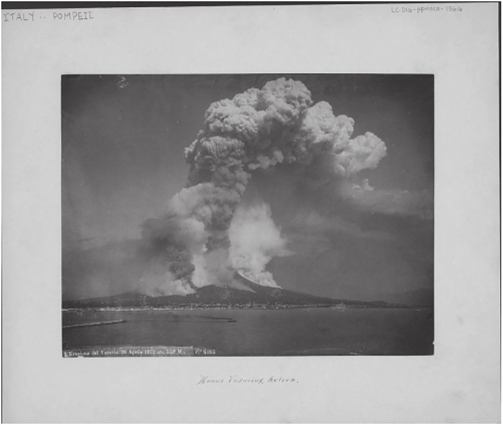
FIGURE 15.4 Mount Vesuvius. (Photo courtesy of Library of Congress, https://www.loc.gov/pictures/itern/ 2008676737/.)
Because Pliny the Younger, encouraged by Roman historian Publius Cornelius Tacitus (56-120), wrote a detailed account of the eruption, Herculaneum and Pompeii were not forgotten.47 Medieval Italians retained folk memories of both but could not pinpoint locations. These recollections’ role in archaeology is unclear; the 1709 discovery of Herculaneum was the fortuitous outcome of an attempt to dig a well rather than the fruits of systematic excavation. Although Pompeii’s excavation attracted greater attention, Herculaneum’s unearthing permitted scientists and scholars to reconstruct inhabitants’ diets with unusual precision.
Sources of Evidence
In this context, the grand discovery was the apartment complex Insula Occidentalis II, built during the reign of Emperor Augustus (63 BCE-14 CE) or Claudius (10 BCE-54 CE). Its two stories accommodated living quarters on the second floor and a bakery, a room that might have been a hotel or store, and a dye shop on the first. Both floors had several latrines whose shafts descended to a sewer roughly 80 meters (87.5 yards or 262.5 feet) below ground.48 Absent running water, the sewer aggregated rather than removed wastes, preserving excrement and, to a lesser extent, urine. Because latrines were in or near a kitchen, they also accumulated debris from food preparation, including butchered bones. The uncertain date of construction leaves unknown how many years’ deposits were in the sewer. British archaeologist Mark Robinson and Oxford University graduate student Erica Rowan supposed that workers emptied the sewer roughly every 20years, but this too is unknown.49 The important point is that the sewer had wastes when Vesuvius erupted, preserving them for identification and quantification. Chapter 1 described middens and coprolites’ value in understanding and evaluating diets, nutrition, and health. As noted, this sew'er was valuable because it had both trash and human wastes, an archaeological rarity.
Chapter 1 also cautioned that garbage and coprolites do not always accurately illuminate diets because bones are more durable than plants, exaggerating meat, poultry, and fish consumption. Persistence of shellfish’s hard parts creates the same illusion. Bones and shells turned up not only in middens because some small fish bones and shell fragments were swallowed inadvertently during a meal. Passing through the digestive tract, they were defecated.
The foregoing does not exclude plants from the archeological record. Several factors affect persistence. First, by desiccating plants, aridity increases chances of preservation. Southwestern Asia,
Egypt, and North Africa supply such an environment, which may explain the antiquity of evidence for the regions’ early invention or adoption of agriculture. Second, not all plant parts are equally susceptible to decay. For example, microbes cannot break down silica (silicon dioxide or SiO,), which is common in plants wherever soils contain it. Plant structures with silica—like grain kernels’ tough outer coat (the husk, hull, or chaff)—are known as phytoliths and may constitute the sole evidence for plant consumption in remote times. Third, cooking without enough oxygen prevents complete combustion. The remaining carbon persists through a process known as carbonization. Fourth, freezing temperatures retard decomposition. Fifth, waterlogging prevents aerobic but not anaerobic degradation. Sixth, where present, calcium (Ca2+) cations and phosphate (P043) anions may replace plant cells, a process known as mineralization. Calcium phosphate compounds endure longer than plants’ organic molecules.
Covering Herculaneum with rock and ash, Vesuvius’ eruption sealed the town. Ash even penetrated the sewer, preventing oxygen from entering and thereby arresting aerobic decomposition. As noted, lava ignited fires throughout the town, but the sewer’s position underground protected it from heat. The latrines that led to the sewer and the sewer itself contained calcium and phosphate ions, which preserved the contents through mineralization. These circumstances permitted archaeologists, scientists, and historians to reconstruct first-century CE Roman diets in unusual detail.
Besides the sewer, some 350 skeletons examined by 2015 further illuminated diets. Teeth and bones revealed nutritional stresses defined in Chapter 1. In addition, bones’ strontium, calcium, and zinc indicated the source of dietary protein. All three elements are metals on the Periodic Table, illustrated in Figure 2.9. In soils, they may be inorganic components of rocks. As rocks weather, these elements may ionize, in which state roots may absorb them. In this context, strontium deserves attention because it tends to exist in roughly equal proportions in plants and in soils in which they grow'. That is, plants mirror soils in strontium content. Herbivores and omnivores acquire the element from plants, depositing it in bones but not muscles. Because muscles lack strontium, omnivores have less of the element than herbivores, and carnivores—eating no plants—have least. In bones, strontium replaces calcium such that strontium to calcium ratios correlate directly with plant, and inversely with meat, consumption. The third element, zinc, is in meat such that zinc amounts in bones correlate with meat intake. Herculaneum skeletons’ excellent preservation, discussed below', permitted quantification of strontium, calcium, and zinc.
Like the sewer, Vesuvius’ rock and ash preserved skeletons unexposed to the eruption’s greatest heat with a fidelity rare in archeology. Entombed beneath 20 meters (21.9 yards or 65.6 feet) of debris, skeletons experienced constant temperature, humidity, and pH (a measure of acidity or alkalinity).50 Together, sewer and skeletons formed a microcosm of Roman antiquity. Such circumstances lead this chapter to scrutinize first-century CE Herculaneum as among the best evidence of premodern diets, nutrition, and health.
The town, named after Greek god Heracles (Roman name Hercles or Hercules), indicates its origin as a Greek settlement. From its base in southeastern Europe, Greece began colonizing the Mediterranean in the eighth-century BCE.51 Southern Italy was an early destination, w'ith Greeks inhabiting w'hat w'as a village of Oscan-speaking Italians around then.52 Naming it Herculaneum, Greeks favored the area because its harbor in the Bay of Naples facilitated maritime trade. Likewise promoting commerce, Rome conquered the towrn about 310 BCE.53 As elsewhere, Rome sought to maintain the stability conducive to trade rather than micromanage Herculaneum. Because Rome admired and copied Greek architecture, urban planning, and culture, it reinforced rather than remade the town’s economy, appearance, and customs. As a relic, Herculaneum thus opens a window' into the Greek, Roman, and Mediterranean worlds. Its lifeways and foodways reveal much about Mediterranean antiquity.
The foregoing does not pretend that Herculaneum can answer every question about its milieu. The spectacle of its destruction, a source of fascination, enhances and circumscribes the town’s archaeological, anthropological, historical, demographic, and medical value. Vesuvius’ engulfment turned the towrn into a kind of time capsule for which the moment of preservation can be pinpointed

FIGURE 15.5 Hercules. (Photo courtesy of Library of Congress, https://www.loc.gov/pictures/item/ 89711289/.)
with unprecedented precision. On the other hand, demographers cannot hope to quantify life expectancy at birth (e°) or at any age because everyone died prematurely. Absent this information, crucial evidence about residents’ health cannot be retrieved.

