Diets
Appreciation of Herculaneum’s utility and limitations permits dispassionate investigation of diets, nutrition, and health to the extent that humans are capable of impartiality. In this inquiry, the sewer supplies more details about Herculaneum’s diets than the skeletons and is our launchpad. As noted, the sewer best preserved foods’ durable parts: bones, shells, and seed coats. Among the last are polyliths of vegetables and of fruits colloquially termed vegetables but which this book denies as such because these categories, as mentioned, do not overlap. Instructive is the fact that preservation is good enough to allow polyliths’ tabulation. To be sure, this section supposes neither that the sewer preserved every seed, or even a sizable fraction, that entered nor that everything preserved has been identified. Nonetheless, no reason exists to suppose, for example, that lettuce seeds preserved better or worse than seeds from celery, from another vegetable, or from any other plant; counts might therefore indicate the place of each vegetable in diets relative to other foods even if the magnitude is unknown. This section acknowledges, however, that large seeds are easier to identify than small ones, introducing unintentional error into attempts to quantify Herculaneum diets.
A glance at the numbers downplays vegetables’ dietary role. Researchers identified under eleven polyliths of seeds each from celery, colewort, and mustard.54 Ambiguity shrouds the last two because of difficulty differentiating them. Additionally, seeds cannot pinpoint mustard’s use because they are a spice, whereas leaves are a vegetable. Because only seeds were recovered, Herculaneum inhabitants may have used mustard as only a spice.
Expensiveness reserved spices for elites, making seeds’ interpretation as vegetable or spice an economic and class issue. A picturesque location, beachfront Herculaneum was a resort where the rich went to socialize and frolic. Emperor Gaius Julius Caesar Germanicus (12-41 CE), known as Caligula, was among the fabulously wealthy who owned a villa there.55 Even the merchants owned “luxuriously appointed” homes.56
Of the 139 skeletons they examined, American anthropologist and archaeologist Sara Louise Clark Bisel (1932-1996) and American editor Jane F. Bisel described four as “privileged.”57 At death, one woman wore “a lot of gold jewelry”—two rings, two bracelets, and earrings—and had coins in a bag.58 Any laborer whose ring has caused blisters or callouses knows that it is more than jewelry when it advertises the wearer’s ability to delegate work to inferiors rather than endure drudgery. A second woman had teeth with little wear, suggesting consumption of only refined foods.59 Two of three adults scrutinized by the Bisels had robust bones, implying excellent nutrition throughout life.60 They could afford food even when shortages increased prices. An 8-year-old girl wore a gold ring and a necklace of glass beads.61
The authors omitted whether these four were the only elites among the 139 or brevity limited coverage. These fortunate few had servants, slaves, and spacious quarters. One apartment, as large as some Herculaneum houses, had bronze—an alloy of copper and tin—and silver decorations62 Such elites afforded the spice pepper (Piper nigrum), represented by two peppercorns from the sewer.63 Pepper was precious, arriving from southwestern India, a voyage that winds permitted once annually during the age of sail. Also imported were dates, represented by under eleven pits in the sewer.64 Although Italy had date palms, they did not flower, necessitating importation from Syria, Palestine—now' Israel and Palestine—and Egypt.65 Besides pepper and dates, the wealthy bought pickles from Spain, ham from Gaul—now France and parts of Belgium, Germany, and Italy— pomegranates (Punica granatum) from Libya, and oysters (Crassostrea species) from Britain.66
The Bisels acknowledged “that the rich were few and that poor people and slaves vastly outnumbered them.”67 Chapter 4 furnished corroborating evidence for Egypt, which was part of the empire from 30 BCE to around 600 CE, and noted the chasm between haves and have nots, a recurrent theme in this book. As the wealthy’s playground, Herculaneum had numerous commoners as servants and slaves. The town’s furniture, also preserved by Vesuvius, evinced stratification. Of fifty wood samples examined in 1991, forty-six were silver fir (Abies alba) or maple (Acer species, likely Acerpseudoplatanus).6* Noted for affordability, maple was attractive enough for those who wanted to appear stylish. The thirty-nine silver fir samples confirm the plebian origins of most residents. Roman authors omitted the wood as suitable for furniture, instead emphasizing its mundane uses in shipbuilding.69 Grown throughout Italy, the tree was plentiful and may be thought the Model T rather than Rolls Royce of woods. By contrast, expensive woods—notably ebony (Diospyros species) and the coniferous Callitris quadrivalvis—were absent from the samples.70 Both symbolized luxury, and ebony was popular in Egypt, a selling point given Roman reverence for Egyptian civilization and its trappings.
Herculaneum therefore had a nucleus of elites surrounded by many servants and slaves. The masses could not have afforded spices, leading this chapter to designate mustard, celery, and colew'ort seeds as evidence that most residents ate their vegetable equivalents: mustard, celery, and colewort leaves, which would have been less likely than seeds to persist as biofacts. Moreover, that leafy vegetables like colewort and lettuce were “common” in Roman diets suggests mustard greens’ consumption.71 That Romans ate colewort, earlier noted as most like collard greens or kale, strengthens the inference that they also consumed mustard greens. A worse showing comes from the sewer’s carbonized plants, which have yet to yield identification of a single vegetable seed.72
Other foods appear to have been more prevalent than vegetables. For example, researchers counted at least 1,000 polyliths of fig (Ficus carica) seeds and eleven to 999 of seeds from apples (Malus domestica) or pears (Pyrus species), olives, broomcorn millet (Panicum miliaceum), foxtail millet (Setaria italica), grapes (Vitis vinifera), and opium poppy (Papaver somniferum).73 The sewer yielded at least 1,000 carbonized olives and eleven to 999 carbonized grapes.74 Bones from numerous fish species, chickens (Gall us gallus dome Stic us), pigs (Sus scrofa dome Stic us), and sheep (Ovis aries) and shells from mollusks (species in the phylum Mollusca), crabs (species in the infraorder Brachyura), and sea urchins (species in the class Echinoidea) have been identified. The apparent disparity between vegetables and other foods squares with belief that vegetables were minor in Roman diets.75
This opinion has four weaknesses. First, the attempt to quantify plant intake by tabulating seeds underreported vegetables because, as emphasized, they are not seeds. Seeds’ exclusion leaves structures less likely to preserve. To put this reality another way, consumption of these plant parts leaves no seeds for possible preservation. For example, identification of under eleven celery seeds reveals little about the vegetable’s place in Herculaneum diets because consumers ate the leaves and petiole not the seeds. Someone who consumed only celery ingested no seeds to defecate. In this light, identification of under eleven celery seeds must represent the proverbial tip of an iceberg, suggesting that celery intake—though hidden from view—was sizable.
This logic applies to seeds that people wanted to eat. For example, the sewer yielded under eleven polyliths of lentil (Lens culinaris) seeds, the same as for celery, colewort, or mustard. Whereas consumers did not want to ingest celery, colewort, or mustard seeds—unless mustard was a spice for the few' wealthy—lentils w'ere nothing but seeds where the consumer was concerned. Under such circumstances, lentils’ consumption ensured that some seed coats—in this instance not above ten— preserved. If lentils were as plentiful in the sewer as accidental celery, colew'ort, and possibly mustard seeds, then celery, colewort, and mustard greens must have been larger parts of Herculaneum diets than lentils. That is, celery, colewort, and perhaps mustard greens must have been crucial to Roman diets given scholars’ judgment that legumes were basic to ancient Mediterranean foodw'ays.76
Second, seeds’ use to gauge plants’ dietary importance is most apt when species yield roughly the same number of seeds per edible. Such uniformity anticipates equal ratios of seeds preserved whenever tw'o species constitute equal parts of diets. But this assumption is false. For example, readers should be unsurprised that fig seeds were numerous in the sewer because a single fig may have up to 1,600 seeds.77 Preservation of even small proportions of the total defecated must have aggregated countless thousands over time. By contrast, a mustard plant has not over twenty seeds per pod.78 This disparity may explain w'hy fig seeds were more numerous in the sewer than mustard seeds. Alternatively, Herculaneum residents may have eaten more figs than mustard greens or seeds. A third possibility is that both factors combined to w'iden the divide between numbers of fig and mustard seeds retrieved.
Third, as noted, seeds are easier to identify when large than small. Size may explain identification of at least 1,000 carbonized olive pits.79 Other medium to large seeds included lentils—both mineralized and carbonized—broad beans (Viciafaba), cherry or plum stones (both Primus species), hazelnuts (Corylus species), walnuts (Juglans regia), cucumber or melon (both Cucumis species), foxtail and broomcorn millet, barley (Hordeum vulgare), einkorn (Triticum monococcum), emmer (Triticum dicoccon), and bread (Triticum aestivum) or durum (Triticum durum) wheat.80 Numerous fig seeds, mentioned earlier, demonstrated that small seeds were retrievable. Researchers’ use of 0.5-millimeter (0.02-inch) mesh aided their recovery.81
Fourth, attention on seeds omitted edibles that did not leave them. The sewer had no evidence of onion (Allium сера) or garlic (Allium sativum)—w'hich have long been propagated from bulbs more than from seeds—even though scholars agree that Romans ate both.82 Farmers who wanted food harvested onions the first year, preventing flow'ering in these biennials. Garlic has been grown from cloves so long that it seldom flowers or produces viable seeds. Roman soldiers consumed garlic in the belief that it enhanced courage.83 Greek and Roman physicians championed it as food and medicine.84 Greek anatomist and author Galen (130-210 CE), physician to Roman emperor Marcus
Aurelius (121-180), counseled corpulent patients to lose weight by eating garlic and onion.85 Of course, overweight and obesity concerned only the few whose wealth protected them from hunger and privation.
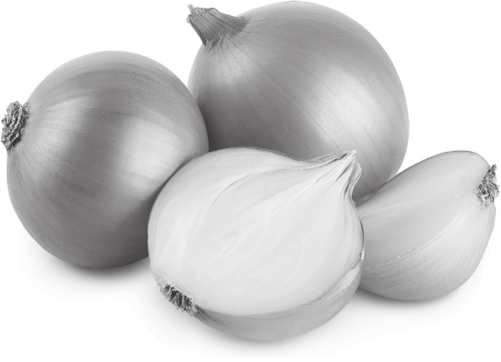
FIGURE 15.6 Onion. (Photo from Shutterstock.)
Reliance on seeds yielded a surprise for grains: carbonized foxtail millet, barley, einkorn, emmer, and bread or durum wheat numbered under eleven each.86 Carbonized broomcorn millet was not found. Mineralized emmer kernels numbered under eleven.87 Between eleven and 999 mineralized foxtail and broomcorn millet grains were counted. No other mineralized cereals were identified. Judging these numbers too small, Robinson and Rowan asserted that Herculaneum’s inhabitants must have eaten bread made from flour absent chaff, just as would be expected of winnowed cereals.88 Such flour would have left nothing to preserve in the sewer. They explained the greater number of millet kernels relative to other grains as the result of millets’ consumption as porridge or gruel. Such fare fed the poor, who could not have afforded refined foods.
This explanation aside for a moment, the sewer yielded no more barley and wheat than vegetable seeds. This result, if not an artifact of cereals’ preparation, challenges the orthodoxy that Romans ate primarily grains. For example, the Bisels pinpointed wheat as the “staple,” with barley and millets as substitutes.89 British classicist Peter David Arthur Garnsey (b. 1938) identified cereals as the ancient Mediterranean’s only “truly ubiquitous” food.90 American classicist John F. Donahue estimated that they gave Romans up to three quarters of calories.91
Against these judgments, the sewer’s contents imply that Romans did not eat mostly grains, which bulked no larger in diets than vegetables. If cereals were central to ancient Rome, then so were vegetables. This view is adopted here because the poor, who were far more numerous than the wealthy, ate porridge or gruel as Robinson and Rowans stated and bread that kept the chaff because of coarse grinding.92 The sewer must have preserved some of it, making seeds’ tabulation an accurate gauge of grains’ place in diets.
These considerations recommend Herculaneum as a test of vegetables’ health effects. The skeletons, to which this chapter turns, best answer questions about vitality. Their strontium to calcium ratio is greater, but zinc content is less, than for modern Americans.93 This result may appear puzzling because high strontium implies, but low zinc refutes, meat consumption. The sewer’s numerous fish bones and aquatic shells resolve the quandary because seafood is rich in strontium but has less zinc than meat.94 From these data, Sara and Jane Bisel concluded that the town’s occupants derived much more protein from seafood than from meat or plants.95 This insight appears to diminish legumes’ place in the diet. Their dearth in the sewer confirms this likelihood. If Herculaneum’s residents ate less bread and fewer legumes than has been supposed, and if most could not afford meat, then vegetables and fruits must have filled their bowls. Numerous fig seeds, already mentioned, support this view if their abundance accurately gauged figs’ dietary prominence.

