Western Hemisphere
Turkeys in Pre-Columbian North America
The turkey’s ancestors inhabited North America around 23 million years ago.112 Unlike today’s turkeys, these birds were light enough to fly, though their reproductive habits favored enlargement. Like many animals, including humans to a degree, the turkey’s predecessors exhibited sexual dimorphism whereby males were larger than females.113 This difference implies that females mated with large males, a preference that retained genes for size. Domestication would amplify this trend.
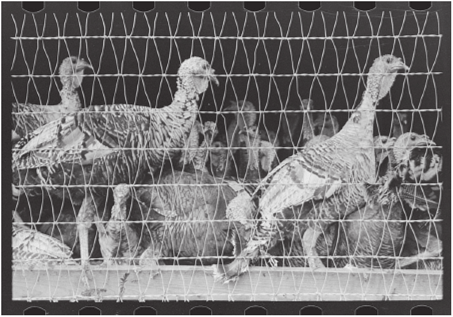
FIGURE 6.6 Turkeys. (Photo courtesy of Library of Congress, https://www.loc.gov/pictures/item/ 2017741384/.)

FIGURE 6.7 Turkey bacon. (Photo from author.)
Scientists have dated the genus Meleagris to the Pleistocene (2.6 million-12,OOOyears ago). Early finds may be M. gallopavo. The genus speciated repeatedly before humans entered the Americas, a development that Chapter 3 recounted. Amerindians domesticated two, Meleagris ocellata in Central America and southern Mexico and M. gallopavo f. domestica in the American Southwest. The first must have been plentiful enough for the Maya to characterize Central America and southern Mexico as lands of turkeys and deer.114 Europeans who colonized what is today the United States encountered the second, making it a Thanksgiving staple. So complete was domestication that wild turkeys no longer exist. Aside from dogs, the turkey was prehistoric North America’s only domestic animal.115
The taming of two species necessitated more than one episode of domestication. Mesoamericans may have tamed M. ocellata between 2500 and 200 BCE.116 To the north, Ancestral Puebloans in Mesa Verde, Colorado—near what is now the junction among Utah, Colorado, New Mexico, and Arizona and known as the Four Corners—domesticated M. gallopavo f. domestica centuries before European contact. American paleontologist Stanley John Olsen (1919-2003) dated domestication no later than Pueblo I period (750-900 CE).117
Wild turkeys may have aided this transition by congregating among humans in hopes of eating leftovers. Reintroducing turkeys into Mesa Verde National Park in 1944, the U.S. Park Service witnessed their intrusiveness.118 Park agents could not frighten them away with small explosives. Similar behavior may have led Ancestral Puebloans to herd turkeys, which benefited farmers by eating insects, slugs, and snails and consumers by furnishing flesh and eggs. In addition, Amerindians fashioned turkey bones into tools, used feathers for adornment, and sacrificed these birds during rituals.
The last two uses generated commentary. Relying on Spanish accounts, American anthropologist Corina M. Kellner and coauthors wrote that “turkeys were kept largely for their feathers at many pueblos.”119 American archaeologist and anthropologist Gordon F. M. Rakita and Mexican archaeologist Rafael Cruz noted that Mexicans in pre-Columbian Paquime in Chihuahua state interred headless turkeys with human corpses, speculating that decapitation occurred during burial

FIGURE 6.8 Mesa Verde National Park. (Photo courtesy of Library of Congress, https://www.loc.gov/ pictures/item/2017740641/.)
rituals.120 In the American Southwest, however. Rakita and Cruz identified consumption rather than religious uses.121 Turkey intake increased as Southwestern populations grew and game dwindled.122 “Turkeys might have been important sources of protein at certain Southwestern pueblos, part of a strategy to cope with relatively limited access to other types of meat,” acknowledged Kellner and colleagues.123
Archaeologists and anthropologists may have overstated the extent of specialization. Raising turkeys for feathers did not preclude eating eggs or slaughtering birds for food when people were hungry or favored other types of ornamentation. Although killing turkeys during rituals and burying them afterward eliminated them as food, there is no reason to suppose that Amerindians eschewed eggs while hens matured to sizes deemed suitable for sacrifice. Plains Indians used all parts of bison, whose contributions to nutrition and health are in Chapter 4.124 Similar behavior surely governed hungry tom and hen keepers.
This book emphasizes that anthropologists, archaeologists, biologists, and other scientists often infer animal consumption by counting bones in middens and bone fragments in coprolites. This method has the value of concreteness but is biased in favor of large, sturdy bones that tend to preserve better than small, light ones. As noted, however, bird bones fall into the second category. Absence from the archaeological record because of poor preservation does not preclude consumption unless evidence eliminates a food from diets. The problem of how to draw inferences from silence is central to an attempt to understand prehistory, when written records cannot be consulted for insights into any aspect of life.
Fortunately, the Southwest offers prehistorians an array of biofacts because aridity retarded deterioration. Readers may consult Chapter 15 for more information about climates favorable for preserving the past. Dryness yielded turkey bones and eggshells. Mesa Verde National Park’s Mug House Ruin had over 1,074 bones from between 183 and 815 turkeys.125 The park’s Big Juniper House likewise possessed many bones. Other Southwest sites—including Poncho House in San Juan County, Utah, Betatakin Pueblo in Shonto, Arizona, Kiet Siel Pueblo near Kayenta, Arizona, Awatovi Ruins near Keams Canyon, Arizona, Arroyo Hondo near Taos, New Mexico, and Wupatki Pueblo near Flagstaff, Arizona—contained numerous turkey bones.126 Cut marks—for example, on bones found at Pecos Pueblo in Pecos, New' Mexico—evinced butchering.127 There, turkey bones were more plentiful than those of any other bird, indicating dietary prominence. Bones represented turkeys at all stages of development, demonstrating that Amerindians ate them as hatchlings on up to maturity.128 Bones’ disarticulation—for example, at Gran Quivira in Salinas Pueblo Missions National Monument, New Mexico—indicated consumption of flesh in segments just as moderns eat chicken from legs or another part.129 Bone fragments in coprolites at Cedar Mesa in San Juan County, Utah, prove ingestion.130 Eggshells reveal that turkeys were tame enough to reproduce in captivity.

FIGURE 6.9 Pecos Pueblo. (Photo courtesy of Library of Congress, https://www.loc.gov/pictures/item/ nm0044.photos.ll3783p/.)
Pecos Pueblo, inhabited from the thirteenth century CE to 1838 and excavated since the 1920s, has yielded nearly 2,000 partial and complete Amerindian skeletons.131 This book repeatedly remarks that researchers have employed chemistry to study diets. Chapter 1 noted that plants use carbon dioxide (C02) in different ways. Transformation of it into the three-carbon compound phos- phoglyceric acid (C3H707P) is designated the C3 pathway. All fruit trees and some plants that arose in the tropics—for example, sweet potatoes (Ipomoea batatas), tomatoes (Solatium esculentum), and beans (Phaseolus vulgaris, P. lunatus, P. acutifolius, and P. coccineus)—are C3. In contrast, other tropical plants—for example, sugarcane (Saccharum officinarum), corn, millet, and sorghum (Sorghum species)—use carbon dioxide to make the four-carbon molecule oxaloacetic acid (C4H405) by the C4 pathway. These pathways use different carbon isotopes such that isotope ratios in animals, including humans, help determine what they ate.
Isotope proportions demonstrate that Pecos Puebloans ate mostly C4 plants and animals that fed on these plants. For example, bison grazed C4 grasses and were part of Pecos diets.132 The pueblo’s occupants were farmers more than hunter-gatherers and did not pursue bison, instead acquiring it through trade with Plains Indians. Conflicts—which Spaniards intensified upon entering the Southwest in the sixteenth century—disrupted trade, eliminating access to bison during these times. Yet isotope data indicate steady C4-food intake. Uniformity resulted from consumption of C4 staples such as corn and turkeys. Turkeys were especially important in this regard because Amerindians fed them corn. That is, domestic turkeys were a richer C4 source than wild birds. This reasoning suggests not only that Pecos Puebloans depended on turkey but that they had fully domesticated the bird. In addition, Pecos Pueblo’s denizens ate mule deer (Odocoileus hemionus), whose bones were numerous in middens.133 This plentitude appears to contradict isotope results because these deer browsed C, plants.
In addition to biological and chemical evidence, art documented turkeys’ prominence in the Southwest. At Awatovi, Hopi artists depicted them on kiva w'alls and pottery.134 Between 1100 and 1300, the Navajo painted a mural of turkeys on a cliff roughly 20 meters (21.9 yards or 65.6 feet) aboveground at Canyon de Chelly National Monument near Chinle, Arizona.
Besides biology, chemistry, and art, numerous pens evinced turkeys’ abundance. Thick layers of excrement confirmed pens’ confinement of turkeys. Within homes, the structures concretized domestication in a fundamental way. The word “domesticate” derives from the Latin domus, meaning “home.” The English noun “domicile” conveys this meaning. Domestication therefore was a process that made an animal or plant sufficiently tame and useful to merit its introduction into the home. What could not be brought into the home remained alien, and a source of unease, to civilization’s order and stability. These pens thus confirmed turkeys’ full integration into Southwestern life.
Additional evidence for domestication comes from feathers, whose color varies with diet. Wild turkeys, like humans, are omnivores. Their fondness for insects, slugs, snails, and worms gave them proteins with many amino acids. Turkeys must ingest the amino acid lysine to produce feathers w'ith colors other than white. The feathers recovered from Mesa Verde have white tips, indicating insufficient lysine.135 This coloration suggests turkeys’ confinement and dietary restriction. They must have eaten just plants rather than the usual buffet of invertebrates and plants. Low in lysine, corn grown in the Southwest was probably the chief feed.
Surveying the evidence, Olsen judged turkey the primary animal in prehistoric Southwestern diets.136 It fed natives in lands marginal for crops. Assailing the Southwest with repeated droughts, aridity endangered farming. The Medieval Warm Period (see Chapters 8, 9, and 16) between the ninth and thirteenth centuries did not benefit the Southwest as it did Europe. Between 1130 and 1180 drought desiccated lands west of the Mississippi River.137 From 1276 to 1299, the Great Drought caused indigenes to abandon their homes.138 Unpredictability magnified drought’s threat as three wind patterns met at the Four Corner. The outcome of the tussle among the three varied, changing rainfall from year to year. Another danger came from the northwest, whose cold air descended on the region, shortening growing seasons.139 Corn, the primary crop and a tropical grass in origin (see Chapter 12), suffered. Thirteenth-century harvests underfed populations. Such circumstances must have increased Amerindians’ reliance on turkeys, eggs, and game.
Columbus and his crew were the first Europeans to see and taste turkey.140 In 1502, on the fourth voyage, they landed on the coast of what is now Honduras. The native population brought the Spanish what they called “land chickens” and what scholars believe were turkeys.141 The birds’ terrestrial habits suggest that they could not fly. In 1519, Spanish conquistador Hernan Cortes (1485-1547) saw turkeys—which fed Aztecs absent large livestock—in Tenochtitlan, now Mexico City.142 Visiting Mexico in 1529, Franciscan priest Bernardino de Sahagun (1499-1590) observed turkey eggs and flesh with chili pepper (Capsicum species) sauce, tomatoes, and squash (Cucurbita species) seeds in Aztec markets.143 Between 1540 and 1542, Spanish conquistador Francisco Vasquez de Coronado (1510— 1554) and his men ate turkeys while searching the Southwest for gold. One among them enthused about the “large numbers of native hens and cocks.”144 Although he did not name the bird, the adjective “native” implies turkey rather than chicken. Familiar with the latter, Europeans would not have designated it indigenous to the Americas. The turkey excited commentary because it was novel.

