Factors That Govern Health
But misery was not universal. Previous chapters identified instances of vigor and posited factors, including diet, that enhanced it. Interest in diet and nutrition, Chapter 1 remarked, led me to test numerous foods’ health effects in prehistory and history. Few emerged from this study as universal as items worthy of every diet. In this category, Chapter 13 amassed evidence that the potato (Solatium tuberosum) approximates a perfect food as nearly as may be possible. This book recommends it above meat as the foundation of a hearty meal, though animal products may merit inclusion as side dishes. Examined in Chapter 8, peas (Pisum sativum) sustained medieval peasants, beans (Phaseolus vulgaris) nourished prehistoric Mexicans, and peas, peanuts (Arachis hypogaea), and beans may have made African slaves better nourished than free whites. Chapter 9 indicated that acorn (Quercus species) eaters were unusual among premodern peoples in displaying few skeletal and dental pathologies besides caries. Chapter 14 identified bananas as a probable factor in Yanomami health and longevity. On the other hand, Chapter 12 faulted corn (Zea mays) for anemia, pellagra, and kwashiorkor. Chapter 13 implicated cassava (Manihot esculenta) in goiter, cognitive impairment, and paralysis. Earlier chapters and a later paragraph emphasize, however, that foods’ utility depends largely on context.
Even the best diet and nutrition do not alone invigorate the body. Although I did not begin this investigation to study activity’s health effects, evidence of its benefits recurred frequently enough to compel the conclusion that vitality requires physical labor, exercise, exertion, activity, or whatever language an onlooker wishes to employ. For example, Chapter 4 identified activity as common to Paraguay’s Ache and Great Plains Indians. Both were far healthier than Chapter 4’s Egyptian elites, whose sloth caused heart disease. All three ate meat, eliminating it as explanation for divergent outcomes. Absent dietary differences, exertion among Ache and Plains Indians and indolence among Egypt’s wealthy offer the best explanation for health disparities.
Other research corroborates my emphasis on activity. American nutritionist Thomas Colin Campbell (b. 1934) and his son American physician and marathoner Thomas M. Campbell II calculated that rural Chinese had seventeen times fewer deaths from heart disease than Americans in the 1970s.20 Cholesterol was lower, and cancers were less frequent in China than in the United States.21 Although they scrutinized dietary contrasts between rural China and the United States, the Campbells observed that Chinese were more active than Americans.22 Manual labor was ubiquitous in China’s countryside. Even Chinese office workers were more vigorous than Americans because they bicycled rather than drove wherever they went.
In a similar vein, American anthropologist Stephen Le, introduced in Chapter 1, upheld prehistoric hunter-gatherers as paragons, asserting that on an average day, men walked 14.5 kilometers (9 miles) and women 9.7 kilometers (6 miles).23 Without a citation, these numbers may be speculation, though Le used them to claim paradoxically that our ancestors expended no more energy than we do today. He seems to have undermined this statement by estimating that Americans now average just 4 kilometers (2.5 miles) by foot, allotting the balance of the day to “sitting, driving, and watching nearly 5 hours of television.”24 Even were an average defensible, it would provide almost no real information given diverse habitats, some requiring enormous efforts to extract food, others far less, and the rest between the extremes. Nonetheless, this book notes that preagricultural peoples’ use as models of what moderns should eat and do appeals to anthropologists and some scientists and physicians.
Examination of hunter-gatherers confirms strenuousness that appears to contradict Le’s assertion that they metabolized no more calories than we do now. The hunt took Amerindians in the Great Basin—today Nevada, most of Oregon and Utah, and parts of Wyoming, Idaho, and California—up to
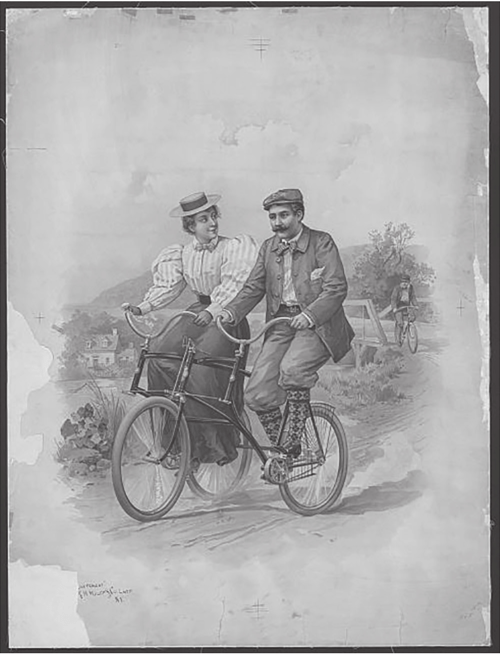
FIGURE 16.2 Bicycles. (Photo courtesy of Library of Congress, https://www.loc.gov/pictures/item/ 2018756236/.)
96.6 kilometers (sixty miles) from camp.25 American anthropologist Clark Spencer Larsen (b. 1952), introduced in Chapter 2, characterized their lives as “rigorous and demanding,” writing that “These people were subjecting their legs to very heavy physical activity, compared to other populations.”26 Their skeletons revealed osteoarthritis in 77 percent of adults and in everyone over age 30.27 The condition, uncommon in modern Americans, evinced intense exertions.28 Great Basin Amerindians’ robust bones, having supported strong muscles, indicated activity and adequate nourishment.29 Even those with light bones, signaling undernutrition, were energetic.30 Prolonged walking, often over rough terrain, strengthened lightweight bones. Despite inhabiting a harsh environment, they were healthy.31 At the risk of belaboring the obvious, such evidence implies that exertion must accompany nutrition to confer maximum vigor and that indolence weakens even satisfactorily nourished bodies.
On the other hand, excessive labor appears to be no better than torpor. Chapters 6, 8, and 15 emphasized that overwork enervated slaves, increased illnesses’ frequency and severity, and truncated lives. Although governments may boast of having ended slavery, overwork and exploitation persist. Farm and factory labor remains arduous wherever it requires muscles rather than machines. The argument may be advanced that many governments do little to prevent businesses from extracting maximum exertions from employees while paying scant wages. As a landscaper, I had a supervisor who lamented the ubiquity of exhausting, filthy jobs, their meager pay, and the difficulty finding people to perform them.
Connected to activity is sun exposure, another topic I did not intend to examine. Yet it could not be ignored because hunting, gathering, fishing, farming, and livestock raising occurred outdoors. Plains Indians’ bones grew stout, as noted, with the body’s manufacture of vitamin D from sunlight.
Conversely, Chapter 7 noted rickets in French peasants who wore too much clothing and a hat, preventing vitamin D synthesis.
These incidents were not isolated examples. As early as the fifth century BCE, Greek historian Herodotus (c. 480-c. 425 BCE) called attention to sunshine’s benefits and deprivation’s dangers.32 Examining remains from those who died in a sixth-century battle between Persia (now Iran) and Egypt, he noticed that Egyptian skulls were thicker and sturdier than their Persian counterparts. Herodotus explained the difference by referencing Egyptians’ practice of shaving the head and thereby exposing it to the sun, whereas Persians wore turbans. In the second century CE, Greek physician Soranus of Ephesus (98-138) described rickets’ symptoms, which Galen blamed on the habit of spending too much time indoors.33 In 2014, Eenfeldt warned against sunlight’s avoidance, comparing Swedes who languished indoors to Gollum, the pale, gaunt creature in British author and scholar John Ronald Reuel (J. R. R.) Tolkien’s (1892-1973) novels The Hobbit (1937) and The Lord of the Rings (1954-1955).34
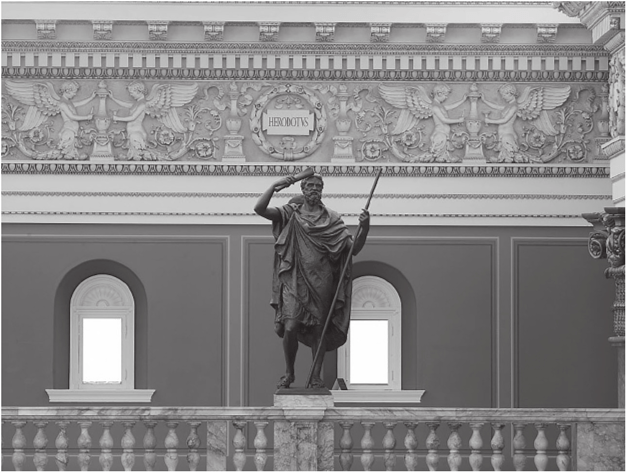
FIGURE 16.3 Herodotus. (Photo courtesy of Library of Congress, https://www.loc.gov/pictures/item/ 2007684411/.)
Diet Depends on Context
Previous chapters and an earlier section stated that circumstances should influence food choices. This book has repeated, perhaps ad nauseam, that after millennia of depending on muscles to accomplish tasks, people now rely on machines powered by fossil fuels. The pedestrian or cyclist is rare on roads, whether desolate or, more often, clogged with cars. Tempers flare when drivers compete for parking spots nearest a destination because no one wants to take one stride more than necessary. Elevators are full and stairwells empty. This book argues that inactivity spiked in the 1920s with the automobile’s adoption. Although his timing ignores this development, Larsen wrote that “one of the most profound lifestyle changes to occur in recent memory is the growing sedentism of late twentieth-century Americans, resulting in unprecedented levels of obesity.”35
Activity at its nadir, people should restrict calories. This dictum minimizes consumption of marbled meats, peanuts, most nuts, vegetable oils, most dairy products, sweets, and kindred items. The result is unsatisfactory because peanuts, for example, have many nutrients, as Chapter 8 detailed.
Chapters 4 and 7 noted that meat and dairy, respectively, are full of protein, vitamins, and minerals; they should be avoided not because they are inherently unhealthy—quite the opposite—but because too many people are too inert to splurge on caloric fare.
Instead, inactivity demands foods that have many nutrients but few calories. The criticism that potatoes, for example, are fattening is untrue. Chapter 13 noted that 100 grams have just seventy- seven calories, a bargain given ample nourishment. Many vegetables, treated in Chapter 15, furnish few calories and abundant nourishment. Lean meats, fish, shellfish, and poultry may be eaten in small quantities. On the other hand, the sugar sucrose (C12H22On), discussed in Chapters 2 and 11, has nothing but carbohydrates and should be avoided. Vegetable oils—discussed in Chapter 10—butter, ghee, and other fats should be used sparingly. This appeal to a spartan existence is too severe to convince anyone of its virtues. Indeed, austerity for its own sake may not be a virtue. Foods are not just nutrient packages because people derive pleasure—arguably a virtue in its own right—from those that are especially tasty. Someone who dislikes broccoli (Brassica oleracea var. italica), for instance, will resent the command to eat it. For example, forty-first U.S. President George Herbert Walker Bush (1924-2018) remarked in 1990 that “I do not like broccoli.... And I haven’t liked it since I was a little kid and my mother made me eat it. And I’m President of the United States, and I’m not going to eat any more broccoli!”36
This problem resists easy solution. The high-fat, meaty diet that appealed to Icelandic-Canadian explorer Vilhjalmur Stefansson (1879-1962), introduced in Chapter 5, suited the Inuit because they lived strenuous lives. Similarly, a 1968 study reported that British railroads fed each laborer 0.9 kilograms (2 pounds) of meat daily.37 Plentiful nourishment and exertion made him “about as strong as he would ever be.”38 In the machine age, hard labor is uncommon except under compulsion, mandating that physically-taxed workers eat like the Inuit, Plains Indians, Ache, and railroad gangs during their heyday. The first three hunted and fished diverse species in contrast to the modern dependence on beef, pork, and chicken. Beyond this trio, as late as 1921 American home economist Helen Woodard Atwater (1876-1947) reported mutton and game in U.S. rural diets.39 This book urges a return to such variety. Meat, fish, peanuts, peas, and beans are excellent choices to sustain arduous work because they combine calories and nutrients.
But Chapters 4 and 5 demonstrated that Plains Indian, Ache, and Inuit health diminished as they became sedentary and ate white flour, canned goods, and other undesirables. Although regrettable, calorie counting’s arithmetic mandates equality between energy intake and expenditure. Acknowledging reality, this book rejects the fantasy of pretending that people may eat mostly what they want so long as they avoid a single food or group of foods, once thought wholesome, but now unmasked as sinister. Such thinking is wishful, dishonest, and does nothing but worsens confusion about the relationship among diet, nutrition, and health. Rather than deception, readers deserve to know that health is not a commodity that can be purchased at discount. It requires work, discipline, and sometimes self-denial. Even the best efforts guarantee nothing because disease may incapacitate those who do everything right. Life’s risks cannot be eliminated. The best we can do is strive to minimize them, to maximize health, and to endure what fate delivers. Greek historian and philosopher Arrian of Nicomedia (c. 92-c. 175 CE) attributed to his teacher stoic philosopher Epictetus (c. 60-c. 138) the doctrine that “We must make the best of those things that are in our power, and take the rest as nature gives it.”40

