Dates, Arabs, and Bedouins
Their tenure in southwestern Asia involved dates, as noted, in the origin of Western civilization, which historians trace to Mesopotamia: lands between the Tigris and Euphrates Rivers in what are today Iraq and parts of Syria, Turkey, and Iran.60 Before 3000 BCE, domesticated palms were common throughout this region.61 Genesis, whose composition w'as probably incomplete until the sixth century BCE, connected Mesopotamia w'ith human origins by tracing a river through Eden.62

FIGURE 14.5 Eden. (Art courtesy of Library of Congress.)
Outside the garden, it divided into four branches, two being the Tigris and Euphrates.63 Muslims anchored dates to this story, believing that their god Allah created the date palm from dust left after Adam’s creation.64 Whatever these accounts’ historicity, Mesopotamia deserves the study it continues to receive.
The date palm’s domestication in the sixth millennium BCE, already noted, coincided with gradual enlargement of the region’s villages into the first cities between roughly 5800 and 3750 BCE.65 Dates and other domesticates yielded the surpluses that freed urbanites from the drudgery of tending crops and livestock, allowing them to specialize in other pursuits. Historians credited them with inventing writing, establishing schools, enacting laws, advancing the study of astronomy, mathematics, engineering, and architecture, and building roads, bridges, canals, and aqueducts.66
Dates cannot receive inordinate credit for such lofty attainment, though they have long been prominent in Mesopotamia, Persia (now Iran), Egypt, Sudan, Arabia, Tunisia, Algeria, and Morocco.67 Besides commoners, Mesopotamian royalty ate them, a fruitcake recipe specifying nine parts dates, three parts butter, one part each of raisins and cheese, and an unknown quantity of flour.68 Delphine Roger described dates as “common everywhere” in Arabia, the Levant, Mesopotamia, Egypt, and North Africa from early times and the poor’s staple.69 In this capacity, the fruit was “bread of the desert” and “cake of the poor.”70 Without sucrose in ancient southwestern Asia and honey expensive, dates and date juice functioned as sweeteners. Roger, Simpson, and Ogorzaly traced Arabs’ enthusiasm for dates to Bedouins—also referenced as Bedu, Qedarites, and Arabaa—who entered Arabia no later than 6000 BCE, established dates and dairy as primary sustenance, and designated the palm the “tree of life.”71 French author Maguelonne Toussaint-Samat (1926-2018) credited Egyptians with this language.72 Over millennia, Bedouin and Arab reliance on dates and other plain fare changed little.
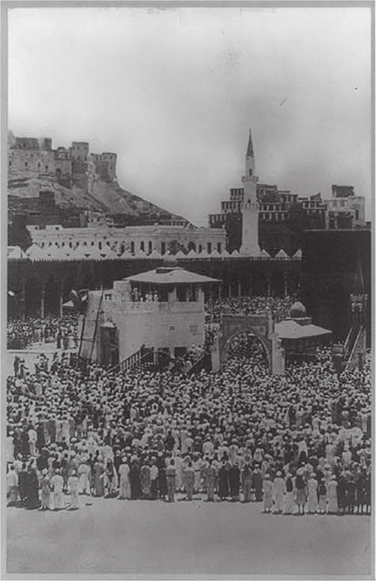
FIGURE 14.6 Mecca. Saudi Arabia, is the Prophet Muhammad’s birthplace. (Photo courtesy of Library of Congress, https://www.loc.gov/pictures/item/2013646214/.)
Originating in the seventh century CE, Islam gave dates spiritual significance because the Prophet Muhammad (c. 570-632) named them among his favorite foods, often eating them to end a fast.73 Muslims follow this practice, especially during the month Ramadan and the Hadj pilgrimage to Mecca, Saudi Arabia.74 Muhammad’s conception of dates as religious symbol may derive from ancient Sumerian and Babylonian veneration of date palms.75 Dates’ importance is also evident in the Arab belief that they have as many dietary and medicinal uses as the number of days per year.76 Into the twentieth century, the fruit was one of four Arab and Bedouin principal foods, the others being unpasteurized milk, rice (Oryz,a sativa), and unleavened bread.77 By 1980, Saudi Arabia had some 11 million date palms.78 Southwestern Asia—including Saudi Arabia—and the Mediterranean have perhaps ten times this number.79

