RESULTS
The first page of the online survey was accessed 87 times following the recruitment described earlier. With the analyses conducted, we included all cases except for 21, because they indicated in the seriousness check (see e.g., Reips, 2009 and Appendix 1) that they would not participate seriously, either by actively selecting “just look” or not responding to the check item. We also did not include another six cases where participants had skipped one or more of the first six items. Of the remaining 60 who participated in the survey (a) 40 reported to be novices who had recently finished their training less than 12 months ago or who would finish approximately in the following 6 to 12 months, and (b) 20 reported to be dance movement therapists whom we call experts and who finished their DMT training more than a year ago.
DEMOGRAPHICS
Demographic information reported by' the participants with regard to their age, sex, country of birth, country of study, and type of DMT program attended is presented in Table 5.1.
Table 5.1 Demographies
|
Total |
Novice (<1 year) |
Experts (>1 year) |
||
|
Reported sex |
Male |
0 |
0 |
0 |
|
Female |
60 |
40 |
16 |
|
|
No Answer |
0 |
0 |
0 |
|
|
Reported age |
Mean |
33.57 |
32.44 |
36.15 |
|
SD |
10.21 |
9.45 |
12.27 |
|
|
Minimum |
20 |
20 |
20 |
|
|
Maximum |
60 |
60 |
55 |
|
|
No answer |
4 |
1 |
3 |
|
|
Reported country of birth |
Belgium |
1 |
1 |
0 |
|
Canada |
5 |
5 |
0 |
|
|
Colombia |
2 |
1 |
0 |
|
|
Denmark |
1 |
0 |
1 |
|
|
Germany |
12 |
7 |
5 |
|
|
Greece |
3 |
3 |
0 |
|
|
Iran |
1 |
1 |
0 |
|
|
Israel |
8 |
5 |
3 |
|
|
Italy |
4 |
2 |
2 |
|
|
Kyrgyzstan |
1 |
0 |
1 |
|
|
Latvia |
1 |
1 |
0 |
|
|
Mexico |
1 |
0 |
1 |
|
|
Netherlands |
4 |
4 |
0 |
|
|
Norway |
1 |
0 |
1 |
|
|
Occupied Palestinian Territory, |
1 |
1 |
0 |
|
|
Occupied |
||||
|
Portugal |
1 |
1 |
0 |
|
|
Romania |
1 |
1 |
0 |
|
|
Russian Federation |
1 |
0 |
0 |
|
|
Slovenia |
1 |
0 |
0 |
|
|
Switzerland |
2 |
2 |
0 |
|
|
Spain |
4 |
2 |
2 |
|
|
Turkey |
2 |
2 |
0 |
|
|
United States |
1 |
1 |
0 |
|
|
No answer |
1 |
0 |
0 |
|
|
Reported Country of Study |
Canada |
5 |
5 |
0 |
|
Colombia |
1 |
0 |
0 |
|
|
Denmark |
1 |
0 |
1 |
|
|
Germany |
14 |
9 |
5 |
|
|
Greece |
2 |
2 |
0 |
|
|
Israel |
6 |
4 |
2 |
|
|
Italy |
3 |
1 |
2 |
|
|
Latvia |
1 |
1 |
0 |
|
|
Netherlands |
9 |
7 |
1 |
|
|
Spain |
14 |
11 |
3 |
|
|
United Kingdom |
1 |
0 |
1 |
|
|
United States |
1 |
0 |
1 |
|
|
No answer |
2 |
0 |
0 |
|
|
Type of Program (multiple selection possible) |
University program (postgraduate or MA/MS) |
37 |
23 |
13 |
|
Non-university program |
20 |
16 |
3 |
|
|
No answer |
3 |
0 |
0 |
|
|
No answer |
3 |
0 |
0 |
|
All 60 participants reported to be female, with a mean age of 33.6 years (SD = 11.2). Mean reported age for novices was almost four years younger (mean age of 32.4, SD = 9.5) than for experts (mean age of 36.2, SD = 12.3), even though the same range between 20 and 60 was reported in both groups. Participants reported 23 countries of birth and 12 countries of studies (no answers = 2). When asked about the type of DMT program attended, nearly two-thirds reported to come from a university program (postgraduate or MA/MS) (n = 37) and one-third from non-university programs (n = 20) (no answers = 3).
Dance in DMT: Comparison Between DMT Novices and Experts
We further compared type of programs: Answers by those having been educated in a university program (postgraduate or MA/MS) versus those in a non-university program did not differ statistically on q2, q4— q7. However, for ql, novices answered 3.05 on average (with a 95% confidence interval of ± .51), while experts responded with a mean of 3.90 (with a 95% confidence interval of ± .68), resulting in a significant difference, t(55) = —2.03, p < .0.05. For q3, those from a university program answered 3.92 on average, while those from a non-university program responded almost a point on the scale higher, with a mean of 4.80 (both groups with a 95% confidence interval of i .54), resulting in a significant effect, t(55) = -2.15, p < .0.05. Thus, overall, those from a non-university program rated higher on “To have a strong dance background is important in dance movement therapy,” and on “During my DMT training, we learn how to integrate dance as an intervention.” One has to take into account that the significant result in one of the two cases statistically may have been caused by chance.
The following section compares the novices with the experts in DMT. For an overview of answers per questions q 1 q7, see Table 5.2. Due to the wide range of countries and the small number of cases from each country, we cannot specify whether national differences exist.
Importance of Strong Dance Background to DMT (ql: To Have a Strong Dance Background Is Important in Dance Movement,)
The great majority of the 40 novices who answered the question agreed that a strong dance background is important or ver}' important to DMT. The distribution included the whole
Table 5.2 Answers per Questions q 1-q7 Descriptives

|

|

|

|

|

|

|

|
|
|
N |
exp |
16 |
16 |
15 |
15 |
14 |
14 |
14 |
|
nov |
40 |
40 |
40 |
40 |
40 |
40 |
39 |
|
|
Missing |
exp |
0 |
0 |
1 |
: |
2 |
2 |
2 |
|
nov |
0 |
0 |
0 |
0 |
0 |
0 |
1 |
|
|
Mean |
exp |
3.19 |
1.44 |
4.40 |
3.93 |
3.79 |
4.36 |
2.86 |
|
nov |
3.48 |
2.13 |
4.28 |
4.25 |
3.70 |
3.80 |
1.77 |
|
|
Median |
exp |
3.00 |
1.00 |
4 |
4 |
4.00 |
5.00 |
3.00 |
|
nov |
4.00 |
2.00 |
5.00 |
4.00 |
4.00 |
4.00 |
2 |
|
|
Minimum |
exp |
1 |
0 |
2 |
: |
0 |
0 |
1 |
|
nov |
0 |
0 |
1 |
2 |
1 |
0 |
0 |
|
|
Maximum |
exp |
6 |
5 |
6 |
6 |
6 |
6 |
6 |
|
nov |
6 |
6 |
6 |
6 |
6 |
6 |
6 |
range of answers from 0 to 6. In the opinion of the experts (n — 16), a strong dance background only plays a medium importance (see Figure 5.1).
Importance of Professional Dance Background to DMT (q2: To Have a Professional Dance Background Is Important in Dance Movement Therapy)
The distribution of answers in the novices included the whole range of answers from 0 to 6, whereas none of the experts thought that a professional dance background would be very important to DMT. Of the 40 novices, the great majority answered that a professional dance background is not important or less important to DMT, but seven indicated that it would be important. The experts, on the other hand, mostly stated that a professional dance background is not at all or of very little importance (see Figure 5.2).
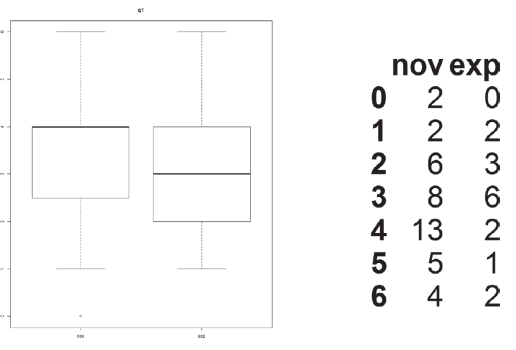
Figure 5.1 Novices’ (nov) and Experts’ (exp) Opinion on Strong Dance Background to DMT
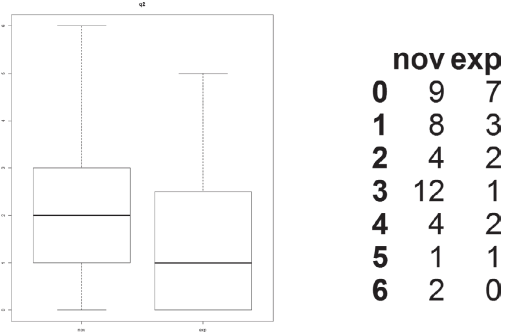
Figure 5.2 Novices’ and Experts’ Opinions on Importance of Professional Dance Background to DMT
Integration of Dance Interventions During DMT Training (q3: During My DMT Training, We Learn How to Integrate Dance as an Intervention)
Novices gave an average of five points and experts four points; both are above the middle of the scale, which means that both groups on average felt that during their DMT training, they learned how to integrate dance as an intervention. About two-thirds of notices (n = 28, from 40) and experts (n = 11, from 15) stated that it is quite accurate or very accurate that dance interventions had been integrated during their DMT training. The distribution in both groups, however, is quite wide: in novices from one to six and in experts from two to six (see Figure 5.3).
Integration of Dance Interventions in the Future (q4: As a Future Dance Movement Therapist, I Feel Prepared to Integrate Dance Interventions^
Both novices and experts have an average of four points, which is above the middle. The distribution of answer options in novices is much wider than in experts. Most novices and experts agreed that they would feel prepared to integrate dance interventions in the future. The great majority of both groups think that they would feel prepared to integrate dance interventions (see Figure 5.4).
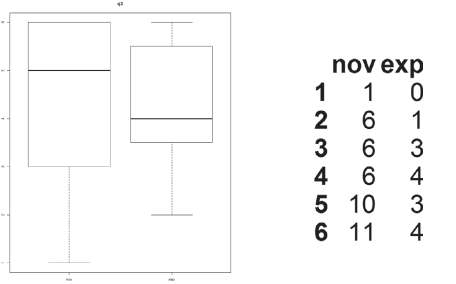
Figure 5.3 Novices’ and Experts’ Opinions on Integration of Dance Training During DMT Training (Option 0 Not Displayed, as It Was Used By None of the Participants)
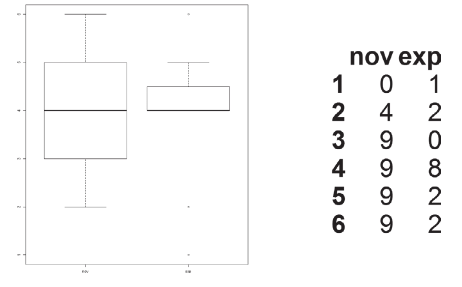
Figure 5.4 Novices’ and Experts’ Opinions Integrating Dance Interventions in the Future
Strong Personal Dance Background (q5: My Personal Dance Background Is Ver)' Strong)
Both novices and experts here indicated an average of four points. Two thirds (27 of 40) of novices stated that it is accurate or very accurate that they would have a strong personal dance background; among the experts eight out of 14 made that statement. Two experts stated that it would be very inaccurate to say that they have any personal dance background. The distribution of answers both in novices and experts is quite scattered, and experts’ answers covered the full range between 0 and 6. Thus, it is a reality that most, but by far not all, respondents have a dance background and that this is true for both those who have entered the field some time ago or only recently (see Figure 5.5).
Non-Dance Based Techniques and Interventions (q6: In the Future, I Plan to Use Non-Dance Based Techniques and Interventions^
Here the average in novices is four points and in experts five points. About two-thirds of novices and experts stated that it would be quite accurate to very accurate that they would plan to use non-dance based techniques and interventions in the future (see Figure 5.6).
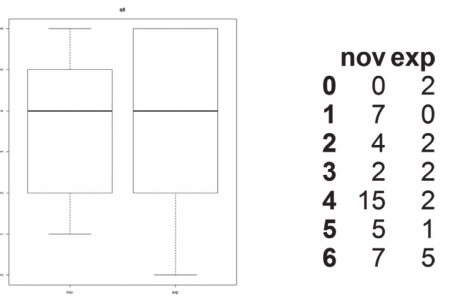
Figure 5.5 Novices’ and Experts’ Personal Strong Dance Background
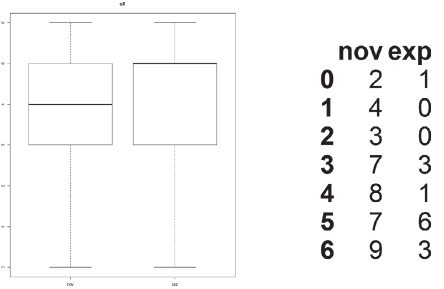
Figure 5.6 Novices’ and Experts’ Opinions on Future Use of Non-Dance Based Techniqucs and Intervendons
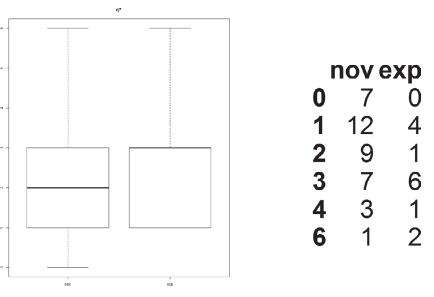
Figure 5.7 Novices’ and Experts’ Opinions on Non-Dancc Based Techniques and Interventions to DMT (Note That Option 5 on the Answer Scale Was Not Chosen by Novices or Experts)
Relevance of Non-Dance Based Techniques and Interventions to DMT (q7: Non-Dance Based Techniques and Interventions Are More Relevant to DMT Than Dance,}
Non-dance based techniques and interventions seem to play a minor role both for novices and experts: With an average of about two points in novices and about three points in experts, respectively; see Figure 5.7.
In summary, four main findings can be highlighted: (1) On average, novices tended to evaluate the importance of a strong background in dance, a professional background in dance, and the integration of dance into the DMT training higher in comparison to the experts (ql, q2, q3). (2) On average, experts evaluated the relevance of non-dance based techniques and interventions to DMT higher than novices (q6, q7). (3) The highest agreement between novices and experts and within each group existed with regard to integrating dance interventions in the future (q4). (4) When asked about their strong personal dance background, the average in both novices and experts was four points, but the distribution in both groups was the widest compared to the other questions (q5).
DISCUSSION
This survey aimed to find out how dance movement therapy novices nowadays would evaluate the importance of dance for their profession and their work: Is dance still as crucial to them as it was to the pioneers or is DMT becoming more of movement therapy with a minor role of the dance in it? We looked at the novices’ answers and compared them with experts’ answers. Furthermore, we compared their answers to DMT pioneers’ dance background and suggested implications for the influence and relevance of dance on the DMT profession.
The DMT pioneers came from a professional dance background; many had performed with professional companies, and some, such as Trudi Schoop, had their own performance groups. A strong personal dance background was natural to the DMT pioneers. The pioneers’ development from dancers to dance therapists was a process, as they began to use dance in a therapeutic way in order to support personal well-being and communication in others. The pioneers described their personal dance heritage as being crucial to the development and the practice of DMT (Levy, 1992). Many of them took the dance into institutions and started to experiment with how they could adapt their dance knowledge to the new environment and to clients’ needs and how the potential of dance could foster health in a clinical environment (for example, Trudi Schoop and Marian Chace). Other pioneers such as Mary Whitehouse introduced the healing aspects of movement and dance in their classes and linked the dance, the body, and creativity with soul and psychology. The new competencies eventually entered into private practice and influenced the way of approaching and working with clients. Those processes gradually created the rise of a new profession, which we now know as dance movement therapy.
Over the years and decades, the DMT field has been constantly developing and has become more professional in the sense that structured training courses have been set up and programs have been offered by trained dance movement therapists who fulfilled the standards defined by their national DMT associations. National associations were established in many countries and have constantly undergone developmental improvements and professionalization. International associations, such as the European Association of Dance Movement Therapy (EADMT, 2018), were created that set standards for national dance movement therapy associations and their training courses, which permit practitioners to be eligible for full professional membership.
These positive and valuable developments have increased DMT’s visibility as an interdisciplinary field. Nevertheless, it remains to be asked whether the dance in DMT may suffer because of the need and pressure for ‘‘professionalizing” DMT. The wish and the pressure to include modules and subjects into the DMT curriculum from related fields such as psychotherapy, medical, social, and behavioral sciences seems to have grown, while the importance of integrating dance-related modules into the DMT training seems to have shrunk or vanished over the years.
When asked about participants’ strong personal dance background, the average in both novices and experts stated that a strong personal dance background was more than important to them (4 points on a scale from 0= very inaccurate to 6= very accurate). The distribution of answers within this question was in both groups the widest compared to all the other questions (q5), and it was bigger in experts than in novices. Thus, not all agreed that a strong personal dance background would be important to DMT, and a minority of dance movement therapists, especially experts, even thought that a personal dance background would not be that important to DMT. However, novices evaluated the importance of a personal and professional background in dance and the integration of dance into the DMT training on average one point higher in comparison to experts (ql, q2, q3). On the other hand, both groups evaluated a professional dance background as not so important (q2). These answers seem to differ from the pioneers’ attitudes to whom their dance heritage had been important and who had a strong personal and professional dance background. Thus, the dance background and especially a professional one, plays a more minor role to dance movement therapists nowadays than at the beginning of the profession’s rise. But has our dance heritage itself become less important to both dance movement therapy novices and experts? Novices interestingly considered the importance of dance higher than experts. It could be hypothesized that the relevance of dance seems to fade away over time as practitioners gain more experience in dance movement therapy practice and perhaps because they grow older. On the other hand, both groups answered that they would intend to integrate dance interventions in the future (q4), and the distribution in that particular answer was the smallest compared to all questions, indicating agreement among the respondents. Other studies showed that dance interventions remain an integrated part of DMT sessions but also other non-dance based interventions would be used (Brauninger, 2014a, 2014b).
Perceived effectiveness of a mix of dance interventions and other interventions also seems to be reflected in the following finding: experts evaluated non-dance based techniques and interventions higher than novices (q6), and experts seemed to be more likely to include other interventions into DMT (q7). For novices, dance interventions were more important than for experts. This may indicate that in becoming experts, therapists may move on and feel more open towards non-dance interventions and may move away from dance. Possibly, this tendency is an effect of many novices entering DMT from dance. With expertise and experience, a therapist might feel the need and necessity to expand their tools and intervention repertoire in order to fulfill clients’ needs. Additionally, dance may set out limitations with certain client groups or may put restraints on the (aging) therapist when working with specific client groups. For example, when working with clients with multiple special needs, non-dance based techniques may offer alternative options to address physical and psychological issues.
Limitations
For methodological reasons, the online survey was distributed exclusively in English, and ever}' participant received the same survey. Knowledge of English was mandatory in order to participate in the survey. This consequently may have excluded dance movement therapists with a limited or no understanding of English.
Our group of experts had entered the field earlier than the group of novices. However, one should keep in mind that some of them may have entered the field relatively recently and thus may be more like advanced novices than long-time experts in DMT.

