BEING MOVED AS A PHYSIOLOGICAL REACTION ACROSS CULTURES
Being Moved as a Physiological Reaction
- Being Moved as a Physiological Reaction
- Being Moved Across Cultures
- Nonverbal Indicators of Being Moved
- BEING MOVED AS AN (AESTHETIC) EMOTION
- Being Moved as an Emotion
- Being Moved as an Aesthetic Emotion
- BEING MOVED LEADS TO APPROACH ACTION TENDENCIES
- Being Moved Causes Action Tendencies
- Implications for Arts Therapies
Darwin (1872) and James (1890) describe tears based on tender feelings. While almost all researchers have described tears or moist eyes as a common aspect of being moved (see Zickfeld et al., 2019), Menninghaus et al. (2015) add goosebumps as a second characteristic and argue that the mix of tears and goosebumps (“goosetears”) is a sufficient physiological operationalization of being moved. Piloerection has been successfully measured with cameras (e.g., Wassiliwizky, Koelsch, Wagner, Jacobsen, & Menninghaus, 2017). Note that both parts of the operationalization of goosetears depend on subjective judgment from embodied resonance. Musical chills are a related important psychophysiological correlate of being moved (e.g., Panksepp, 1995; Sumpf, Jentschke, & Koelsch, 2015). Warmth in the chest is another often described experience (e.g., Seibt et al., 2017; Tan & Frijda, 1999).
Being Moved Across Cultures
In order to measure self-reported being moved, Seibt et al. (2017) asked people to write down an episode involving positive tears (for an enumeration of other methods suited to elicit being moved, see Zickfeld et al., 2019, pp. 13/14). The findings of Seibt ct al. (2017), resulting from cultural comparisons carried out as a comprehensive test across the United States, Norway, China, Portugal, and Israel, show very' similar patterns of self-reports regarding being moved cross-culturally.
Evidence from the meta-analysis of 42 studies by Seibt, Schubert, Zickfeld, Zhu, et al. (2017) and Zickfeld et al. (2018, 2017) with 7084 participants from all over the world showed a medium to large correlation of r = .47 [.43, .51] for the relationship between tears and being moved (Cohen 1988 classified correlations of >— .1, .3, .5 as small, medium, and large, respectively). All this research is based on self-report; no objective measure of tears has been used in the context of being moved so far (Zickfeld et al., 2019). Results from the meta-analy-sis yielded a small-to-medium correlation of r = .35 [.31, .39] for the relationship between self-report of chills or goosebumps and being moved, where there is also initial evidence from psycho-physiological studies, measuring piloerection (Wassiliwizky, Koelsch, et al., 2017).
They further detected a medium correlation of r = .50 [.46, .54] between felt warmth (in the chest) and being moved (Zickfeld et al., 2019). While Seibt et al. (2017) speculate that it maybe the combination of all three sensations that uniquely indicates being moved (Schubert et al., 2016; Seibt et al., 2017), there are reports of being moved without any of the three characteristics (Zickfeld et al., 2019). In any case, it can be assumed both sympathetic and parasympathetic systems are activated during the experience of being moved (for a more extensive review and the connections to neuroscience, see Koelsch et al., 2015 and Zickfeld et al., 2019).
Nonverbal Indicators of Being Moved
Based on interviews, participant observation, and literature reviews, Fiske and colleagues (2017) found that kama muta experiences can include taking a deep breath, experiences of buoyancy (feeling light, floating), and/or exhilaration (feeling refreshed, energized, optimistic) that may endure after the experience. In addition, increases in heart rate, respiration rate, and skin conductance may occur along with reported chills during experiences that people may describe as being moved. Nonverbal expressions of being moved, other than the autonomous reactions reported (tears, goosebumps, chills, or warmth) have not been systematically described yet. Fiske et al. (2017) describe that there is no distinct facial expression for ката muta', instead they propose that ката muta sometimes includes putting one or both palms on the chest, and adding an exclamation such as “Ahhhhl”. However, to date no defined method exists for an observer to identify the instance or degree of being moved (Zickfeld et al., 2019).
BEING MOVED AS AN (AESTHETIC) EMOTION
Being Moved as an Emotion
Some researchers recently have conceptualized “being moved” as a distinct emotion (Cova & Deonna, 2014; Menninghaus et al., 2015; Tan, 2009; Zickfeld et al., 2018). The experience has been categorized as purely positive (Cova & Deonna, 2014; Seibt et al., 2017), occurring with mixed affect (Frijda, 2007; Menninghaus et al., 2015), and even as primarily negative (Bartsch, Kalch, & Oliver, 2014).
From an arts therapies perspective, an unfolding explanation for this positive and negative mixed conceptualization (Zickfeld et al., 2019) of being moved could reside in the fact that as an active factor it actually arises from problem actualization (Grawe, Donati, & Bernauer, 1994), which is an important common factor of psychotherapy. Problem actualization refers to the phenomenon of reexperiencing the problem on the sensory level and in detail. There is empirical evidence that if I do not experience the problem in the therapy session, I will not be able to find efficient possibilities to deal with it or solve it. We can assume that the problem, question, or feeling that constitutes a present challenge for a client (developmental task; striving for closure) is working inside the client for the entire time, and there is an organismic need to solve it (e.g., feeling lost or lonely after a separation). In therapy, the problem needs to be sensorially actualized. A song, for example, can actualize an issue that is inside of a person and create a feeling of an inner-outer resonance (as for example described in Reik’s famous “The haunting melody”; Reik, 1953). Such a form of aesthetic resonance (see Lange, Hartmann, Eberhard-Kaechele, & Koch, 2020) can make the person feel understood, consolidate the person, and at the same time potentially transform the problem (often by providing metaphors as a joint anchoring “object” for the therapist and the patient).
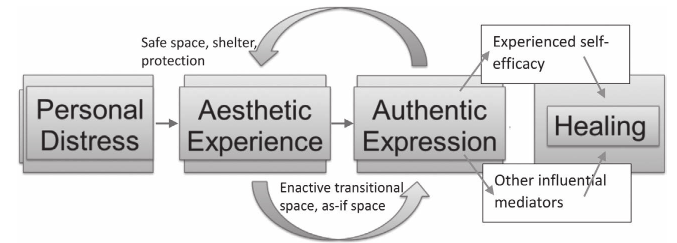
Figure 7.1 Process Stages of Being Moved in the Context of Arts Therapies
Note. Being moved takes place in the middle two components and their circular relation. In DMT, the expression often comes before the aesthetic experience and is dialectically intertwined with it (Koch, 2017); both aesthetic experience and authentic expression support and create experiences of self-efficacy (Bandura, 1977), strength, control, effectiveness, resources, and empowerment) as another important active factor feeding into health and healing. While self-efficacy is directly connected to moving (motor control effects; also in making music, and across the arts), the relationship of self-efficacy and being moved needs more investigation and specification.
The aesthetic experience may, in a second step, also inspire a person to actively express a question or begin to envision an emerging solution and thereby make use of it for further understanding and continuing growth to the topic. One can start with a reflection of it in music, movement, or art, and from there use the enactive transitional space or as-if space (Koch, 2017) to transform it and to arrive at insights and workable solutions (see Figure 7.1).
Art has the particular quality to unite opposites, constituting one of the reasons why it has the potential for integration and healing (“beyond polarity” view; e.g., Koch & Fisch-man 2011). In the same vein, psychological research shows that positive and negative affect are not opposite poles on one dimension: they are often distinct aspects of an experience and thus need to be measured separately (such as with the Positive Negative .Affect Scale (PANAS) by Watson, Clark, & Tellegen 1988). In this respect, Frijda (2001) states that being moved includes “joy with a melancholy overtone” or “sadness with a not unpleasant tone”. Similarly, Menninghaus et al. (2015) divide being moved into two different aspects: one with joy as the main component, another with sadness.
Being Moved as an Aesthetic Emotion
Interestingly, Menninghaus, who argues for a distinct emotion theory, is an aesthetics researcher. He and his colleagues (2015) state that being moved is often caused by significant relationship events or aesthetic stimuli. In their Distancing-Embracing Model (Menninghaus, Wagner, Hamch, et al., 2017), they assume that being moved helps integrate negative affect into positive states in art reception.
Research on being moved brings together embodiment (see Seibt et al., 2017; Zickfeld et al., 2018), attachment (see Feniger-Schaal, Hart, Lotan, Koren-Karie, & Noy, 2018), moral (see Sheets-Johnstone, 1999), and aesthetics research in a rich and holistic theoretical support for what creative arts therapies claim to do. Yet CATs and particularly DMT are enactive modalities: they use active art-making as their intervention method. It is thus interesting to see what the psychological approach to being moved says about ac tions.
BEING MOVED LEADS TO APPROACH ACTION TENDENCIES
Being Moved Causes Action Tendencies
Zickfeld et al. (2019) assume the following components of emotions: (1) an appraisal pattern/ elicitor, (2) bodily reactions, (3) a feeling or affect (valence and arousal), (4) action tendency or motivation, and (5) expression and labels (facial or verbal; Scherer, 2005). Points (4) and (5) are clearly related to action, and the expressive side, which Zickfeld et al. (2019) further outline as being moved basically causes approach tendencies in persons affected (see Table 7.1). For us as creative arts therapists, the action side is particularly interesting, for there is a general void of theory and empirical work on the action side in psychology and the cognitive sciences (see Koch, 2017). Our active creative modalities that prepare patients to stand in the world, bond, and take action are in need of a good theory model on the active art-making side, such as the role of movement/dance and nonverbal expression for health.
Table 7.1 Action Tendencies From Being Moved
|
Label of Concept |
Action Tendency |
Domains |
Reference |
|
(Moral) Elevation |
Approach |
Affiliation, love, moral, action, altruism |
Thomson and Siegel (2016), Pöhling and Diessner (2016) |
|
Empathic Concern |
Approach |
Empathy-altruism hypothesis, altruism, relieving other’s need |
Batson (2010), Batson (1991) |
|
Being Moved (Cova & Deonna) |
Reorganization of hierarchy of values and priorities |
Altruism/prosocial |
Cova and Deonna (2014) |
|
Being Moved (Menninghaus) |
Approach |
Bonding, altruism, aesthetic, promoting bonds |
Menninghaus et al. (2015) |
|
Being Moved (Bartsch) |
Insight |
Satisfy meaning-related needs, personal growth |
Bartsch et al. (2014) |
|
Being Moved (Tan) |
Approach |
Bonding, signaling significance |
Tan (2009) |
|
Kama Muta |
Approach |
Sustaining, engaging in relation |
Fiske et al. (2017) |
Source: Adapted From Zickfeld et al., 2019.
Note. Action tendencies are what a person is physiologically and cognitively prone and/or primed to do; Approach action tendencies involve sequences of responding with positive evaluation and moving towards a stimulus, or bringing the .stimulus in the direction of one’s own body (such as in appetitive behavior; as opposed to avoidance or withdrawal-tendencies; Cacioppo et al., 1993; Kafka, 1950; Koch, 2014). Being moved causes approach action tendencies, which can be used toward therapeutic goals in CATs.
Implications for Arts Therapies
Social psychologists found that being moved may reduce stereotypes and prejudice, and increase altruistic and helping behavior (Schnall et al., 2010), humanization of outgroups, and interpersonal closeness (Oliver et al., 2015). This aspect may be particularly important for the therapist, particularly for keeping up the therapist’s motivation and restorative resources. On the other hand, and more relevant to the client, being moved may also be related to insight, meaning, and personal growth (Bartsch et al., 2014; Oliver & Bartsch, 2011; see also research on peak experiences often described as “deeply moving”: e.g., Maslow, 1970). Zickfeld et al. (2019) point out the potential of the concept to contribute to clinical areas among others:
The study of the concept that is often referred to as being moved may help inform a number of research areas. ... It also seems to play a major role in the appreciation and enjoyment of arts, psychotherapy, support groups, addiction-recovery groups, marketing, politics, and religion. There is much promising ground to explore.
(Zickfeld et al., 2019, p. 33)
There is no clear consensus on what evokes being moved (Zickfeld et al., 2019). Because it corresponds to one’s own situation and the questions and open loops (Fuchs, 2008) in one’s own system, it may be caused by a match of inner and outer, a significant relation of one’s own situation and the environmental stimuli in a given situation (and thus would presuppose interoception and introspection). Artistic stimuli are particularly suited to address the ambiguity of feelings and situations. However, the experience of beauty can only be actively used for health if the therapist offers space and time to explore and enact it through movement. No matter which modality is used in creative arts therapies, we offer space and materials for the clients to come to an experience of being moved. Creative arts therapists try to “meet the clients where they are” to jointly find ways to transform their situation in the manner appropriate for them to move forward. Mirroring is a way into this joint search (Sandel et al., 1993). Mirroring has been recently related to attachment by Feniger-Schaal et al. (2018), who found that the degree of mirroring in movement corresponded to attachment styles (Bowlby, 1969), with securely attached persons using freer mirroring, this relates to the concept of being moved by love, discussed later in the chapter. Next to social and moral emotions, we propose that being moved has consequences for and a function in healing (see Figures 7.1 and 7.2). The process may be the following: Being moved action tendency unfolding action self-efficacy healing (see Figure 7.1). In this way, the process is based on being moved by love in a more receptive mode, and develops into being moved by love ideally in an active mode (compare Maturana & Varela, 1987). The therapist can help facilitate the transition from action tendency into action.

