HOW SAMPOORNATA IS DIFFERENT FROM OTHER
DMT MODELS
According to the ADTA (n.d.), DMT is the “psychotherapeutic use of movement and dance through which a person can engage creatively in a process to further their emotional, cognitive, physical and social integration” (para 1). DMT empowers individuals to find new means of communication, to explore ways of releasing the psychological and somatic impact of trauma, and to experience a greater sense of self-worth as they move forward (Bernstein, 2009).
Sampoornata adopts the four core principles of global DMT practice: (1) DMT as a creative methodology, (2) body-mind connection, (3) nonverbal movement beyond the hegemony of verbal creation, and (4) the experiential nature of the process. At the same time, it has emerged as a new model. Sampoornata focuses on integrating mental health, education, and employment using DMT (see Figure 14.2). Participants continue their healing journey not only through cognitive and emotional development in the therapeutic space but also as DMT practitioners, performers, and empowered community activists, thinking through and actively directing their own lives.
Specifically, Sanved offers professional DMT education to its participants through the DMT Leadership Academy. Students of the academy go through a rigorous, two-year academic training program and emerge as change leaders and DMT facilitators who can earn their livelihood (Chakraborty, 2019). Skilled practitioners can reach out to other individuals in vulnerable situations, creating a cycle of learning and development. DMT enables participants to make empowered life choices, such as pursuing a range of livelihoods or seeking
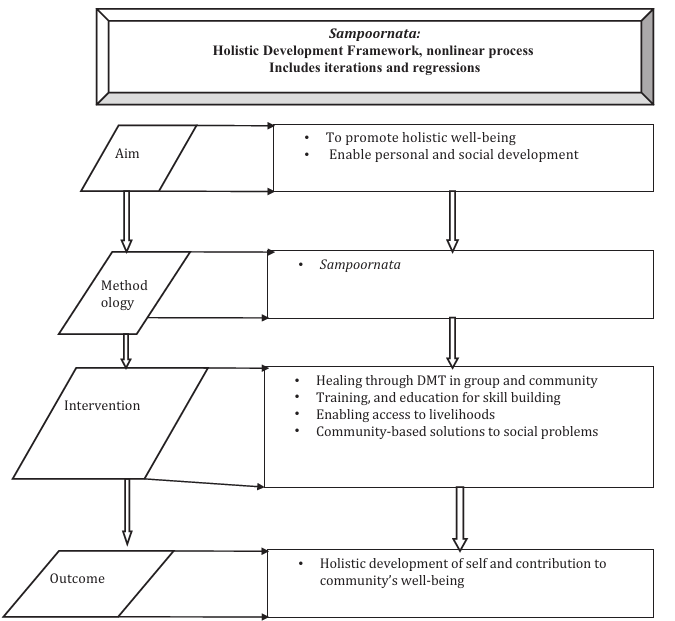
Figure 14.2 Sampoornata Development Framework Source: Chakraborty, 2019.
an education to increase financial stability. Dance improves individuals’ ability to express themselves powerfully and creatively, and it is a vital tool for giving marginalized individuals a voice (Wiese, 2017). Additionally, Sanved purposefully refers to its facilitators as ‘practitioners’ instead of ‘therapists’ to break the intrinsic hierarchy of that word. It indicates the ongoing ‘practice’ of the form and a deeper connection and openness to the larger community (Chakraborty, 2019).
MAIN CHARACTERISTICS OF SAMPOORWATA
Sampoornata Addresses Gender-Based Violence As a Social and Structural Problem
Sanved’s work adds to the feminist movement and discourse both locally and globally; gender-based violence is supported and perpetuated by societal attitudes and structures. The Sampoonata model provides the opportunity for women and children to organize with other survivors and allies to combat these attitudes and structures. Sanved has reached a global audience by working with international partners such as One Billion Rising, Vital Voices, and many more women’s rights advocacy programs. Further, Sanved has appeared in international documentaries and continues to work with international DMT practitioners and submit articles and research to international publications.
Sampoornata Is a Community-Focused, Non-Medicalized Intervention
Sanved’s practitioners come from marginalized communities, and the process considers their life experiences and practical skills as important as their formal education in DMT techniques. Sanved has created a non-hierarchical model that is based on participation in a democratic process of healing. This model is culturally adaptable and does not rely on diagnoses, which may reduce human experience to a checklist of symptoms. It promotes skills for self-healing.
The Sampoornata Model broadens the scope of Dance Movement Therapy from a singular, isolated focus on mental and physical health to a broader, contextualized focus on the human rights of participants. This rights-based approach is new, and it actively encourages participants to address the social and structural determinants of health within their communities and in society at large. Sanved promotes this concept by training survivors to become practitioners in the DMT Leadership Academy and encourages them to set up independent units in their communities.
Sanved’s Sampoornata Model Goes Beyond Clinical Models of Rehabilitation
Sampoornata provides an experimental space where participants can access personal freedom and explore themselves in a purposeful, non-hierarchical collaboration with others. The artistic practice of DMT challenges the status quo by acknowledging that all persons have a right to health, to bodily autonomy, and to the articulation of their own experiences. It also assists participants in developing self-confidence and independence. The artistic practice of DMT is sustainable: it is not limited to the therapeutic session. It has the potential to become a lifelong practice for well-being. The Sampoornata Model encourages participants to take lessons learnt within the session into their daily lives. It gives them the confidence to demand the same from their societies and peers and inspires participants to become agents of social change.
SAMPOORNATA IS AN EVIDENCE-BASED AND TESTED MODEL
Kolkata Sanved has conducted and published two studies (one qualitative and one quantitative) to generate evidence. The qualitative case study is called ‘‘Scripting Their Lives” and is a study of Dance Movement Therapy for children in a care institution in the Cooch Behar District of West Bengal. This study was conducted in March 2016 by Kolkata Sanved and the Paul Hamlyn Foundation (Chakraborty & Dasgupta, 2016). The case study method was used to understand the DMT intervention in a care institution for girls through which the Sampoornata model was used to overcome behavioral, psychological, and structural challenges faced by the children. The research study was conducted to measure and analyze the impact of our program so that we could replicate it and bring it to other shelter homes.
Challenges that Sanved faced while working with this care institution included stigma and discrimination faced and experienced by participants, issues in the structural organization of the shelter home—such as physical and emotional segregation of children according to whether they had a history of sexual abuse or not, and a generally negative attitude from the caregivers towards the DMT team. In order to address some of these challenges, we conducted a DMT orientation and workshops with the caregivers so that they understood the importance of healing. The outcome of this was that all the girls in that shelter were granted permission to attend DMT sessions, and some of the girls, who had not been able to access education before, even received school education within the shelter home. Further, the Survivor DMT Leadership Academy proved successful. Girls who left the shelter home after graduating from DMT academic training set up independent DMT units outside the shelter home and now work as DMT practitioners.
The second evidence-based study conducted by Kolkata Sanved was a randomized controlled trial. The purpose of the study was to assess the impact of DMT on the traumatic symptoms of survivors of trafficking and sexual violence. The quantitative research study examined the impact of DMT on trauma-related symptoms in a sample of 69 child survivors of sex trafficking and sexual violence living in childcare institutions (Dasgupta & Chakraborty, 2017). The participants, aged 15-16 years, were randomly assigned to a DMT treatment group and a waitlist control group.
Kolkata Sanved conducted a six-month-long DMT intervention module focused on self-image, anger management, and communication. Data were collected from government and NGO run childcare institutions in Maharashtra and West Bengal. Following a pre-test, mid-test, and post-test design, the Trauma Symptom Checklist for Children (TSCC) was used to measure the impact of DMT on psychological parameters. Results showed significant improvement in levels of anxiety, depression, posttraumatic stress, and dissociation in the group receiving DMT compared to those not receiving it at mid- and post-test phases. Sexual concerns among survivors attending DMT became clinically non-significant by the post-test, as well.
In light of the research studies conducted, Sanved’s DMT intervention model appears to be successful for the following reasons:
- 1. It is viable in low-resource settings; two DMT practitioners can work with at least 20-40 children at the same time.
- 2. It has shown positive results in addressing behavioral issues of children. Often, care institutions resort to strict rules to control disruptive behavior. However, such behavior is often a cry for help and attention. DMT provides the safe space for children to express their fears, work on their insecurities, and develop positive coping strategies. The model results in a reduction of such ‘deviant’ cries for help.
- 3. It can lead to the positive personality development and can teach necessary life skills to children who will have to leave the care institutions and fend for themselves after turning 18.
Building Academic Credibility for Sampoornata
The work of Sanved has grown successfully, and just as with all developing professions, with ours there is a need to continue to build our knowledge. This is being done through evidence-gathering and a new academic program. While most art-based pedagogies for change remain in the informal domain, Kolkata Sanved has enshrined its DMT for Change curriculum into theoretical frameworks and grounded it in academia. The one-year diploma program in DMT held in collaboration with the Centre for Lifelong Learning Tata Institute of Social Sciences has gone a long way in building academic credibility for DMT It is preparing DMT as a new, emerging profession in India by establishing its own principles and ethics of practice.
Steps Towards Quality Control Through Evidence Gathering
Kolkata Sanved believes that quality is maintained through effective monitoring and evaluation. We have generated credible evidence on the effectiveness of DMT with survivors of gender-based violence through rigorous research. We have developed a group DMT scale that measures the therapeutic processes. Use of qualitative data in the form of session reports is important. In addition, we have regular external evaluations to ensure accountability within the program.
CONCLUSION
Sampoornata has emerged from established DMT practices and has moved beyond these realms. It encourages participants to develop a range of life skills, most notably the ability to think creatively. It is inclusive and promotes tangible change. It encourages the coming together of mainstream and marginalized persons to create noticeable changes in the community as well as at the state and policy level. This has created a new perspective regarding both DMT and the field of psychosocial rehabilitation. This is an emancipatory model of DMT.
NOTES
- 1. Rabindranath Tagore is respected tremendously across the nation, especially among Bengalis, as he shaped Bengali music and culture with his sheer talent for music, poetry; and literature, giving it its own unique individuality.
- 2. Bharatnatyam is a major Indian Classical dance that originated in the southern part of India, and Navanritya is a contemporary' dance language developed by Manjusri Chaki Sircar and her daughter Ranjbari Sircar that is based on a very' feminist framework.
REFERENCES
American Dance Therapy Association, (n.d.) (para 1). Retrieved July 30, 2019, from https://adta.org/
Bernstein, B. (1995). Dancing beyond trauma: Women survivors of sexual abuse. In E Levy (Ed.), Dance and other expressive art therapies: When words are not enough. New York: Routledge.
Bernstein, B. (2009). Survivors to healers: Dance/Movement Therapy and Expressive Arts Therapy in Kolkata. Newsletter of the International Expressive Arts Therapy Association (IEATA), 4—7.
Chakraborty, P. (2004). Dance, pleasure and Indian women as multisensorial subjects. Visual Anthropology, /7(1), 1 17. Retrieved from https://doi.org/10.1080/08949460490273988
Chakraborty, S. (2010). Dance as healing: Kolkata Sanved. In P. Chakravorty & G. Nilanjana (Eds.), Dance matters: Performing India on local and global stages (pp. 62 72). New Delhi: Routledge India.
Chakraborty, S. (2011). Empowering through Dance Movement Therapy. In U. Sarkar-Munsi & S. Burrige (Eds.), Traversing tradition: Celebrating dance in India (pp. 222 234). New Delhi: Routledge.
Chakraborty, S. (2012, August 13). Dance a powerful tool to release trauma. Retrieved March 2, 2016, from www. peacexpeace.org/2012/08/dance-a-powerful-tool-to-release-trauma/
Chakraborty, S. (2013). Dance beyond dance. Paper presented at the 48th .Annual Conference of American Dance Therapy Association.
Chakraborty, S. (2015}. The implementation of Dance Movement Therapy and other creative therapies: Guidelines and strategies for working with government shelter homes in India. Kolkata: Kolkata Sanved.
Chakraborty, S. (2019). Transforming lives through Dance Movement Therapy (Doctoral thesis). Tata Institute of Social Sciences, Mumbai, India.
Chakraborty, S., & Dasgupta, C. (2016). Scripting lives: A case study of Dance Movement Therapy in a shelter home for children in Cooch Behai H est Bengal. Kolkata: Kolkata Sanved.
Chakraborty, S., Mondol, J., Bhattacharya, S., & Chaudhuri, P. (2014). A journey of fortitude and discovery: The impact of Dance Movement Therapy on the participants of training of trainers. Kolkata: Kolkata Sanved.
Dasgupta, C., & Chakraborty, S. (2017). Impact of Dance Movement Therapy on trauma: A study of survivors of sex trafficking and sexual violence in shelter homes. Japan: Kamonohashi.
Fargnoli, A. (2014). Maintaining stability in the face of adversity: Self care practices of human trafficking survivor-trainers in India. Chicago: Columbia College Chicago.
ILO. (2005). A global alliance against forced labour: Global report under follow-up to the ILO declaration on fundamental principles and rights at work. Geneva: International Labour Organisation (ILO). Retrieved September 10, 2018, from www.ilo.org/wcmsp5/groups/public/-ed_norm/-declaration/documents/publication/ wcms_081882.pdf
Kolkata Sanved. (2014). Impact report analysis: A compilation of two impact reports. Kolkata: Author.
Rajan, A., & Bhogal, T. S. (2017). Looking back and forward: Kolkata Sanved impact evaluation report. Unpublished Report. Kolkata: Kolkata Sanved.
UNICEF. (2016). Western regional consultation on strengthening restoration and rehabilitation of children under the juvenile justice system. Mumbai: Author.
United Nations Secretary General’s Campaign UNITE. (2009). Violence against women. Retrieved January 13, 2015, from www.un.org/en/events/endviolenceday/pdf/UNiTE_TheSituation_EN.pdf
Wiese, S. (2017). Reframing rehabilitation of sex trafficked victims from the survivor's point of view. Sweden: Lund University.
World Bank Operations Evaluation Department (OED). (2005). Putting social development to work for the poor: An OED review of World Bank activities. Washington, DC: The World Bank.

