Asian Cultural Body, Dance and Therapy: A Korean Perspective
Kyung Soon Ko
BODY AND MIND IN EAST ASIA
DMT uses body movement as a therapeutic tool. Although movement is a global language and 93% of communication is nonverbal (Mehrabian, 1972), for DMT to be effective, movement needs to be interpreted within a deep understanding of the unique cultural context of the client. DMT is uniquely positioned in this regard, because even though it is grounded in Western modern dance and psychology, its foundational emphasis on the body-mind connection echoes core components of many East Asian philosophies, which see a healthy mind and body as mutually interdependent.
This attitude towards the body-mind connection can be seen in the medical treatments that East Asian people have historically sought out, such as qigong, acupuncture, and herbal medicine. Haque (2010) stated that life energy (i.e., Chi} preserves not only the physical body, but also mental and spiritual health: “Thus, excessive, unbalanced, or undisciplined emotions are primarily the reason for any kind of illness” (p. 129). Tseng (2004) explains that people in East Asia tend to communicate their emotional, mental, and psychological problems through their bodies, instead of naming them verbally. Traditionally, the five emotions of joy, anger, worry, sorrow, and fear have been connected to the five visceral organs of the heart, liver, spleen, lungs, and kidney, respectively. This “may reflect that it is more acceptable in the Asian culture to communicate problems indirectly through the body, rather than directly through verbal and psychological expression” (p. 156). In Chinese medicine, these five organs are subsequently correlated with the five elements of nature: wood, fire, earth, metal, and water. These elements can then be easily transferred to movement qualities using Laban Movement Analysis (LMA) in DMT.
One example of this Asian style of manifesting distress is called Hwa-Byung in Korean, which is unique to Korea. This disorder is caused by the suppression of anger and is also known as “Anger Syndrome” or “Fire Disease” in the Diagnostic and Statistical Manual 4th ed (American Psychiatric Association: APA, 2000). A person with Hwa-Byung often complains of physiological symptoms which they describe as being like a fire or storm in their
Table 15.1 Connections Between the Five Emotions, Organs, and Elements in Traditional Chinese Medicine (Kuman, 2019)
|
Organ |
Heart |
Liver |
Spleen |
Lungs |
Kidney |
|
Associated Emotion |
J°y |
Anger |
Worry |
Sorrow |
Fear |
|
Associated Element |
Fire |
Wood |
Earth |
Metal |
Water |
|
Associated Saying |
Hasty Heart |
Elevated Liver fire |
Losing spleen spirit |
Full of air in the Lung |
Exhausted Kidney |
chest. They also often report generalized aches, indigestion, a feeling of a mass in the epigastrium, palpitations, anorexia, dysphonic affect, and dyspnea (Min, 2009). This is because of the Korean culture’s esteem of restraint and the established belief in the body-mind as one uni t, which in East Asia parallels DMT’s core belief of a body-mind connection.
PSYCHOTHERAPY IN EAST ASIA
Psychotherapy is an unfamiliar concept in East Asia (Sue & Sue, 2008), as traditional mental health practices have instead focused on visiting a shamanistic healer, praying to Buddha, practicing meditation, or using herbal medicine (Tseng, 2004). The field of mental health in China has been shaped and influenced by the philosophies of Taoism, Buddhism, Confucianism, and traditional worship practices (Haque, 2010). The field of mental health in Korea was also originally heavily influenced by Shamanism. Psychotherapy was gradually introduced by the West after the Korean War in the early 1960s (Bang & Park, 2009).
Individual vs. Community
DMT in East Asia has grown rapidly under the influence of both local DMTs and visiting scholars from the West. However, there have been barriers and challenges in transferring DMT into places with different learning and teaching cultures (Ko, 2015). DMT in the West is deeply rooted in modern dance, which has promoted a nonjudgmental attitude, personally meaningful movement, individual self-expression, and emotional content. These elements align with Western values of individuation, self-actualization, and independence, which have become the core essence of DMT (Levy, 2005). In contrast, in the East, one’s self is inextricably linked to one’s society, neighbors, family, and friends. Sharing emotional difficulties and individual self-expression tend to be unfamiliar and difficult in East Asian cultures (Kim, Sherman, & Taylor, 2008).
The real difference here is on the importance of self-construal, focusing on the primacy of individual goals over those of others and groups. ‘‘Interdependent self-construal is characterized by a sense of connectedness with others, by attention to one’s role in in-groups, and by the primacy of group goals over one’s individual goals which can be seen in East Asians” (Cross, 2018, p. 1).
Dosamantes-Beaudry (1999) explained these divergent East-West cultural constructions of self by comparing the different ways that participants moved and interacted in a DMT workshop in the West versus the East. Participants in the Western group (which took place in Zurich, Switzerland) displayed a range of negative and positive emotions along with diverse expressive movements. In contrast, those in the Eastern group (which took place in Taiwan) hesitated to express emotion and performed only movements that were similar to those that others did.
Ho (2005) conducted a pilot study in which six consecutive DMT sessions were offered for patients with cancer in Hong Kong. Ho reported: ‘‘Chinese participants were not accustomed to moving and dancing in front of others” (p. 27) and recommended that DMTs working with Chinese people allow extra time for participants to gradually become comfortable expressing themselves through movement.
Tepayayone (2004) investigated how cultural influences in attitudes, values, and biases play a role in how movement is assessed. Laban Movement .Analysis (LMA) is an observation and assessment tool (Laban & Ullmann, 2011). Tepayayone found that cultural background influenced the way that movement was perceived and assessed. As a result of this study, it is recommended that the study and instruction of LMA include not only an awareness of body movement but also a consideration of historical, ideological, and cultural aspects in the analysis of human movement as well as the impact of the observer’s cultural background.
When Voice Is Not Allowed, Dance
Korean shamanistic rituals involve mainly dancing and singing, and are primarily the domain of women. Ritual activity in Korean Shamanism provides an emotional outlet for people to share their pain with each other (Ko, 2006). Such ritual activity has much in common with DMT, as Levy (2005) argues that “body movement reflects inner emotional states and that change in movement behavior can lead to changes in the psyche” (p. 36). Two traditional Korean dances exemplify such healing practices: a group circle dance, Ganggangsullae, and a solo dance with a long silky scarf, Salpuri.
Ganggangsullae: A Circle Dance
This type of dance has traditionally provided a rare break from restrictive rules governing the behavior of young women, with free expression allowed within this sacred circle space (Kim, 2012). Simple movements are paired with songs and quickly create a sense of community, equality, and harmony (UNESCO, 2018). This dance is similar to some aspects of Marian Chace’s DMT approach in that both involve forming a circle and sharing a rhythm or group rhythmic activity (see Figure 15.1, Ganggangsullae, 2008).
Salpuri: A Scarf Dance
The Korean scarf dance called salpuri usually takes the form of a solo dance with a white silk scarf as a key prop. It was originally a shamamst ritual that cleansed the spirit by portraying the “sorrow of human relationships and separations, the bitterness of unsatisfied desire” (Fong, 2011, p. 1). This white scarf is used as a symbolic prop with which to sweep away tears or wave goodbye to beloved persons who have gone away or died. This dance,
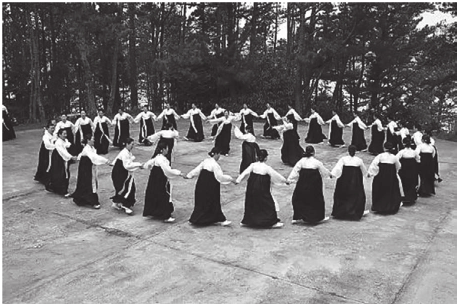
Figure 15.1 Ganggangsullae (Korean Circle Dance)
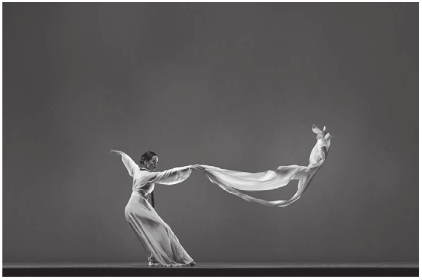
Figure 15.2 A Modernized Salpuri Dance Choreographed and Danced by Fong (2011)
combined with certain uses of the scarf, is used to symbolically express waving, flying away, shaking off, embracing, suppressing, folding, and spreading. Salpuri begins with a slow-paced rhythm, increases in speed as the dancer expresses her wishes, and then slows to a tranquil conclusion (see Figure 15.2). Using a scarf helps dancers to feel bigger and stronger and makes them more expressive. The physical and psychological key to the dance is a hold-and-release breathing cycle that generates energy and relaxation.
SPECIFIC KOREAN EMOTIONS
Haan: A Cultural-Psycho-Social Perspective
Korea’s Confucian philosophical and cultural foundation supports rigid authority structures in the family, reinforcing the wife’s submissive role and the husband’s governing role (Lee, Wachholtz, & Choi, 2014). This expectation of self-effacement and nonentity can naturally lead many women to ignore their own wants and needs, and prolonged struggles with this conflicted female identity can lead to manifestations of haan. This culture-bounded syndrome may include mixed feelings of neglect, sorrow, and powerlessness; a suppression of feelings; a lack of self-identity; and a lack of a sense of belongingness (Min, 2009). Song and Moon (1998) described haan as a victimization-based syndrome resulting from perceived unjust treatment and the result of the lack of opportunity for self-actualization in a male-dominant society.
Haan as a Somatic Symptom and Cultural Syndrome
The expression of haan often includes psychosomatic pain, and it is related to another Korean-specific cultural syndrome known as Hwa-byung, an individualized expression of illness and a hallmark of haan (Min, 2009). Haan is a cluster of symptoms, and Hwan-byung is a diagnosed illness. Hwa-byung is described as a “cultural syndrome” that “manifests in the mixture of clinical depression, anxiety, and somatic symptoms characterized by the presence of a ‘lump’ and pressure in the throat or chest” (Kim, 2012, p. 237), feelings of heavy shoulders, a fire in the chest, difficulty breathing, floating without strength in one’s lower body parts, a tight chest, a rapid heartbeat, or a lump in one’s neck or stomach (Min, 2009).
Although haan has depressive overtones, it also features anger and rage, which tend not to be part of depression as manifested in Western cultures. These features explain why Hwa-byung is often referred to as anger disease or fire disease (Lee et al., 2014).
Haan and Generational Trauma
Haan is derived from prolonged intergenerational trauma beyond the individual personal level, a collective and national sorrow involving feelings of indignation and injustice that have been suppressed and endured. National traumas such as colonization by Japan, World War II, and the Korean War left deep scars of tremendous emotional suffering on the Korean people. Like any mental illness, this is a complex experience that should not, however, be thought of as completely negative, destructive, or without value: Kim (1998) emphasized that “Haan is not a passive process of suffering with acceptance and resignation, but an active process of suffering with a will to endure pain, to overcome and to triumph someday” (p. 219). Although several researchers have made excellent suggestions for using body-based expressive psychotherapy, research into these areas is insufficient.

