Making (the) Material
A constant in my creative process is my shift between authoethnographic (Allegranti, 2014, 2019) writing, movement improvisation and choreographic co-composition as part of choreographic or therapeutic relating. I employed this process when creating bespoke choreographic and accompanying sonic material in the studio with the four professional company dancers and musician. During this studio practice, the impetus for movement exploration and composition is the transcribed interview-conversations and my autoethnographic writing together with movement responses following the family interview-conversations.
Making (the) material was not only a space where choreography was undertaken. It was, in the Winnicottian sense (1971), also a ‘holding’ space. With the dancers, I facilitated movement improvisational tasks and verbal reflections’ where the visceral and felt sense impact of lost, incomplete words, family relationships in turmoil, changing identities, fading memories, relationships with environments (natural, medical), symbolic and literal references was explored by the dancers, see Figure 11.2. As a team of artists working together, we articulated the impact of working with this dementia material on our own bodies, and in doing so, the bespoke material became a performance of selves (Allegranti, 2011), layered from the families’ autobiographical, often intimate stories, whilst also combining the artistic teams’
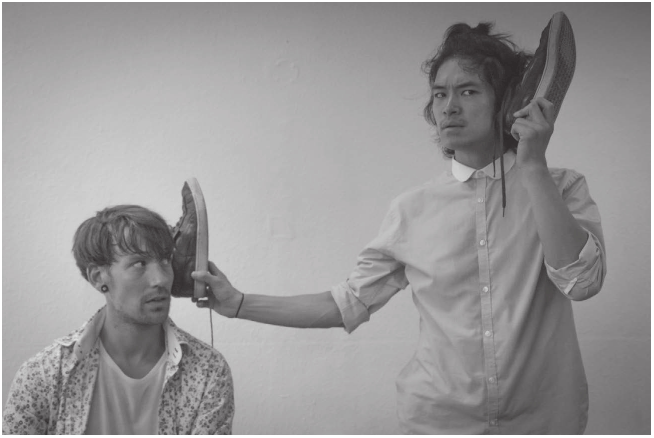
Figure 11.2 Luke and Takeshi, Public Performance at Crouch Encl Festival
Photo: Julia Testa.
verbal and movement responses to that material. Sabrina speaks to this tangling of stories, affects and memories after one of the studio practices:
We’re not pretending to have dementia; we put ourselves, as well, in it. I felt like in [the] rehearsals I was receiving something in return about my life that I can cany It’s something that really shifted my life.
The artistic import during this process allows for a disruption of participants’ stories and working against representation (Ringrose et al., 2019). In doing so, we began to inhabit the other—as well as reinhabiting ourselves—the resultant bespoke choreography became a process of ‘storying’ life material. The dancers were not ‘pretending to have dementia’ as accessed through forms of role play or ‘verbatim’ performance. Instead, I facilitated the dancers through a process of Am-aesthetic prompts. I have adapted the word Am-aesthetic to include three aspects: the sense of movement, including interoceptive and proprioceptive awareness; the vital aesthetic process in forming movement (in artistic and therapeutic contexts) and the emergent material kinship during the process of witnessing and engaging in movement. This intersecting trinity of Ain-aesthetic co-composition provides an epistemological gateway towards an intuitive understanding of the dynamic inseparability of selves and environments and allows the dancers to engage with the ubiquitous and tangled material layers of loss and life with dementia and thus extend their own understanding and capacities of relating in this context. The process highlights several ubiquitous factors crucial for artistic and therapeutic practice: how (the) material holds affective and intimate parallels as well as vastly different experiences from our own and, how the evolving choreographic process became a movement form of consciousness. It also highlights that the process of storying is not flat and fixed but open-ended; offering somatic, movement-based and political layers of dementia and everyday life.
Participatory Ecologies
The third spacetime event troubles embodied intersubjective relating (Allegranti, 2011, 2014) and is more akin to Manning’s (2013) proposition of participatory ecologies inasmuch as an ecology touches on the everyday while moving beyond the individual and beyond the event. These one-and-a-half-hour events include an average of three to six families each session. The events comprise bespoke performances witnessed by families, followed by an invitation for families to join us in a collective movement improvisation response, see Figures 11.3 and 11.4. An option for verbal and written reflections is offered at the end. These events take place in a variety of spaces such as art galleries and studios, libraries and hospital wards. Shifting between artistic and therapeutic facilitation (Allegranti, 2011), I pay attention to the ethics of engagement
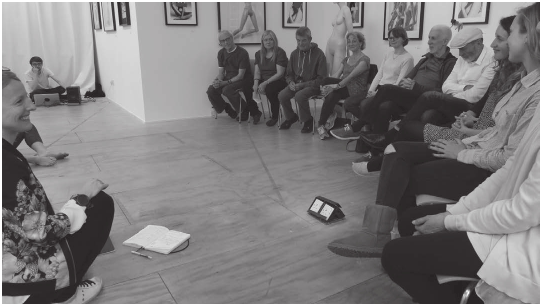
Figure 11.3 Participatory Ecology
Photo'. Julia Testa.
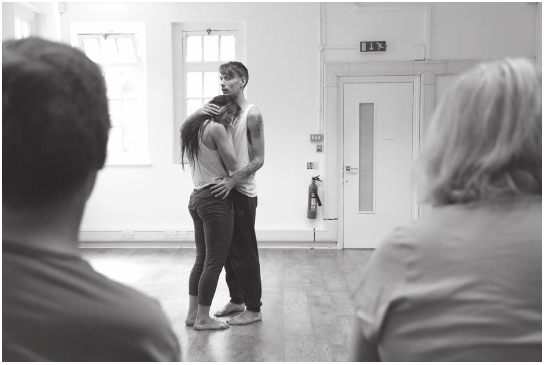
Figure 11.4 Bespoke Performance for Family
Photo'. Aidan Orange.
such as trust, consent, safety, level of participation, and choice, and I maintain a strong witness position, assisting me to hold group process and enfolding material.
Performing bespoke choreographic and sonic material is the first step where the witnessing families, who have been interviewed, are already invested in the material and are perhaps ‘reminded’ of people in their personal life stories, their singular and collective identities, and their value as a collective. This collective remembering is a crucial aspect of relating, particularly for people living with dementia where control, independence and voice are personally and publicly challenged.
The act of witnessing and being witnessed during the bespoke performances holds neu-ro-affective impact both for dancers and families. Takeshi speaks to the unmediated nature of what is getting ‘done’ in this moment of performing and being witnessed by the families, by describing the process as “very special, because it allows us to be very attentive and very careful with what we do [it] feels like we are creating an umbilical cord between the performance and participants”. Takeshi’s visceral observation is also echoed by Luke, who speaks of the impact of being witnessed, “face-to-face, flesh-to-flesh, that is a bit more loaded or charged; allowing emotion to come”. This neuro-affective recognition in witnessing and being witnessed (Calvo-Merino, Grezes, Glaser, Passingham, & Haggard, 2006) during the bespoke performances offers opportunities to recognize and work with the tangle of personal and collective (family) processes. For people living with young onset dementia and their families, this may be crucial since it allows for an immediately Ain-aesthetic way of facing the changes in their lives with a view to redefining and reimagining, as Jacquie, whose husband lives with Alzheimer’s, said, “[T]he dances surfaced a lot for me as a carer and made me realise that I could use some sort of help, counseling or therapy. I’ve buried a lot”.
The second participatory ecology component involves participant-led movement improvisations, including responses to the performance material, see Figure 11.5. The aim is to
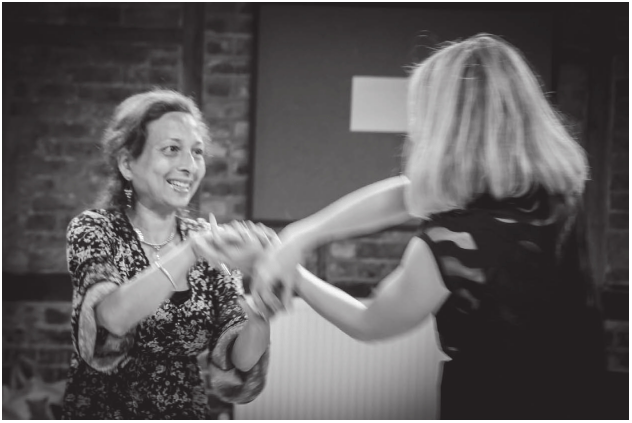
Figure 11.5 Movement Improvisation with Participant
/7ra/o: Julia Testa.
invite participants to playfully make the material their own and in doing so, to creatively and affectively co-compose through gaze, gestures and micro and macro movements and voice. Luke referred to an ‘elastic structure’ capturing the process of overall safe holding and being prepared to let go of structure when participants take the lead and choose their own level of engagement. Elasticity also refers to the creative incipience of movement and relating (Manning, 2013) and notably, this is a distributed process: between people living with dementia and their family carers. Zaki, the adult son of Forhat, who was diagnosed with young onset dementia at 52, speaks to this distribution:
We were both able to experience something in our own ways and get something independently out of it. It was incredibly liberating to see mum enjoy and be so engaged in dancing. Il was the first time in a while I was able to leave her to herself and her own enjoyment without feeling guilt or responsibility.
Our participatory ecology became a Ain-aesthetic assemblage for shared agency through a recursive loop of performing, witnessing and moving together. During this process, kinship extends beyond immediate family' ties to other families, the artistic team and with the choreographic material and all the human and more-than-human forces that the material evoked.
Giving-Back
The material emerging from the bespoke dances contributed to the creation of an internationally' touring dance theatre work I’ve Lost You Only to Discover That I Have Gone Missing, see Figure 11.6. Troubling the linear causality of ‘story’, this dance theatre piece opens into a wider ecology during every relationally contingent performance. The work aims to disrupt sociopolitical taboos about loss, intimacy and resistance and acknowledges the tensions of
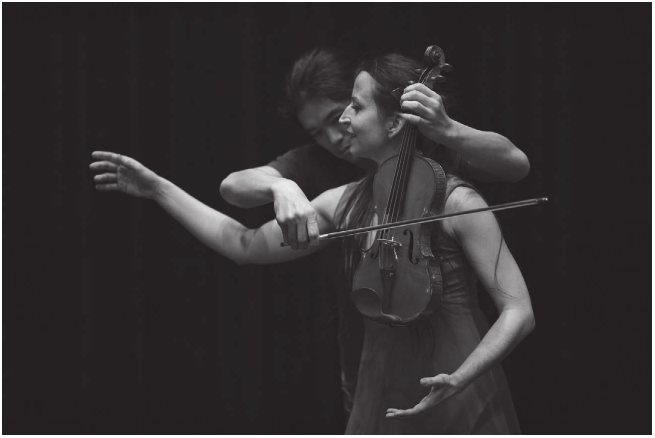
Figure 11.6 Takeshi and Aneta, Public Performance at Utrech Centre Photo: Martha Kamminga.
our entanglements with others, with our environment and the paradoxical sense of dispossession in loss and grief, and every audience engages with this in different ways. To date, there have been 12 international public performances of the work. Some have been dementia-friendly studio performances and others in more traditional theatre spaces.
Detailed discussion about the choreographic process for performance is presented elsewhere (Allegranti, 2019), but it is worth noting the overall impact of the work in the wider public arena as a continued distribution of the material. Following a dementia-friendly studio performance that many of our participants attended an insight from Takeshi about ‘giving back’ was offered:
fit] felt like opening sonic precious gift, like it was giving-back today... being witnessed by [the families] was a crystallization of these last few months. And also makes me think about this process of dementia, transforming or becoming different, it’s becoming a positive thing. Beautiful.
Performing each iteration allows for new possibilities of consciousness-raising with public audiences in different ways, and journalist Pippa Kelly captured the bigger picture in her review, writing that “what you’ll see is about the ties that link and sustain us, verbal or not. It’s about what it is to be human, and surely we all have a stake in that”.
In the writing that follows, my intent is to produce multiple, colliding, in/ra-acting subjectivities—for people living with dementia, their families, the artistic team and my own as practitioner-researcher. Drawing from choreographic vignettes, photographs, memories, interviews with participants and discussions within the artistic team, I demonstrate how DMP, choreography and dementia ‘diffract’ (Harraway, 2016; Barad, 2007): how ongoing insights from each can be read through one other. In doing so, I highlight how the work has challenged perceptions and ways of movement relating for everyone taking part, particularly around themes of loss, voice, vulnerability and agency.

