AESTHETICS IN DANCE/MOVEMENT THERAPY WITH PEOPLE WITH DEMENTIA
I start from a Rogerian perspective (Rogers, 1995); a basic tenet of Rogers is that humans tend toward self-actualization. I believe that just as grass grows, people grow, given a nurturing environment. I find that people with dementia can also continue to grow—perhaps not cognitively, but physically, emotionally, and spiritually. When we tap their internal motivation by inviting them to move through the use of music, props, and relating to them as dance partners, they build strength, endurance, and flexibility, expanding their physical and expressive range of movement, A meaningful aesthetic experience furnishes the nourishing environment people with cognitive limitations need to grow and heal. The value of such an aesthetic experience can be found in this statement by Donald Blumenfeld-Jones of Arizona State University: “Living aesthetically is an active participation in the world through one’s senses . . . having a profound effect on one’s sense of place and value in the world (1997, p. 315).
Belief in the therapeutic process is the deepest underpinning of my practice. I trust that healing wants to happen, just as I trusted my intuition that DMT was my path. Similarly, I have faith that if I bring my intention to be a vessel for healing, setting ego and personal concerns aside, I strengthen the container for therapy. I have come to understand setting an intention and recognizing the images that emerge as perhaps the most important aspects in my creation of an aesthetic DMT experience for groups of people with dementia.
Intention
In her elucidation of Irmgard Bartemeffs Fundamentals, Peggy Hackney wrote “Intent organizes the neuromuscular system” (Hackney, 2002, p. 262). While Bartenieff and Hackney may have been speaking of an effectively functioning body, I find that to be equally true of our actions in life. Setting a clear intention enables the greatest likelihood of achieving our desired outcome.
My intention in leading groups for people with dementia is to create a safe space for healing relationships through dance, music, props, caring, humor, and joy (Newman-Bluestein, 2005; Newman-Bluestein & Hill, 2010). Through exploration, as we play with various rhythms and colors, I hope to motivate people, stimulating their individual energy and shaping the group energy. My purpose is to transform the space into a dance of interaction where people can be, and know they are seen, heard, and valued. I envision people feeling a greater sense of vitality as they express themselves, leading to genuine, heartfelt exchanges which are intimate, joyful, and uplifting. I aim to provide an aesthetically satisfying experience in which each person feels an essential part of a group, a larger whole, one that is vibrant and alive with possibility and which they can then internalize (see Figure 12.1).
Without a curtain rising and falling, movement rituals establish the beginning and end of the group as a time and space outside the ordinary, where movement will be the primary medium for our relating. This makes it more likely that even participants without the ability to verbally understand will grasp our nonverbal communication. The following paragraph contains the words that accompany the movement ritual with which I begin each session:
Let’s begin by wrapping our arms around ourselves in a big hug. Now let’s open our arms and our hearts, making room for a group hug. Our theme is love, because it takes work to grow love. Living in a world where it is much easier to hate than it is to love, we need to work on growing love. Now we bend over and gather up some of the love that is in this room, as much or as little as you want. Let’s lift the love, raising our arms over our heads, and let the love shower into our hearts. And now, we give it away. The best way to grow love is to give it away.
From the outset, I am inviting participants to recognize themselves simultaneously as an individual and a member of a group, focusing on their internal, kinesthetic sense, even
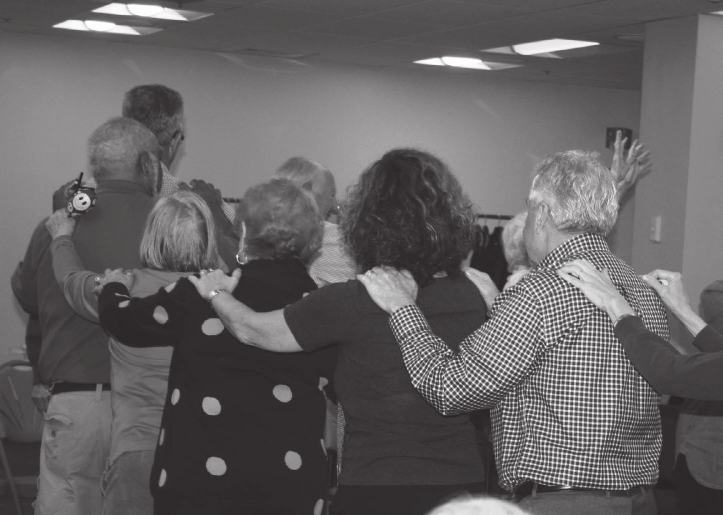
Figure 12.1 This Conga line spontaneously emerged in an environment where each person had a choice
Source'. Courtesy of JF&CS of Boston.
while looking beyond themselves. As they open their arms, reaching out to the sides, they often adjust their chairs so as not to make accidental contact with their neighbor. They have begun adapting to both their individual and group needs. As far as the theme goes, I have learned over the years that love is what they appear most interested in. The theme of love also helps create a safe space. In terms of the movement itself, we are changing our shapes as we enclose and spread, gather and scatter, moving in space in the horizontal, vertical, and sagittal planes. We are using different body actions as we lift and flutter and different body parts as we move our arms and our spines, hopefully engaging several of the body connections Irmgard Bartenieff identifies, namely, the arm-scapula, head-tail, and upper-lower connections, as we bend over (Bartenieff & Lewis, 2002; Hackney, 2002).
To ensure safety given their physical challenges, we do most of our moving while seated. For many older adults living in an institution, joint pain and stiffness due to prolonged sitting as well as neurological issues often lead to poor balance. They and the staff around them are fearful of their falling, so they sit more. When they do walk, they tend to be cautious, using considerable tension to hold themselves erect. That tension, while natural, is counterproductive to fluid, grounded, well-balanced movement. While seated, we have the opportunity to safely move off-center. Only when I am confident of their ability to stand will I encourage them to do so, providing support to those who need it. My goals for them individually are to increase spontaneous self-expression, reach into their far kinesphere, move off their center of balance, and most of all to move their spines:
In doing this and in every way I can conceive, I am attempting to get each person to release as much personal energy, take risks and give as much of themselves to the group as possible. It is not necessarily the size of the movement, but the level of engagement I am looking for. Sometimes, it is the smallest movements which arc the most profound. I am looking for movements that demonstrate a sense of connection, to rhythm, to their bodies, to themselves, feelings, memories, and thoughts. I want them to move with some awareness of, and at least momentarily, in relation to another person.
(Newman-Bluestein, 2005, p. 6)
Of course, many of the people I work with don’t follow suggestions. While initially, I found that distressing, as is often the case, I learned the most from my most challenging group, the one I mentioned at the beginning of this chapter. About ten minutes into every group, I wondered why I was even trying to get them to be a group. My efforts appeared futile. At that point in each group, it seemed that I surrendered, giving up what were clearly unrealistic goals. As soon as I let go of my expectations, I began to observe what they were doing, rather than bemoan what was missing. As I began to see, name, and applaud their very small efforts, to my amazement, I noticed small shifts. Their kinespheres were expanding, as was their range of expressive movement through the use of various props. When I opened up my auditory field, I began to hear some of the sounds in the environment outside our space, to which they were responding. I could appreciate that despite significant dementia, one woman had a strong empathic response to a woman crying in another room. She interpreted the sound as a baby crying—her baby—and she needed to ease her baby’s suffering. Understanding this, I could meet her where she was.
Because people in this group were unable to connect with one another, requiring individual attention to engage at all, I turned to my images for guidance.
Image
As in my own dance, the image I hold as therapist is vital and probably the most cohesive element. In general, as the group leader, I see myself first as container, holding not a circle but a sphere which encompasses the multidimensional group experience involving the movement in planes, the emotional, the imaginal, the liminal, and the unconscious as well as the conscious.
As the group unfolds, my images often shift. In groups where participants are unable to connect with anyone other than the group leader, I find a useful image to be that of a wheel, with the leader as the hub and the interactions between the leader and the members as spokes. I hypothesize that the participants are relating to the group leader as though that person were their primary caregiver. As hub of the wheel, I connect with each member of the group individually and repeatedly, in hopes that they will begin to interact with one another (see Figure 12.2):
With this image emerging quite frequently, I wondered what would happen if I created a physical representation of the wheel out of stretchy fabric. Would I then be able to occupy a seat at the periphery of the circle rather than continually moving through the center? That image led to my creation of the Octaband®. The Octaband’ is made of colorful stretchy fabric shaped like an octopus or the sun, with a center circle from which a number of legs emanate. Because there were hems at the end to slip their hands into, it was easy for them to hold on, and because they could visually, kincsthetically, and tactually see and feel their connection to the others, there began to be a bit of group cohesion. This did, indeed, allow me to be at the periphery with them, and to see myself as one of the members of the circle, receiving as well as giving. The quality of humility is paramount and is symbolized by this image.
(Newman-Bluestcin, 2005, p. 5)
Rather than seeing myself bearing sole responsibility for the group, my image needed to expand to see the participants as also responsible. The Octaband’ helped me do that. As soon as I experienced the slightest responsiveness on their part as a gift, I experienced meaning and beauty in our exchanges. The relational aspect of my aesthetics was being fed.

