FRAME 1 META-THEORETICAL CONCEPTS
Additional examples from the selected studies in frame 1: Dance as cultural practice; Dance as healing practice; Creativity/creative process; Body-mind integration; (Movement) expression of inner states; The primacy of movement; Embodiment; Kinaesthetic memory; Metaphors; Aesthetics; Animation; Enactive approach
This frame was indicated when a text presented specific key concepts that are characteristic for DMT but do not solely belong to the domain of DMT. These are concepts that DMT shares with other disciplines, like philosophy, anthropology, psychology, biology, neuroscience. In some cases, such concepts were explicitly discussed or defined, such as the concept of culturally sensitive practice in Ho et al. (2016) or the phenomenological orientation in Wiedenhofer et al. (2017). Professionals in the field of DMT typically contribute from a practice-based and experientially informed epistemology to these conceptualisations, whereas other disciplines contribute typically through theoretical or cognitive models. An example from the selected articles is to be found in Fischman’s (2017) conceptualization of transcontextual meta-patterns in group formations in DMT. Some other dmts discussed meta-theoretical concepts directly for their relevance for DMT. An example here would be the discussion of cultural contextual-ization of movement materials for the use in DMT sessions (Ho, Fong, & Yip, 2018; Ho, Lo, & Luk, 2016).
FRAME 2 THERAPY THEORY
Additional examples from the selected studies in frame 2: Models on healing; Models on mental health; Models on well-being; and for the dance informed orientation, models on specific body or movement related aspects, specific working elements; The professional domain was indicated, for example, as Body psychotherapy; Dance Therapy; Dance Movement Therapy
This frame was used when the article delivered characteristics of DMT as a discipline in the creative arts therapies. Decisions for this frame were made from questions such as ‘ What are specific indications for dance therapy?’ ‘ What does DMT provide that is specifically dance or movement related? ‘ What are specific DMT related goals/intentions? This frame covered models or explanatory concepts about the way in which DMT may contribute to healing, recovery and well-being. Contributions in this frame were also found to describe the specific contributions of DMT to the treatment of specific symptoms or specific populations. In this frame, authors made the connections between pathological issues and movement-related interventions that would address these issues. Examples: ‘grounding’ (de Tord & Brauninger, 2015) and ‘the use of touch’ (Mathcrly, 2014).
Closely related to specific therapeutic approaches are choices regarding the therapist’s leadership style. Brauninger (2014b) discusses choices in leadership style explicitly and mentions the interrelatedness of verbal and nonverbal interventions in DMT. Authors mention frequently that leadership style is flexible and dependent on general aims of the DMT and patients’ manifest needs as they occur throughout therapy (Dunphy et al., 2014; Sandel et al., 2005; Barnet-Lopez et al., 2016; Shim et al., 2017). Additional examples from the selected studies in Frame 2 in the text box show the broad orientation on theoretical models with psychotherapeutic orientations.
FRAME 3 THERAPY STRUCTURES
Additional examples from the selected studies in frame 3: Development of therapeutic process; Session structures; Dyadic and group structures; Autonomous therapy; Adjunctive therapy; Improvisational structures; Directive structures; Choreography
Frame 3 was indicated when the structure of the DMT session was explicitly addressed or when a therapy program was described. Only a few articles explained manuahzed DMT interventions that give specific descriptions of what happens in the DMT sessions in relation to the individual, interactional, social and environmental factors. Examples for a more detailed description of manualized interventions in our review sample were found in Pyl-vanainen et al. (2015), Koch et al. (2015) and Ho (2015). In many cases the information on session contents in terms of the applied interventions was given at a rather general level, such as by' listing the phases of the DMT session (from warm-up to closure) or rather general description of session content without specification of the applied technique. Practice-oriented articles in our review did not always provide the theoretical foundation for the choice of a specific session content.
FRAME 4 APPLIED DMT ACTIVITIES
Additional examples from the selected studies in frame 4: Chace approach; Authentic movement; Circle dances; Folk dances; Ballroom dances; Improvisation; Relaxation; Breathing exercises
I his frame was tagged when articles described single interventions or activities in the clinical context, or as examples within a theoretical argument. Typically, this frame would describe the concrete movement activities that dmts apply in their sessions. In some cases, it was difficult to trace the dance-related characteristics of an activity. In these cases, we evaluated the embeddedness of a single intervention in the context of DMT. A physical exercise in the course of a DMT session would not only address the physical engagement of the participants but would be related to the potentially therapeutic effects that stem from the social, aesthetic or cultural dimensions of dance (Samaritter, 2018).
As can be seen from the proportional overview of the 43 studies (see Figure 8.1), most of the studies were categorized into frame 2 suggesting that the scoping review tapped into DMT models and characteristics of DMT as a discipline. Since the least number of studies fell into frame 1, the review suggests that relatively little is written during the last 18 years about metatheory and conceptualization of DMT. Twenty studies fitted into two frames, and 11 studies into three frames. The contents of 17 articles fitted into both frames 2 and 3 revealing that dmts who describe their DMT models also often provide descriptions of therapy structures. Such studies are important for the field in order to build the knowledge base on DMT as a discipline with quantifiable structures. Half of the studies provided descriptions of the actual DMT activities, i.e., frame 4, and 16 of them were combined with frame 3. Only two studies were categorized into all four frames and five studies only with one frame.
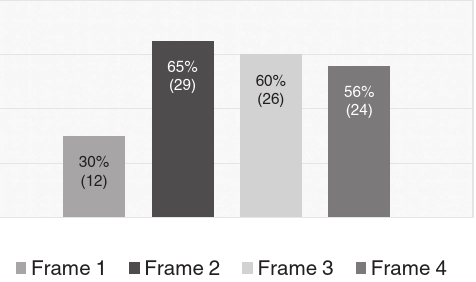
Figure 8.1 Frequencies (n) of the Four Structural Frames
DISCUSSION
The main aim of the scoping study was to review how the dmts describe the contents of their practice. The review included 43 studies from two academic search machines.
It is possible that the results are limited since the chosen search machines may not include all available DMT-related resources. Furthermore, journal articles often have a specific and focused structure, depending on the journals’ scope. Also, the choice for specific search terms may have impacted on the outcome of the review.
Summarizing the results, we found that the current review delivered a broad range of DMT-related studies, which offered a considerable diversity of DMT theories and practices. Notwithstanding the variety of the selected articles, the content analysis showed overarching themes and structures between studies. However, in many of them this information was rather implicit. We found it at times difficult to disentangle the information on DMT-specific elements. Also, many studies lacked the argument on why specific interventions would serve a specific target group, symptom or problem. Being dmts by origin, we experienced in the multitude of studies a level of revisiting the well-known, familiar and generalized descriptions of DMT. Reviewing studies that were less explanatory required effort, reorienting and searching for a way in. The contents and definitions of the four frames continued to evolve all the way to the end of our writing process. We felt we had many roles, not just of an external observer but also as a privileged choreographer who combines and structures old and new, having a role in the collective creation of DMT as a specifiable structure.
It seems a challenge for dmts not only to find the right wordings for the experiential content of their work (Panhofer & Payne, 2011) but to also find the right structures for the multiple layers of decision making that go along with the positioning in a professional field that is characterized by a broad variety of theories and applications. Many studies were tagged for multiple frames in various combinations, suggesting that there are studies combining meta-theory (frame 1) with DMT theory and models (frame 2), even together with therapy structures (frame 3) and applied DMT activities (frame 4) (Ho, 2015; Houghton & Beebe, 2016).
In our selection there were also studies that portrayed DMT at just one level, i.e., at a meta-theoretical level as embedded into philosophical, cultural, anthroposophical and psychological fields (Capello, 2007; Klasson, 2014; Ho et al., 2016) or in contrast on a practical level into specific DMT activities and working forms (Barnet-Lopez et al., 2016).
Only a few studies gave explicit information about the specific orientation of the applied DMT intervention, such as psycho-education, revalidation, well-being, prevention, care or cure. In some cases, it was not clear whether the presented model would in fact address therapeutic goals. These results reflect Rush & Imus’s overview on the creative arts therapy continuum (2017, p. 173) distinguishing therapeutic, aesthetic, recreational, educational, rehabilitative and psychotherapeutic approaches. For DMT to be recognized within a multidisciplinary mental health field, it would be helpful if DMT interventions would be indicated with a clear therapeutic orientation.
The formal structure of DMT sessions, which is composed of successive interventions throughout one session, is due to the arts-related contents and dynamics constantly adjusted to the group needs and interactional shifts between group members. The therapist will have to find responsive interventions to alter movement material throughout therapy while maintaining a clear therapeutic orientation to the population and the application of specific working elements. Situating DMT interventions within the interacting structural frames will inform the movement interventions on the spot ‘as the body of knowledge behind our intuitive choices increases, perhaps so too will those moments in which the therapeutic process seems to take over on its own’ (Bruno, 1981, p. 133).
Ideally, DMT studies would describe a series of choices made, including meta-theoretical concepts and their relevance for the chosen therapy approach. This would enable describing a suitable design of DMT practices and session structures, and finally, would give a rationale for the selection of specific dance and movement interventions. This kind of explicit process description would position DMT more clearly in the broader mental health field or a multidisciplinary context. The four frames may support the process of decision making during the development of a DMT manual. Table 8.3 describes an example about the layered decision making in DMT, focusing on embodiment with a patient with personality disorder.
We would therefore propose the four structural frames as highly interrelated (see Figure 8.2). When viewed together they form a dynamic structure of interacting layers, with the
Table 8.3 An Example of Using the Four Frames to Construct a DMT Manual Focusing on Embodiment for Patients with Personality Disorders
|
I. Frame of meta-theoretical concepts |
Description of the significance of embodiment for patients with personality disorders (PD) and which DMT approaches would support the development of embodiment in PD. |
|
II. Frame of therapy theory/model |
Decision on a series of DMT sessions oriented on developing embodiment in PD. |
|
III. Frame of therapy structures |
Description of the composition of the single session to support development and maintenance of embodiment in PD throughout a DMT session. |
|
IV. Frame of applied DMT activities/ working forms |
Description of specific activities that will afford embodiment in PD. |

Figure 8.2 The Four Frames as Interacting Structuresmeta-theory being the broadest and the dance therapeutic method being the most elementary unit. The description of specific aspects of DMT interventions consisting of all four layers would be useful for dmts. We need to familiarize ourselves not only with different perspectives to acknowledge and take further the existing DMT literature. In order to describe and disentangle the complexity of DMT interventions, we should acknowledge the versatility of studies carried out not only in our own but also in other cultures and traditions. The four proposed frames could serve as a dynamic structure to describe manualized interventions as well as single interventions without losing the complexity of the arts-based nature of DMT.
Choices made throughout the four frames would also have an impact on the leadership style applied during the interventions. In the selected studies, the information on leadership styles was relatively rare. However, some authors have addressed particular variations in DMT leadership styles (Koch, 1984) and their relevance for the effectiveness of DMT interventions (Brauninger, 2012). Within the structural frames, leadership styles are related to the specific approach or orientation of the intervention, the therapy theoretical choices. For further conceptualization, leadership style could serve as a sub-category of frame 2.

