Nine Fundamental Mechanisms of DMT
The nine fundamental mechanisms were identified through an analysis of four sessions from my 40 years of evolving practice, education and research as a creative arts dance/movement therapist. Three were group sessions and one was an individual session; two of the three group sessions were with international participants. One of the international sessions had an interpreter, and one did not. During my analysis, I pursued the question of what is essential in my session and how did ‘it’ work for my clients’ transformation to occur from the beginning to the end of the session? Further development in each category is ongoing as I seek to more specifically articulate the component parts (see Figure 9.1).
Fundamental Mechanism 1: Safety and Risk
Safety and risk include creating an environment within which risk and reward are balanced through the management of biobehavioral stimuli. A receptive nervous system is the goal, allowing the client to receive stimuli and respond without sympathetic overstimulation. Safety includes a shift from a defensive reaction of fight, flight or freeze into social engagement (Porges, 2011). It is, therefore, necessary for dance/movement therapists to prepare

Figure 9.1 Nine Fundamental Mechanisms in DMT
the therapeutic environment to sound, look and mentally and physically be safe. This means that stimuli must be limited at the onset of treatment and throughout the session to prevent emotional dysrégulation by the client, or lack of participation, to name just a few defensive responses.
Risk is related to the courage to try something new, seek novelty and shift patterns. May (1974) called it the courage to create, stating “courage is what is necessary to make being and becoming possible” (p. 13). May identified numerous types of courage, including physical, social, moral and creative. He identified creative courage as the most important because it “is the discovering of new forms, new symbols, new patterns on which a new society can be built” (p. 21). Courage is necessary for the client’s commitment to treatment. Courage is fostered through the creative inspiration of the therapist at a pace that is commensurate with the client’s pace. It includes the therapist’s fostering the client’s creating. Creative courage is therefore necessitated from the therapist as well as the client. This means that the dmt is willing to take creative risks in co-creating with their client. The therapist learns to embrace their personal fears in facilitation and leadership. I always tell my students that the client will only go as deeply as they are willing to go. Therapists’ fears are influenced by their personal history and illustrate the need for their own psychotherapy, particularly to assist with countertransference.
Fundamental Mechanism 2: Aesthetic Mutuality
Aesthetic mutuality is the interactive movement behavior and reciprocal engagement in creating, the purest actualization of one of my personal DMT beliefs that creating breeds creating. Aesthetic mutuality is the therapeutic movement relationship for dance/movement therapy in the same way that the therapeutic relationship functions in verbal psychotherapy. Aesthetic mutuality is accomplished through the discriminating appreciation and participation in making specific qualities reflected in form. It is a relational feedback loop between the client and the therapist that develops bonds within a therapeutic relationship. It includes an additional stimuli and response from and to the creative manifestation—differentiating the creative arts therapies from verbal psychotherapy. Through this process, patterns of attraction manifest through aesthetic sensitivities, aesthetic preferences and aesthetic values. This is a feedback loop like those identified by Caldwell (2018) and Koch (2018).
AESTHETIC SENSIBILITIES
Aesthetic sensibilities are rhythmically coordinated, patterned signals/calls and their responses that are unmediated by thought. This includes temporally organized rhythms of vocal, facial and kinesthetic expressions of affiliation that are unconsciously adaptive within the therapeutic relationship (adapted from Dissanayake, 2009; Porges, 2011; Stern, 2010). Examples of this may be a sing-song vocalization filled with intonation that greets clients or scatting along with someone’s movement rhythms, to name just a few examples. This stage of the mechanism relates to sensory information processing and remains more unconscious. The sensibilities will tend to more easily resemble and include developmental and familial patterns.
AESTHETIC PREFERENCES
Aesthetic preferences entail ‘'more complex aesthetic responsiveness [that] requires one to employ and develop a predominately cognitive ability to appreciate (and participate in) the ways in which stimuli are combined with each other and with other humanly features” (Dissanayake, 1982, p. 152). Aesthetic preferences include conscious awareness of favored sensory information processing—iconic, haptic, echoic, gustatory—and their respective arrangement in perceptual forms, which provide the discriminating understanding of and embellishment for our attractions (or things we are drawn to). Aesthetic preferences require the therapist to understand their knowledge about, and bias in, their personal movement predilections. This is called body knowledge/body prejudice (Moore & Yamamoto, 2012) and is influenced through extensive practice of dance technique. It facilitates the dance/movement therapist’s quick responsiveness from a solid background in the study of dance and movement. It is, “I know from my body. I have practiced this movement many times throughout my ballet and character dance training, from tap and musical theatre and through this familiarity I can more accurately respond.” In addition, culturally informed personal preferences in pedestrian patterns of movement, or the movement signature, have been formed through the repetitive use of movement to meet our needs. This familiarity may perpetuate prejudice in not only how we observe and assess knowledge of movement but in its influence on countertransference with our clients.
Aesthetic Values
Aesthetic values are the set of consciously discriminated and culturally determined beliefs and rules that underlie the dmt’s discriminating actions via the call and response. Aesthetic values form patterns of attraction and discriminating appreciation of specific qualities reflected in form. The creation of forms and the representational perception of the forms are “one method of promoting effective interpersonal communication and satisfying relationships” (Hinz, 2009, p. 10). “Representational diversity” is a term that art therapists use to describe differing points of view (Hinz, 2009, p. 10). Aesthetic values previously identified by dance/movement therapists include: the general in the specific, freedom, symmetry (Hervey, 2000), flow (Imus, 2012), beauty, authentic expression and touch (Koch, 2017), though many others may exist. This pattern of attraction includes cultural bias, which may link to the therapist’s countertransference.
Fundamental Mechanism 3: Dynamic Concretization
Dynamic concretization is the action-oriented process of making art, dance, music, drama and poetry through an energetic exchange of feelings, thoughts, sensations and memories into an explicit form. This includes “bringing concrete form and containment to sensations, images, feelings, and thoughts, (SIFT) to gain objectivity in viewing one’s own creation and forming a new perspective” (Siegel & Bryson, 2011). The forming of objects within the experience is intentional but may have unconscious motivation. In DMT, dynamic concretization may also be referred to as embodiment. Embodiment means a concrete expression of some idea or quality. The concretized form is perceptually understood through formal aesthetic art elements such as space, line, kinesphere, efforts, shape, intonation and so on. Aesthetic mutuality and dynamic concretization together create what Dissanayake (1992, 2009) and Koch (2017) refer to as the aesthetic experience.
Fundamental Mechanism 4: Improvisation and Play
Improvisation and play are the spontaneous expression of imagination, typically without planning. This mechanism does not require concrete form and may not come from guidance from the dmt. Improvisation and play do not need reciprocity or the relational feedback loop. It may be random, exploratory' and often nonlinear. This mechanism involves the search for replication through modeling as in play, as well as the search for novelty' as in improvisation. These qualities of improvisation and play' allow for freedom and are often more unconscious, expansive and may' activate divergent thinking.
Fundamental Mechanism 5: Symbolization and Metaphor-Making
Symbolization and metaphor-making are the linkage between matter and the story. It assists one in identifying similarities and differences in patterns. Symbols are simple to complex representations of experiences or implied experiences from past events to new events (Wright, 1979). Symbolization is the action of making symbols and is therefore a creative process. A metaphor is an implied comparison in contrast to an explicit comparison in a simile. Comparing and contrasting creative responses expands possibilities, leading to greater understanding and choices. It is equally as important to identify how a creative call and its response is like something else (simile) or is something else (metaphor) as it is to identify the difference between the creative call and its response. The difference or contrast becomes the springboard for creating something new.
Fundamental Mechanism 6: Coherence, Integration and Meaning Making
Integrate means combining one thing with another so that they become a whole. Dan Siegel (1999) defines it as “the linkage of differentiated elements of a system” (p. 64) and states that it “illuminate(s) a direct pathway toward health” (p. 64). The American Dance Therapy Association’s (ADTA, 2016) definition of DMT highlights integration: “DMT is the psycho-therapeutic use of dance and movement for the integration of the physical, mental, social, spiritual, and cultural health of an individual” (para 1). Coherence is systematic, logical or consistency. Siegel (1999) believes that coherence is an outcome of integration and describes it; “as creating balance in the system between sameness and rigidity on one hand, and novelty and chaos on the other” (p. 330). Meaning-making is accomplished when our body/movement logically links together with our information/story. If they do not fit or are incoherent, this creates a tension or call/signal worth examining. Understanding is when the matter of information and the matter of biolog}' fit. As Bechtel previously stated, the transformation in biolog}' is of material. Transformation in psychology is of information (2008). To reiterate—DMT’s definition is to transform the whole person (its material body and movement) and its story, thoughts, feelings and beliefs (information). The transformation of the story and meaning-making will be strongly influenced by the psychotherapeutic approach of the therapist. I lean toward a humanistic approach.
Fundamental Mechanism 7: Empowerment and Autonomy
The very nature of making something is a creative process and provides the freedom to make individual choices. Dissanayake (2009) described making art, dance, music, theatre and poetry as competence-building actions. Making art allows the client to feel an internalized locus of control: the client makes it, controls it and can choose to change the specific qualities reflected in any form. Art-making diminishes dependence on the therapist and empowers the client. Empowerment and autonomy promote self-efficacy, which, in turn, promotes empowerment and autonomy. “Self-efficacy and perceived control are the potential for enhancement of mood and of health in general” (Evans, 2007, p 93).
Fundamental Mechanism 8: Informed Clinical Decision Making
Informed clinical decision making is both a systematic classification and a rationale. The mechanism requires the dance/movement therapist to appraise, formulate/develop,
Table 9.1 Integration of Matter and Information
|
Transformation of Matter (form) |
Transformation of Information (content-story) |
|
Biological (bio) Physical Body & Movement (kinesthetic-sensory-perceptual components) |
Psychological (psycho) Thoughts & Feelings Social-Cultural (social) (affective-symbolic-cognitive components) |
intervene and evaluate. Decisions on interventions must be informed through assessment of the identified form through movement components and their accompanying content in the form of the story and vice versa. Appraisal tools within dance/movement therapy are required as per the Standards of Education for Approved Master’s Programs in DMT. Movement observation and assessment tools that are suggested come from movement observation systems like Laban Movement Analysis, Kestenberg Movement Profile and Bartenieff Fundamentals. The assessment tools provide the difference in making decisions that are intuition driven and decisions that are appraisal driven. The challenge here is in the quickness required to assess and make a decision during practice. According to information processing theory, our sensory memory is no more than three seconds. This is when we pick up or select which movement to develop. How can we rationally go through our entire taxonomy when choosing to intervene when we have only a matter of seconds? A background in dance and movement as previously mentioned is essential to enter the discipline and practice of DMT. It facilitates the therapist’s responsiveness from the personal body experience.
Appraisal may also include the psychological paradigm that influences your choice of approach. If you are psycho-dynamic in your approach, the client’s developmental history, transference and countertransference will be components that must be examined. They are a part of the story that influences the concretization of movement and the therapist’s choice of intervention.
Fundamental Mechanism 9: The Continuum of Interdisciplinary Approaches
The continuum of interdisciplinary approaches is the delivery of DMT interventions along a continuum, including the aesthetic, therapeutic, recreational, educational, rehabilitative and psychotherapeutic (Rusch & Imus, 2016; see Figure 9.2). This mechanism has similarities to
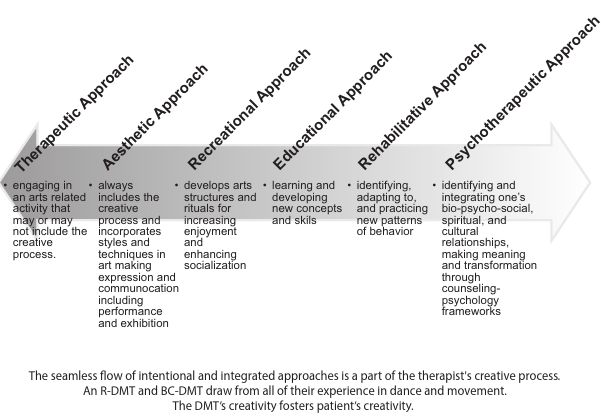
Figure 9.2 Continuum of Interdisciplinary Approaches informed clinical decision making because it is closely affected by the client’s diagnosis and the environment where the treatment is taking place.
The continuum is not static. It invites the therapist to be flexible and make creative choices within a session along the continuum. The therapist may ask the client to concretize/ embody their feelings into a dance (aesthetic) and then have the client practice it to strengthen muscles and to improve motor functioning (rehabilitative). The client may be asked to perform the dance at home to assist in relaxation and refocusing (therapeutic). The therapist may teach the client (educational) patterns of body connectivity to understand proxemics, physical stability and support. The therapist may then examine the psychological story about relational stability and support from the humanistic perspective of positive mutual regard or examine the psychodynamic perspective of transference and countertransference for further assessment and intervention (psychotherapeutic). The combination of options along the continuum engages the therapist in responding creatively with the most effective intervention from the interdisciplinary approach to the needs of clients within the healing environment. This mechanism provides options for the information processing system that will best work to assist the client in learning. For example, the rehabilitative approach emphasizes the value of repetition and practice essential to working memory. The aesthetic approach focuses on sensory memory. The educational approach highlights the organization of information chiefly through chronology. The psychotherapeutic approach emphasizes meaning-making and its selection into long-term memory.

