Type B Reflectors
In this section we mainly follow our paper (Glimm & Oliker, 2003). For ease of reference we will refer to reflectors considered in preceding sections as reflectors of type A. An important property of reflectors of type A is that they are convex surfaces. We show now that there is another class of reflectors, called type B, that also solve the FFR problem. In contrast to type A reflectors which are guaranteed to be

FIGURE 9.2 The far-held T is the shaded area; k is a constant enforcing (8.21).

FIGURE 9.3 Side, bottom, and front views of the designed freeform reector.
convex, reflectors of type В are not necessarily convex. This may be a serious disadvantage for manufacturing. Physically, the reflectors of type A produce reflected rays which are crossing while for reflectors of type В the reflected rays are noncrossing. The principal difference in constructions of type В and type A reflectors is that to build a type В reflector one must take a union in Definition (8.8).
Definition 9.5.1 Let D,T cS! and let (p, p) be a pair of functions defined on D and T, respectively. We say that the pair (p, p) defines a reflector of type В if p, p > 0, and

The surface given by the vector function r(m) = (m, p(mj), me 5 is called a reflector of type B. The set of reflectors of type В is denoted by 7li;. See Fig. 9.4 for an illustration in plane.
Figure 9.4: here, a type В reflector consists of two parts: the curve ABC and curve EFG; D is a circle of unit radius with center О—the light source, and T = {y,,y2}- Both parts are composed of pieces of parabolas P(yt) and P(y2). The segments shown by interrupted lines are not part of the reflector. The rays incident on AB and EF

FIGURE 9.4 Here, a type В reflector consists of two parts: the curve ABC and curve EFG: D is a circle of unit radius with center О - the light source, and T = {y,, y2}. Both parts are composed of pieces of parabolas P(yt) and Р(ч). The segments shown by interrupted lines are not part of the reflector. The rays incident on AB and EF are reflected in direction y, and the rays incident on BC and FG are reflected in direction y2.
are reflected in direction y, and the rays incident on BC and FG are reflected in direction y2.
Condition (9.9) means that in order to define a type В reflector, for each m e D, one has to choose among paraboloids with axes у e T and focal parameters p(y), у e f, the most distant from point О in direction m. On the other hand, condition (9.10) means that for each у e f one has to choose the paraboloid with axis у and focal parameter realizing the shortest distance from О to the directrix plane of that paraboloid. Thus, the first condition is geometric while the second is optical and they must be consistent to define a reflector of type B. A similar interpretation can be given to conditions (8.13)—(8.14) taking into account that inf and sup are interchanged as compared to Equations (9.9)-(9.10).
Type В reflectors can be constructed geometrically as follows. Consider the paraboloids of revolution P(y), у e T. with focal functions p(y) and the convex bodies B(y) bounded by P(y). Put

where K(D) is the cone of rays emanating from О and passing through points of D. Clearly, a reflector Re Tie and it is a graph of p over D. With the above definition it is guaranteed that for each у e T the paraboloid given by py(m) = p(y) / (1 - (m, y}), m e D has a point of contact with R. Note that the concept of supporting paraboloid does not generalize to reflectors of type B.
For our purposes it will be convenient to rewrite the characterization of type В reflectors in the following equivalent form:

and where for each m there is a у such that equality is achieved and vice versa.
Assume now that the sets D,T a S2 are both nonempty, open and connected, and satisfy the condition

The results below remain true for more general subsets of S2—as long as they satisfy (9.13). Because of the geometric restriction DnT = 0 we have the following:
Lemma 5.2 Suppose D and T satisfy condition (9.12) and let (p, p) be a pair offunc- tion(p.p) e C(D) x C(f) defining type A or В reflectors. PutC = mm^,„ d(m,y).
Then for any m, in' e D

Also, for any у, у' e T

See the proof in Glimm and Oliker (2003).
Functions satisfying conditions (9.13) and (9.14) are called Lipschitz continuous. It is known that Lipschitz continuous functions are differentiable almost everywhere in D and T (cf. Notes 8.5.1 and 8.5.2 at the end of Section 8.5). Thus, such are the radial and focal functions, p and p, of any reflector of type В (or A), assuming a priori that (p,p) e C(D)xC(T).
Consequently, for type В reflectors, similar to the case of reflectors of type A, we can use (9.11) to define the generalized ray-tracing map associated with R: namely, we put

It follows from differentiability almost everywhere of p and p that y(m) is singlevalued almost everywhere in D.
It follows from Equation (9.11) that the map у is onto, that is, y(D) = T. In addition,

is a measure on T for any nonnegative and integrable function 1 on D.
Suppose we are given two nonnegative and integrable functions / and L on D and T, respectively, satisfying the conservation law' in (8.24). The far-field reflector problem for reflectors in TZB is to find Re TZB such that

Now' we describe the variational formulation of the FFR problem for reflectors of type B. The constraints on the admissible functions are

Theorem 9.5.3 (See Glimm & Oliker, 2004.) Suppose D and T satisfy (9.12) and let R e TZB be defined by a pair (p. p) e C(D)x C(T). Put

where I and L satisfy

The following assertions are equivalent:
- (D minAdm.(^5.7rг(м) = ^(p•/,)•
- (2) The reflector R defined by (p, p) is a weak solution of the FFR problem.
For the Monge-Kantorovich problem (9.8) we have the following:
Theorem 9.5.4 Suppose D and T satisfy condition (9.12) and let R e!ZB be a weak solution of the FFR problem. Let у be its ray-tracing map. Then у maximizes the
transportation cost P K(m.P(m))l(m)da(m) among all plans P: D —>T, and jd
any other maximizer is equal to у almost everywhere on spt(I) {m e D I I(m) = 0).
The existence of type В solutions to the reflector problem is established by showing that T admits a minimum on Adm+fAT). See Glimm and Oliker (2004) for details and a uniqueness statement. Here, we just note that under condition (9.12) the existence of weak solution is proved independently in Theorem (8.7.1).
When Does the Variational Approach Not Apply?
In the FFR problem the cost function (9.1) was defined as

The radial and focal functions p and p are connected with /С by Equation (9.2). However, in many optical problems the focal function enters into the expression for the cost. Consequently, the resulting optimization problem is not linear and the known methods can not be directly applied for solving the problem. For example, in the near-field reflector (NFR) problem, one is given a point source of light and a target set at a finite distance. It is required to determine a reflector that intercepts the light rays emitted by the source and reflects them so that a given irradiance distribution is produced on the target. This problem can be solved for the weak solution with the SQM (Kochengin & Oliker, 1997). However, this weak solution is not an optimizer of the functional associated w'ith the NFR problem. An explicit example illustrating this situation is provided in Graf and Oliker (2012).
Strong Solutions of the FFR Problem
In this section we discuss only the reflectors of type A.
It was shown in Oliker (2002) that if a given function p e C2(S2) is such that p > 0 on S2 and

where paa denotes differentiation along the arc length of any large circle of S2 and I Vo I2 +p2 ,
p = —---— then the map
2 P

defines a reflector in 12 of class O. Furthermore, |r(y)| = p(y); that is, the value of the radial function in direction m(y) = |r(y)| / p(y) is p(y).
The question when a positive continuous function p(y), у e S2, generates a reflector in 'R, such that for each у e S2 the paraboloid

is supporting was investigated in Oliker (2008).
If the focal function p of a reflector Rs H is positive and of class C2(T)nCT) then the Jacobian of the inverse map y"1 : T -» D in Equation (8.18) can be computed
as

where Hess (p) is the matrix of second covariant derivatives; see Westcott and Norris (1975) and Oliker and Waltman (1987). Then, for a measurable set coczT

The point-wise Equation (8.18) assumes now the form

The reflector problem in this case is formulated as the problem of finding a function p e C2(T)nC'(f) such that the normalized map (9.15)
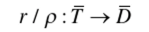
is one-to-one between D and T and satisfies (9.16). Such a function p is called a strong solution of the reflector problem. Regularity (that is, differentiability of weak solutions) under various assumptions on I and L was studied in Xu-Jia Wang (1996); Guan and Wang (1998); Caffarelli et al. (2008); and Loeper (2011).
Acknowledgment
This work presented in Chapters 7-9 is supported in part by the U.S. Air Force Office of Scientific Research (AFOSR) under award FA9550-18-1-0189.
References
Benitez, P., Winston, R., and Minano, J. C. (2006). Nonimaging Optics. Short Course at SPIE annual meeting. San Diego, CA, # SC388. 76-78.
Caffarelli, L. A., Gutierrez, С. E., and Huang, Q. (2008). On the regularity of the reflector antennas. Ann. Math. 167(1), 299-323.
Gangbo, W., and Oliker, V. (2007). Existence of optimal maps in the reflector-type problems. ESAIM: Control. Optim. Calculus Var. 13(1), 93-106.
Glimm, T., and Oliker, V. (2003). Optical design of single reflector systems and the Monge- Kantorovich mass transfer problem../. Math. Sci. 117(3), 4096-4108.
Glimm, T., and Oliker, V. (2004). Optical design of two-reflector systems, the Monge- Kantorovich mass transfer problem and Fermat’s principle. Indiana Univ. Math. J. 53(5), 1255-1278.
Graf, T., and Oliker, V. I. (2012). An optimal mass transport approach to the near-field reflector problem in optical design. Inverse Probl. 28(2), 1-15.
Guan, P., and Wang, X. J. (1998). On a Monge-Ampere equation arising in geometric optics. J. Differ. Geom. 48. 205-223.
Kochengin, S., and Oliker, V. (1997). Determination of reflector surfaces from near-field scattering data. Inverse Probl. 13(2), 363-373.
Loeper, G. (2011). Regularity of optimal maps on the sphere: The quadratic cost and the reflector antenna. Arch. Rational Mech. Anal. 199, 269-289.
Merigot, Q., and Oudset, E. (2016). Discrete optimal transport: Complexity, geometry and applications. Discrete Сотри. Geom. 55(2), 263-283.
Oliker, V. (2005). Geometric and variational methods in optical design of reflecting surfaces with prescribed irradiance properties. In SPIE Proceedings, Nonimaging Optics and Efficient Illimination Systems II, ed. by R. Winston and R. J. Koshel, volume 5942, pages 07-1-07-12, San Diego. CA.
Oliker, V. I. (2002). On the geometry of convex reflectors. PDE’s, Submanifolds and Affine Differential Geometry, Banach Center Pub!., 57, 155-169.
Oliker, V. I. (2008). On the geometry of convex reflectors, II. Polar reflectors. Results in Math. 52. 359-367.
Oliker, V., and Waltman, P. (1987). Radially symmetric solutions of a Monge-Ampere equation arising in a reflector mapping problem. In Proceedings of UAB International Conference on Differential Equations and Mathematical Physics, ed. by I. Knowles and Y. Saito, pages 361-374. Lecture Notes in Mathematics 1285.
Rdshendorf, L., and Uckelmann, L. (2000). Numerical and analytical results for the transportation problem of Monge-Kantorovich. Metrika 51(3), 245-258 (electronic).
Villani, C. (2009). Optimal Transport: Old and New. Grundlehren der Mathematischen Wissenschaften, Volume 338, Springer-Verlag, Berlin.
Wang. X. J. (1996). On design of reflector antenna. Inverse Probl. 12(2). 351-375.
Wang, X.-J. (2004). On design of a reflector antenna II. Calculus of Variations and PDE’s " 20. 329-341.
Westcott, B. S., and Norris, A. P. (1975). Reflector synthesis for generalized far fields../. Phys. A: Math. Gen. 8. 521-532.

