Calliphoridae
- Phormia regina (Meigen)
- Cochliomyia macellaria (Fabricius)
- Compsomyiopes callipes (Bigot)
- Chrysomya rufifacies (Macquart)
- Chrysomya megacephala (Fabricius)
- Calliphora vicina (Meigen)
- Calliphora vomitoria (Linnaeus)
- Calliphora (Eucalliphora) latifrons (Hough)
- Calliphora lívida (Hall)
- Calliphora alaskensis (Shannon)
- Cynomya cadaverina (Robineau-Desvoidy)
- Cynomya mortuorum (Linnaeus)
- Protophormia terraenovae (Robineau-Desvoidy)
- Lucilia illustris (Meigen)
- Lucilia sericata (Meigen)
- Lucilia cuprina (Wiedemann)
- Lucilia coeruleiviridis (Macquart)
- Lucilia cluvia (Walker)
- Lucilia mexicana (Macquart)
- Lucilia elongate (Shannon)
This family is commonly known as the blowflies, bottle flies, and screwworms, and includes the most important and common species to inhabit carrion. The Calliphoridae are members of the first

Figure 5.11 The larvae of Dermatobia hominis, the human bot fly. This species is parasitic to humans, primates, and many other animals. Unlike most other species of maggot, bot flies require a living host.
sere of decomposing insects, and therefore tend to arrive at a body very quickly after death. Some species may exploit open wounds in living animals and continue feeding after the animal dies.
The adult calliphorid ranges from 6 to 14 mm in length, although the final adult size is dependent upon species and food availability in the larval stages. Most of the species are metallic in appearance, ranging from bright green or blue to bronze or shiny black. Some adults have a covering of fine hairs or powder that may mask the metallic coloration, giving them a dull or dusty look.
Blowflies are among the first insects to detect and colonize animal remains. In experimental studies, calliphorid adults have been recorded to arrive at carcasses within minutes of carcass exposure, making this family the preferred group for use in time of colonization estimation. Blowflies locate remains in a two-step process that begins with chemical detection, followed by a visual assessment of the carcass. Adults prefer to lay their eggs in natural body openings and wounds, which allow for protection of the eggs and newly hatched larvae.
Eggs are laid in large bunches called clutches. The individual eggs are glued to each other and to the substrate with a thin, sticky coating placed on each egg during oviposition. This bunch of eggs leads to a large mass of maggots hatching at the same time in the same area and leads to a patchy maggot mass effect on large carrion. Female flies lay clutches of about 200 eggs at once, which take around 24 to 48 hours to hatch, depending on species and temperature.
The eggs hatch into the first of three larval instars. The larval body is tapered with a head and mouth hooks at the pointed anterior end, and a pair of spiracles, or breathing tubes, at the blunt posterior end. The head is greatly reduced, lacks eyes, and is supported internally by a sclerotized cephalopharyngeal skeleton. The complex structure of the cephalopharyngeal skeleton is partially visible through the integument of live larvae, but the larva must be cleared of excess protein to see the entire structure. The shape of this cephalopharyngeal skeleton is very useful in identification of the larvae.
The first instar is the smallest in size and the shortest in duration. The maggots are tiny and feed near where the egg mass was originally oviposited. As they grow, they move into less putrid material further away from the original oviposition site. The mature or third instar larvae range from 8 to 23 mm in length and are white or cream colored. The terminal segment contains the posterior spiracles, which are the primary breath apparatus of the larvae.
The posterior spiracles are important morphological indicators for species identification and larval stage. The slits that form the opening to each spiracle slant toward the midline in Calliphoridae. Other families have very different spiracular opening slits. The number of slits in each spiracle is
Important Insects in Decomposition indicative of the larval stage. First instar larvae have one u-shaped slit, second instar larvae have two slits, and third instar larvae have three slits.
It takes between 4 and 21 days to go through all three larval stages, dependent upon species and temperature. Naturally, the warmer the temperature, the faster the larvae develop. The third instar larvae is the longest stage and features the most voracious feeding.
Once the maggots have finished feeding, they disperse from the body and find a protected area in which to pupate. They tend to do this en masse, and large numbers of maggots can be seen dispersing or wandering from the carrion at once. This stage is often called the pre-pupal stage and is characterized by maggots discontinuing feeding and dispersing from feeding sites. The stage can last anywhere from 3 days to 2 weeks, depending on if the maggots are able to find a suitable pupation site. The larvae usually wander 15 to 20 feet away from the carrion and dig down into the soil or crawl under protected areas in the environment, such as leaves, rocks, furniture, or carpet. On exceptionally smooth surfaces, like tile or linoleum, the maggots can wander upward of 100 feet away from a feeding source. It is important to remember that this stage is a non-feeding stage, and the larvae are simply looking for a suitable pupation site. In some cases, such as animals that may possess a thick and matted fur coat, the pupae may be found in the fur of the animal. In many such animal cases, the typical wandering stage of the larvae is truncated and the pupal stage is formed within the fur coat of the animal.
Once in a protected area, the pre-pupae will shorten, and the outer cuticle will harden into the pupal casing. This pupal stage can last from 3 to over 20 days, and adults have been known to eclose from pupae months old. As the pupal ages, the pupal casing changes color. Young pupae start out creamy white, the same color as the larval stage, and then morph into a dark brown. This is a good way to approximate the age of a pupa, although it is more of a qualifiable than quantifiable method.
When adults are ready to eclose, or emerge, from the pupal casing, they inflate a special bladder and break the end of the pupal casing off at weakened sutures. Newly emerged adults are light in color and do not have the characteristic metallic bodies. Their wings are collapsed so they are unable to fly right away. It takes them about 45 minutes to extend their wings and harden their bodies, during which time they are very vulnerable to predation and parasitization.
It is easy to tell the difference between male and female Calliphoridae. Both sexes have internal genitalia that is only exposed during mating or oviposition, but both also have an external characteristic that is indicative of sexual dimorphism: the eyes. In females, the compound eyes are widely spread apart, leaving a gap of several millimeters between the medial edges of the eyes. In males, the eyes are touching at the vertex of the head, leaving no space in between.
There are several species of Calliphoridae that are forensically important in the United States. Each species can be found in a specific range, and generally prefers a specific set of temperatures.
Phormia regina (Meigen)
Phormia regina is commonly known as the black blowfly. It is found throughout the United States, with the exception of southern Florida. The adult ranges from 7 to 9 mm in length and is a dark green to olive color on both the thorax and abdomen. The legs and head are both a deep black. The anterior thoracic spiracle is surrounded by bright orange hairs, giving it a bright orange appearance. Phormia regina is typically a cold weather fly and tends to be most abundant in southern regions during the spring and the fall. In northern latitudes, it is common in summer. The larvae of this species develop mainly on carrion but are known to produce myiasis. It appears to prefer larger carcasses and tends to arrive on those carcasses later in succession.
Cochliomyia macellaria (Fabricius)
Cochliomyia macellaria is commonly called the secondary screwworm and is the most common Cochliomyia species in North America. It is found primarily in the southwestern United States, from California through Texas, and good specimens are easily identified even without the use of a microscope. The adults have an obvious greenish-blue coloration, with three pronounced dark green longitudinal stripes called vittae on the dorsal surface of the thorax. The head has an orange coloration, and the legs are a reddish brown. The larvae have readily visible respiratory trachea on their posterior end, which appear as swirling black lines easily visible against the maggot’s body. They prefer warm, humid weather, and are most abundant during rainy periods in the southern United States. Species frequent carrion in both sunny and shaded locations and are only rarely recovered from indoor habitats. They are not cold tolerant and are not common during winter months.
Compsomyiopes callipes (Bigot)
Compsomyipes callipes closely resembles Cochliomyia macellaria. It has the same dark metallic coloring, along with three dorsal vittae and bright orange coloration on the head. It tends to be slightly bigger, though, and has clavate palps on the mouth parts, long dark setae on the hind coxa, and dark calypters. It is currently found exclusively in the southwestern United States and prefers rural areas and large carrion.
Chrysomya rufifacies (Macquart)
Chrysomya rufifacies is commonly known as the hairy maggot blowfly. It is indigenous to the Australian and Oriental regions of the world and was introduced into the United States in the early 1980s. It is now well established throughout the southern U.S. regions. It is rapidly expanding its range and has most recently been found up through southern Canada during the warmest months of the year. The adults have stout, brilliant blue-green bodies with dark blue—tinged abdominal segments. The adults prefer outdoor settings, and rarely enter dwellings. The larvae are readily distinguished from other species by the presence of prominent flesh protrusions along their body, giving them their common name of the hairy maggot. The larvae will not only feed on carrion, but are predacious and cannibalistic, often totally eliminating other species on a carcass (Smith, 1986; Baumgartner, 1993; Whitworth, 2006).
Chrysomya megacephala (Fabricius)

Chrysomya megacephala is commonly known as the oriental latrine fly, and is widely distributed throughout Oriental regions, South Africa, and South America. It is now well established in the southern United States, particularly in Florida, Georgia, Alabama, Mississippi, Louisiana, and southern Texas. The adults have short, stout bodies similar in appearance to C. rufifacies but with a noticeably larger head. The eyes are unusually large and a very prominent shade of red, making this species easy to recognize in the field. Both male and female adults are attracted to carrion, fruits, sweet foods, and fecal material, hence the common name. Once the adults have settled on a food source, they are not easily disturbed, and therefore may often be collected off of carrion even if they are present in relatively low numbers. This species readily enters dwellings to find food and oviposition sites. The larvae are primarily carrion feeders and the adults show preference for fresh remains (Smith, 1986; Whitworth, 2006).
Calliphora vicina (Meigen)

Calliphora vicina is commonly known as the European blue bottle fly. Several species share the common name "blue bottle fly,” but C. vicina is the most widespread, with worldwide distribution. It is most abundant in the northern half of the United States and is common on large carrion. It is a large fly, ranging from 10 to 14 mm long. The head is black, with the lower part of the cheeks appearing red to yellow. The thorax is dark blue but covered with fine hairs and a grayish powder which gives it an overall dusty or silvery appearance. The thorax has faint vittae of dark blue or black, and the abdomen is a pronounced metallic blue with patterns of silver. Overall, the body appears very bristly. This is a common urban species, and adults are attracted to most types of decaying matter and frequent rotting fruit, decaying meat, and feces. Larvae are found primarily on carrion and are often the dominant Calliphora species on carrion in temperate urban areas (Hall, 1948; Whitworth, 2006).
Calliphora vomitoria (Linnaeus)
Calliphora vomitoria is commonly known as the Holarctic blue blowfly. This species is common in the United States from Virginia to California, and north through Canada to Alaska. It is 7-13 mm in length and has a dark blue thorax with four dark longitudinal stripes and a very stocky and bristly body. It is covered with fine hairs and gray dust, giving it a silver coloration. The abdomen is bright metallic blue and patterned with silver-gray powder. It is similar in appearance to C. vicina, except the head is entirely black; it lacks the orange cheek area characteristic of C. vicina. This species is common in wooded rural and suburban areas, where it prefers shaded locations. In Canada, it is chiefly a forest species which can be found at higher altitudes and is especially common around refuse in human settlements. It is a slow-flying fly and makes a loud buzzing sound during flight. The larvae are carrion feeders, and the most common Calliphora species on carrion in rural settings.
Calliphora (Eucalliphora) latifrons (Hough)

Calliphora latifrons is commonly known as the blue bottle fly and is a species that is common from Mexico to Canada, and into Wisconsin and Ontario. It is most common in the Rocky Mountain region from Colorado onward, and has been reported up through Alaska. The thorax of this species is dark blue and marked with dark stripes. It is not as common as other Calliphora species and is most often collected from excrement and decomposing tissues (Hall, 1948; Smith, 1986; Whitworth, 2006).
Calliphora lívida (Hall)

Calliphora livida is commonly known as the blue bottle fly and is generally 8-10 mm in length. It is overall dark, shiny blue in coloration, with a dulled thorax due to a gray dust-like substance. The abdomen has abundant setae that give it some white markings on the dorsal and ventral surfaces. Its head is fully black in color, and this species can be easily confused with other Calliphora species. C. livida is widespread across the North American continent.
Calliphora alaskensis (Shannon)

Calliphora alaskensis is a widespread but relatively rare species, found only at high elevations in the southern portions of its range. It is found from Alaska throughout Canada, and into the United States through Tennessee and North Carolina. Adults are approximately 7-13 mm long with a metallic blue abdomen and thorax, possibly dulled with grayish coloration. The head is overall black (Whitworth, 2006).
Cynomya cadaverina (Robineau-Desvoidy)

•v
Cynomya cadaverina is a species that is common on the North American continent, with its greatest abundances along the Canadian—U.S. border. It is present only rarely in the warmest, southern most regions of the United States, but has been found as far south as Texas. It is a fairly large species, approximately 9-14 mm in length, with a dark blue abdomen. The head beneath the eyes is reddish brown to black, and often covered with small, yellow hairs. C. cadaverina has peaks of abundance in the spring and fall, although adults may appear in midwinter in the southern most regions of its range. Adults are attracted to excrement and carrion in the later stages of decay. The larvae may generally be found on carrion after Lucilia and Cochliomyia species (Whitworth, 2006).
Cynomya mortuorum (Linnaeus)
f ■ -1
H — i
Cynomya mortuorum is closely related to Cy. cadaverina but has a much more limited range. It is found only in the far north in Alaska near the Arctic Circle, indicating it is a cold-adapted blowfly. The adults can be found on woodland edges and meadows, often near flowering plants. The adult body ranges from 8 to 15 mm in length, with metallic blue coloration on the thorax and abdomen. It can be easily distinguished from Cy. cadaverina due to its bright orange head. Due to its range, the larval stage of this species is longer than most other blowflies, taking upward of 38 days to complete all three instars. The larvae are most commonly found colonizing the small mammals common to the region but can survive on excrement in the absence of carrion (Smith, 1986; Whitworth, 2006).
Protophormia terraenovae (Robineau-Desvoidy)

Protophormia terraenovae is commonly known as the northern blowfly or the blue bottle fly. It has a deep blue to purple coloration and is a large fly, measuring 7-12 mm in length. It is characterized by a black to brown anterior thoracic spiracle, a black head, and black legs. This species is common throughout the northern regions of the United States up through Canada and Alaska. It is known as a cold weather fly and may rarely be found in the southern United States during the winter months. It becomes more common at high elevations during the summer, and is abundant in the Arctic, having been found within 550 miles of the North Pole. In these regions, it is most abundant during July (Hall, 1948; Whitworth, 2006).
Lucilia illustris (Meigen)
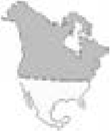
Lucilia illustris is commonly known as the green bottle fly and is one of several species given this common name. It may be one of the most common Lucilia species throughout the Western hemisphere and is widespread throughout in the northern regions of the United States and throughout Canada. Adults are approximately 6-8 mm long with a bright green thorax and abdomen, and black legs. It is considered a warm weather species and is most abundant in open woodlands during summer months. Adults are primarily attracted to fresh carrion, although they may sometimes be collected from excrement. Females are most active and commonly oviposit on remains in bright or sunlit locations. The larvae can feed and develop on excrement, but seem to prefer carrion (Stevens & Wall, 1996; Whitworth, 2006).
Lucilia sericata (Meigen)
Lucilia sericata is commonly known as the sheep blowfly and may be placed in the genus Phaenicia in some texts. L. sericata may be the most common species of Calliphoridae worldwide. In North America, it can be collected throughout the United States and Canada and is most commonly found in the western regions. The adults are 6-9 mm in length with a brilliant blue-green, yellow-green, or green-bronze thorax and abdomen. The thorax has three prominent transverse grooves on the dorsal surface, and the front femora are black or deep blue. The larvae can successfully develop on a wide variety of food substrates but are best suited to carrion. This is one of the earliest species to arrive on carrion and will oviposit within a few hours after death. The adults prefer carcasses located in bright sunshine and open habitats but will seek shaded areas of the body to deposit eggs, although this species is known to cause myiasis in many animals. This is one of two species commonly used in maggot debridement therapy for the removal of necrotic tissues in wounds (Smith, 1986; Stevens & Wall, 1996; Whitworth, 2006).
Lucilia cuprina (Wiedemann)
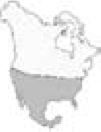
Lucilia cuprina is commonly known as the Australian sheep maggot or the bronze bottle fly. It is closely related to L. sericata, but L. sericata is more cold tolerant and found most abundantly in the northern portions of its range. L. cuprina is most common in the southern regions of North America, particularly in the southeastern United States It is most common from Virginia, west through Missouri to California. This fly is 6-8 mm long, and usually with metallic yellow-green or dull copper tinted with green coloration and green metallic femora. The adults seem to prefer excrement to carrion, but are commonly attracted to both, as well as decaying fruit. They often alight on the ground or on vegetation in close proximity to a food source and will take flight readily when disturbed. This makes the adults very difficult to collect at a scene. The larvae are most frequently found on carrion, although they are a causative agent of sheep strike and myiasis in some animals. This species is abundant from spring though fall and is collected year-round in Florida. They are often found near dwellings and will readily enter homes. This is the second of two common species used in maggot debridement therapy.
Lucilia coeruleiviridis (Macquart)
Lucilia coeruleiviridis is primarily located in the southeastern United States but may be rarely found in the northeast and midwest. It is most commonly found from Maryland south to Florida, and north to Michigan and Wisconsin. It is much less abundant west of the Mississippi River. Adults are generally 8.0-9.5 mm in length, with a shining green thorax and abdomen. The fifth abdominal segment is often tinged with red or purple along the dorsal surface and tends to be highly polished and shining.
Lucilia cluvia (Walker)
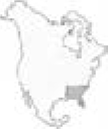
Lucilia cluvia highly resembles L. coeruleiviridis, but tends to be slightly smaller, ranging from 7.5 to 8.0 mm on average. Other minor differences between L. cluvia and L. coeruleiviridis include the color of the hairs on the head and the relative shininess of the fifth abdominal segment. Identification of this species is best left to experts due to its similarity with L. coeruleiviridis. The adults of L. cluvia are limited to the southeastern United States from Florida north to North Carolina and west to southern Mississippi (Whitworth, 2006).
Lucilia mexicana (Macquart)

Lucilia mexicana is primarily a southwestern U.S. fly, common from California through Texas, and ranging from southern Utah south through Mexico. The adults are 6-9 mm long with a bright metallic green coloration on both the thorax and abdomen. The legs are usually black, as is the head. This species can be found in both wooded areas and urban habitats due to its attraction to animal and human feces, garbage, and fresh carrion (Stevens & Wall, 1996; Whitworth, 2006).
Forensic Entomology
Lucilia elongate (Shannon)
V
Lucilia elongate is a relatively rare species, found in the western regions of the United States, throughout California, Colorado, Oregon, and Washington, and up through British Columbia. It typically has a shining blue-green thorax and abdomen, with a black head and black legs (Smith, 1986; Whitworth, 2006).

