Sarcophagidae
The Sarcophagidae are commonly known as the flesh flies. Members are found throughout North America, although most species occur in the warmer regions of the continent. Adults are medium to large flies, with usually three black longitudinal strips on the dorsal thorax and a checkerboard (or tessellated) pattern on the abdomen (McAlpine, 1981). The larvae are large and inhabit decomposing flesh. Species in this family are very difficult to identify and are often simply referred to by the family name (Smith, 1986; Nation, 2011). Adults are attracted to carrion under most conditions and are often found on animals that are decomposing indoors (Sanford, 2015). Females will primarily larviposit rather than oviposit, causing the larvae to appear as the oldest on carrion. Common species will arrive concurrently with or slightly after Calliphoridae (Mullen & Durden, 2002).
Sarcophaga haemorrhoidalis (Fallen)
Sarcophaga haemorrhoidalis is commonly known as the red-tailed flesh fly, due the obvious red terminal end of the adult abdomen. It is associated with humans and human environments, and is distributed throughout most of North America, north of Mexico. This is a large species, with black coloration and a dusting of white powder that gives the adults an overall gray appearance. Adults have three obvious dorsal stripes on the thorax and a distinct checkerboard pattern on the abdomen (McAlpine, 1981). The adults are known to feed on fecal matter and carrion and have been known to cause myiasis in animals (James, 1947; Smith, 1975).
Sarcophaga bullata (Parker)
Sarcophaga bullata, the gray flesh fly, is closely related to S. haemorrhoidalis, and has approximately the same distribution, although it is most common in the southern United States The adults are nearly identical to other Sarcophagidae, and positive identification relies upon the use of specialized keys for the male genitalia (McAlpine, 1981; Vairo et al., 2011).
Phoridae
The Phoridae is a large family of flies that occur worldwide. The adults are small to medium sized, with dull black, yellow, or brown coloration and an expanded thorax which gives them a “hump-backed” appearance. The pupae are dorsoventrally flattened with a pair of distinctive respiratory horns on the anterior end. They are collectively called the scuttle flies due to their propensity to run about on the substrate in an erratic manner, or humpbacked flies due to their appearance. Larvae are found in decaying organic matter, and many species are associated with animal carrion. Several species have the ability to reproduce underground, and are associated with burials (McAlpine, 1981; Smith, 1986).
Megaselia abdita (Schmitz)
Megaselia abdita, the scuttle fly, is often found in association with other Megaselia species. The adults are well known from subterranean carrion and have the characteristic hump-backed appearance and scuttling movement that characterizes many of the Phoridae. The adults are attracted to decomposing materials and have the ability to colonize buried bodies. As a forensic indicator, M. abdita has been associated with carrion in colder months (Greenberg & Wells, 1998; Manlove & Disney, 2008), but has yet to be researched in depth.
Megaselia scalaris (Loew)
Megaselia scalaris is commonly known as the humpback fly or the coffin fly. The adults are 2-3 mm in length with a yellow or yellow-brown thorax and abdomen. This species is primarily found in warm climates but extends into the northern regions of North America. It is associated with humans and has been transported to new regions as humans have moved around the globe. The females are attracted to foul-smelling fluids and will lay eggs on most organic matter. The larvae consume a wide range of organic materials and will infest everything from living plants to decomposing matter. Some larvae may become facultative parasites of other invertebrates under the correct circumstances, and many have been found to cause myiasis (James, 1947; Disney, 2008). This species ranges from the southern regions of the United States up through southern Canada (James, 1947).
Megaselia rufipes (Meigen)
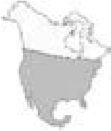
Megaselia rufipes, the scuttle fly, is closely related to M. scalaris, and often found in association with the latter. The adults are 2-3 mm long with a dark brown thorax and abdomen, and light yellow legs. The ventral surface of the fly presents as light yellow. This species is found from the southern most regions of Florida up through Alaska. Preliminary observations indicate M. rufipes may oviposit on animal carrion within a few days of exposure and have the ability to access decomposing matter that is buried or concealed indoors (Manlove & Disney, 2008).
Piophilidae
The Piophilidae are collectively known as the skipper flies and exhibit their greatest diversity in temperate regions (McAlpine, 1981). The adults are small, and overall metallic blue or black. They colonize a large number of decomposing habitats and are commonly found during the later stages of animal decay. They earn their common name due to a characteristic behavior exhibited by the larvae. The larvae have protrusions located on the last abdominal segment, and they will grasp these protrusions with their mouth hooks. The sudden release of the mouth hooks causes the maggot to "leap” into the air over a distance of several inches. Infestation by Piophilidae maggots often results in a description of “jumping worms” on animal carrion (Huckett, 1975; McAlpine, 1981; Nation, 2011).
Phiophila casei (Linneaus)
Piophila casei, commonly known as the cheese skipper, cheese fly, or bacon fly, is a small species, approximately 2.5-4.0 mm in length. It has an overall black body and a distinctly round head, and the lower part of the head, the antennae, and parts of the legs yellow. It is a cosmopolitan and synanthropic species, commonly associated with carrion and considered a pest species in the food industry. The larvae tend to arrive in the later stages of succession, and the larvae have been known to cause myiasis in living animals. It is widespread in the United States and Canada, ranging from southern Louisiana and the Gulf Coast north through Alaska and the Canadian Arctic (Martin-Vega, 2011; Rochefort et al., 2015).
Stearibia nigriceps (Meigen)

Stearibia nigriceps adults range from 2.5 to 4.1 mm in length and are glossy black with a metallic blue tinge. The legs vary in coloration from entirely yellow to partially yellow and black. This species is a synanthropic fly that frequents carrion in both the adult and larval stages and is also a known pest of the food industry. It is most commonly associated with the advanced stages of decomposition and can be of forensic importance in buried carrion. It is widespread in the United States and Canada, ranging from the Yukon Territory and British Columbia to Nova Scotia, and south through Louisiana (Martin-Vega, 2011; Rochefort et al., 2015).

