Firing A Gun
The discharge of a firearm is commenced when the trigger of the weapon is pulled, initiating the release of the firing pin within the gun. The firing pin strikes the primer of the cartridge case, and it ignites, causing a flame. The flame enters the cartridge case chamber, igniting the powder and producing large quantities of gas and heat. One gram of propellant can produce 1 liter of gas under high temperature and pressure. The heat generated by the gas exerts pressure on the projectile and the sides of the cartridge. The gas pressure at the base of the projectile drives it down the barrel of the gun (Clasper, 2001). When the bullet exits the barrel, an eruption of flame, gas, and unburnt powder, soot, primer residue, and vaporized metal from the projectile and cartridge all follow the projectile. This material is referred to as gunshot residue (GSR). In revolvers, this type of material may also escape from both the cylinder-barrel gap and the barrel (DiMaio, 1999; Bradley-Siemens & Brower, 2016; Bradley-Siemens et al., 2018). The GSR may also travel backward from the weapon to the shooter.
The speed at which projectile leaves the barrel of a gun is called the muzzle velocity. The velocity is based on the type and the caliber of the ammunition, barrel length, the propellant (gunpowder) burn rate, and the gas production after the ignition of the primer.
Rifling
Handguns, rifles, and air- or gas-powered guns have rifled barrels. The process of rifling a barrel involves cutting spiral grooves the length of the inside or bore of the gun barrel (Figure 9.6). The remaining metal left between the grooves is referred to as the lands (DiMaio, 1999; Merck, 2013; Bradley-Siemens & Brower, 2016). The purpose of the rifling is to create a rotational spin to the projectile along its longitudinal axis, stabilizing the projectile’s flight through the air. Rifling stabilizes the bullet and increases accuracy; however, it also slows it down. The diminished velocity is caused by the projectile energy being deviated from a forward direction (Clasper, 2001; Bradley-Siemens & Brower, 2016) and thus rifling decreases the velocity. Rifling acts as a fingerprint of an individual weapon placed on the ammunition used in that individual weapon by imprinting the internal barrel rifling, unique to each firearm, onto the projectile (Figure 9.7).
A handgun or a rifle may have a device known as a suppressor or "silencer” attached to the end of the barrel to diminish its sound. This suppressor diminishes sound by absorbing gases and particles emitted from the gun muzzle. A suppressor is a metal tube with a series of baffles within it that divert the gases and particles expelled from the gun barrel. This can alter the dispersal of gunshot residue affecting distance determination (Bruzeka-Mucha, 2017). The suppressor can also have

Figure 9.6 Rifling within a gun barrel. (Photo courtesy L. Siemens.)
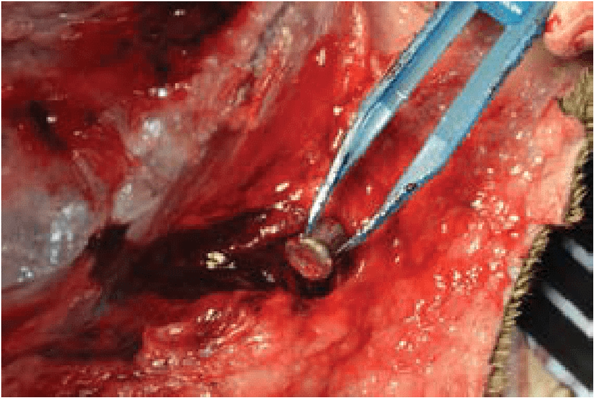
Figure 9.7 Removal of projectiles must be done with gloved fingers or instruments such as shown here, that will not alter rifling on the projectile.
effects on ammunition fired through the weapon if it is placed incorrectly on the muzzle or a homemade suppressor is used. These can alter the projectile as it leaves the barrel, causing nicks or indentations. These defects to the projectile are referred to as a “baffle strike” (Haag & Haag, 2011).
Ballistics
Ballistics is the science of projectile travel. A flight path of a projectile can be described in three stages, consisting of internal, external, and terminal ballistics. Internal ballistics describes the path of the projectile inside the firearm. External ballistics describes the projectile’s flight through the air. Terminal ballistics is the projectile’s pathway within an object (animal). When a projectile enters the body of an animal, this type of ballistics may be referred to as “wound ballistics”
(Bradley-Siemens & Brower, 2016; Bradley-Siemens et al., 2018). This concept is expressed in the equation:
Kinetic Energy (KE) = '/2 Mass x Velocity2
The equation relates the effects of mass and velocity on the amount of kinetic energy potentially delivered to animal tissues by a projectile. The equation demonstrates that if the mass of a projectile is doubled the KE is doubled, but if the velocity is doubled, the KE is quadrupled (DiMaio, 1999; Merck, 2013; Bradley-Siemens & Brower, 2016; Bradley-Siemens et al., 2018).
The distances a projectile travels and changes in the media it transgresses on its pathway will affect the capacity of a projectile to elicit tissue damage. The velocity of a projectile alters with the distance it travels before contact, affecting the amount of kinetic energy transferred to the tissue. The resistance of tissues to a projectile will also affect the amount of energy released into the tissue. Skin maintains enough resistance that a minimum projectile velocity of 50-60 m/s is necessary for penetration. Ballistics impact the KE transferred to the tissue; the KE in combination with the type of weapon used is what best anticipates the wounding capacity of a projectile (DiMaio, 1999; Santucci & Chang, 2004; Bradley-Siemens & Brower, 2016; Bradley-Siemens et al., 2018).
The type of ammunition used will have effects on wounding capacity, but the ability or tendency of a projectile to fragment or to partially or completely flatten (mushroom) on impact, in conjunction with the caliber of the projectile and any jacketing, will also significantly affect wounding capacity (Clasper, 2001; Felsmann et al., 2012; Bradley-Siemens & Brower, 2016).

