Dogfighting
Dogs have been used against lions, wild boars, bulls, and humans for over 3000 years. In the thirteenth century in England, bull-baiting and bear baiting were fashionable forms of entertainment and consisted of dogs attacking a confined or tethered bull or bear (Lockwood, 2013). Popular dogfighting began in the 1830s after the banning of bull/bear-baiting events and became a popularalternative. In the United States, dogfighting became popular in the 1860s, with many of the dogs originating in Ireland and England (Lockwood, 2013).
In the United States, fighting dogs are usually American pit bull terriers. Other breeds of dogs have been used for fighting in Europe, South America, and Asia. These breeds include Neapolitan Mastiff, Akita, and Tosa from Japan; the Argentinean Dogo; Dogue de Bordeaux in France; and Chinese Sharpei. There are indications that dogfighters in the United States are exporting American pit bull terriers to Canada, Mexico, England, Europe, Australia, and the Far East (Christiansen et al., 2004).
Types of Dogfights
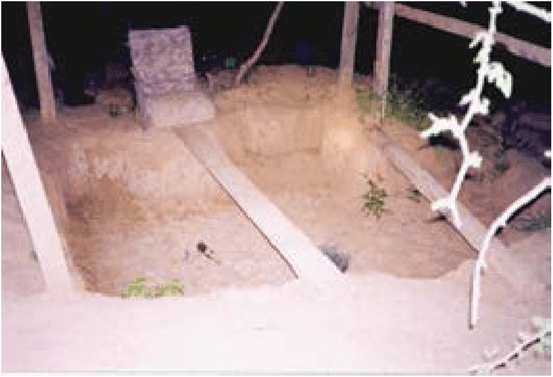
Dogfights may be held whenever and wherever fighters will assemble. Dogfights occur when two dogs specifically bred and trained to fight are placed in a pit. Events are called a match, show, or convention (series of matches) depending on the size and number of participants. The actual fight will occur in a makeshift or permanent pit or arena. The pit or arena is generally an area enclosed by plywood walls (Christiansen et al., 2004; Sakach & Parascandola, 2016). Matches maybe staged in rural areas on the weekends in the evening or larger events near holidays that encompass 3-day weekends. Outdoor or indoor fighting pits may be utilized. A typical dogfighting area measures from 14 to 20 square feet with wooden walls approximately 24-36 inches high. The surface of the pit is usually carpet or canvas to enhance traction. A pit may be portable or made with makeshift items such as hay bales (Christiansen et al., 2004; Sakach & Parascandola, 2016) (Figure 13.13).
Dogfighting Participants
Personnel involved in dogfighting are similar to those in cockfighting events. The promoter is the individual making all the arrangements to conduct the match, show, or convention. They own or control the location, are responsible for selecting event staff, constructing or providing the pit or arena, and collecting entry and admission fees. In dogfighting, promoters give more scrutiny to security by hiring guards, using police scanners, and having outside peripheral lookouts that will blow a car horn if law enforcement is observed approaching. The handler (sometimes the owner) is responsible for handling the dog during the fight. A referee is the person officiating the event in the pit. In a national convention a referee is usually an established name in the dogfighting community. The referee will be paid for the event as well as compensated for travel, food, and lodging expenses. The fees can vary from $200 to $500 per day depending on the number of matches scheduled. Spectators are individuals who attend the events. These individuals come for
Dogfighting entertainment, gambling, or entering an animal. Spectators as well as handlers, promoters, referees, and fighters may be any age, sex, race, occupation, or financial status (Christiansen et al., 2004; Sakach & Parascandola, 2016).
Dogfighting Profiles
There are three levels of dogfighters: the serious (professional), hobbyist, and street fighter. The professional takes great pride in breeding, training, and fighting their own dogs. They may operate at a national and/or international level and may be known in underground publications. The fights they are involved with are high-stakes matches using experienced dogs with established bloodlines (Christiansen et al., 2004; Sakach & Parascandola, 2016). Hobbyists are individuals living short distances from one another. These individuals have a greater interest in gambling than the quality of their fighting dogs. They may purchase dogs of average ability and may consistently use the same fight location. Street fighters tend to be gang members or juveniles using pit bulls and pit bull crosses. Street fighters usually compete in impromptu matches in public parks, playgrounds, or back alleys. This group is generally amateur participants (Christiansen et al., 2004; Sakach & Parascandola, 2016).
Training
"Organized fighters’’ may own dozens of dogs and breed their own pups from proven bloodline stock. A common dogfight motto is “breed the best and bury the rest” (Christiansen et al., 2004). A quality desired in fighting dogs is “gameness”—the animal that is ready and willing to fight and will not yield. Puppies bred in these breeding programs are subjected to an intensive culling process. Only those puppies that exhibit aggressive behavior toward other dogs are kept. A dog that survives the first 16-18 months may become a prospect and be schooled. At this stage, the prospect dog is placed up against other dogs in a series of “short rolls” and "combats" to build confidence and expose them to different fighting styles (Christiansen et al., 2004). The opponents at this stage are not overly rough. Next a "game” test is facilitated. The young dog is usually pitted against a larger, rougher dog until they are thoroughly exhausted. The prospect dog is then expected to rush or scratch at another fresh dog. If the animal passes, it becomes a match dog (Christiansen et al., 2004; Sakach & Parascandola, 2016) (Figures 13.14 through 13.16).
Before a fight, the match dog will enter a keep. This is 4 —6 weeks of intense conditioning. The keep is designed to build endurance, strength, and cardiovascular fitness. It consists of strenuous physical activity, much like a boxer. This may occur with treadmills (slat or carpet mills) or modified commercial treadmills. Other devices include cat mill or jenny for endurance and spring pole for strength building. A cat mill or jenny is similar to a horse walker where the dog is harnessed to a spoke projecting from a rotating central shaft; the dog will chase a small bait animal that is caged or tied to a leading spoke just ahead of the dog. A spring pole uses a hide, inner tube, or dog grip toy suspended from a heavy spring sapling pole that the dog can bite or hold onto (Christiansen et al., 2004; Sakach & Parascandola, 2016) (Figure 13.17).
These pieces of training equipment are key evidence in the investigation and should be confiscated for case evidence and to end the continued use for training.
CASE 4: Dogfighting Breeding and Training Operation (NBS)
History: Local law enforcement with a search warrant conducted a search of a residence for illegal drugs but came up empty. They photographed the residence and the backyard. In the yard were multiple American pit bull terriers tethered with heavy chains. There was a treadmill and string pole in the yard as well. This police agency presented scene pictures toanother agency’s animal crimes unit and were able to obtain another search warrant for the dogs and another look for illegal drugs.
Physical Findings: Upon entry to the house and property the dogs and the above listed paraphernalia were identified and confiscated. Additional medications, vitamins, and medical supplies consistent with dogfighting were confiscated. Six kilos of cocaine were found in the home. All of the dogs had healing wounds and scars to the neck and front legs.
Outcome: All the dogs (six) and equipment were confiscated. The dogs were given both physical and behavioral examinations and were either placed for adoption or humanely euthanized. The suspect was charged with drug possession with intent to distribute and multiple felony animal abuse charges.

