Medications/Paraphernalia
Drugs and veterinary supplies are used extensively in cockfighting beyond just vitamins during the keep. There is a list in the humane society of the United States (HSUS) Final Round publication on cockfighting. The birds may be given injections of heart stimulants such as digitalis, vitamin K to help with blood clotting, hormones such as testosterone, and other anabolic steroids. Many cockers (owners) have their own “secret formula” that is injected into the bird and can consist of almost anything (Sakach & Parascandola, 2016) (Figure 13.4).
The birds are often given different types of drugs to enhance performance. These usually consist of hormones, stimulants, and blood clotting agents. Strychnine is a commonly used stimulant to increase the bird’s level of agitation and aggression (Dinnage et al., 2004). Other drugs may consist of antibiotics, caffeine, methamphetamines, and vitamins (Merck, 2013).
The presence of these types of drugs helps solidify the documentation that gamecocks are being raised, trained, and fought at a given location. Veterinarians can help with the identification of these drugs and their applications. In addition, veterinarians can indicate to law enforcement any drugs that may be illegally possessed (i.e., anabolic steroids). A prescription may be required to possess the drug, or the drug may be illegal to possess, depending on the type of drug. These may lead to additional charges. Although not routinely done, blood can be drawn for toxicology purposes. A blood sample for toxicology should be in an EDTA or heparinized tube. A purple- top tube used for dogs and cats can be utilized. Blood can be drawn from the ulnar vein in the wing. Discuss this with law enforcement, especially if drugs such as methamphetamines (speed), PCP, cocaine, and so on, are suspected to have been given to the birds to enhance fighting.
The birds will have gaffs, long knives (Filipino slashers), or short knives (Mexican slashers) attached to their altered spurs on one or both legs. The attachment of these devices is called heeling (Christiansen et al. 2015). The birds are fought in a pit usually 15-20 feet. The pit may be rectangular or circular with walls to a height of 3 feet. Construction materials vary greatly. (Merck, 2013) (Figures 13.5 through 13.7).

Figure 13.4 Hormones used in cockfighting. Many bottles will state specifically for a keep or cockfighting in English or Spanish. (Courtesy Ruthie Jesus.)

Figure 13.5 Gaffs laid out on a tarp. These are attached to the bird's leg in a process called heeling. (Courtesy Ruthie Jesus.)

Figure 13.6 Heeling accoutrements for gaff placement on the legs. (Courtesy Ruthie Jesus.)

Figure 13.7 Leg with gaff attached. (Courtesy Ruthie Jesus.)
CASE 3: Loud Music Call (NBS)
History: A complaint of a loud music call was received by police; this is the predominant cockfighting call. Police responded and found a backyard (underground) cockfighting event. This usually involves as few as 20 birds up to as many as 100. Police received a call of loud music and a large body of people gathered behind an apartment complex. The scene was surrounded, and the suspects were detained.
Physical Findings: A makeshift ring of carpet and wood was present soiled with blood. Deceased fighting gamecocks were piled near the ring/pit. Many of these had lacerations and cut wounds. Death appeared to have resulted from exsanguination or broken necks with observable injuries affecting the fighting ability of the bird. Injuries were documented similar to previously mentioned cases. Gaffs and knives were present on the confiscated birds.
Outcome: Felony charges were filed for organizing, participating in, and acting as spectators for cockfighting.
Bird Processing
The conditions of the birds seized in a cockfight raid are not usually as significant as for the prosecution of dogfighting (Lockwood, 2013). Charges are usually based on possession of the birds and fighting paraphernalia. Detailed written and photographic documentation of bird conditions can add strength to other evidence. The bird should be photographed with case information, date, and so on. The gamecock should be held in a manner allowing the veterinarian to do a thorough gross exam. The head, body, wings, legs, and tail should be examined for any type of scars, injuries, or evidence of injury repair by the handler (i.e., stitches with thread or dental floss). Any of the aforementioned should be photographed with and without measurements. Each bird is assigned an identification number which all exam findings and photographs will be referred to for each individual gamecock (Figure 13.8).
In addition to the forensic exam, the veterinarian needs to document any bands (plastic or metal) that may be found on the bird’s legs or wings. These may match up with keep cards or some form of fighting event schedule linking that bird to the day’s proceedings. These types of bands may also assist in establishing where the bird originated (Figure 13.9).
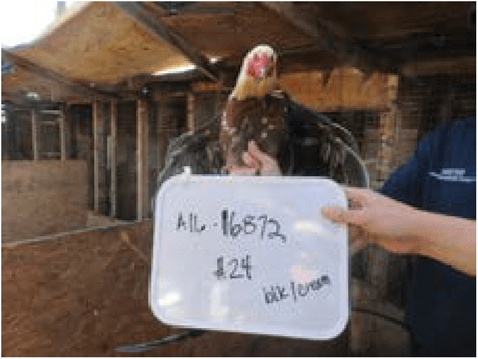
Figure 13.8 Using marker board to photograph bird with case information.
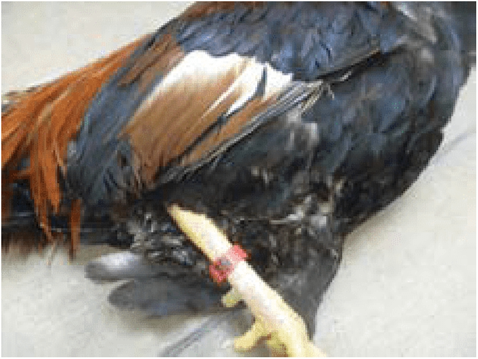
Figure 13.9 Bird with band on leg. Used in fighting matches, will usually match up with event keep cards.
Types of Injuries
Gamecocks used for cockfighting usually have evidence of multiple injuries in different stages of healing. These injuries (scars and wounds) can be documented using a diagram of some sort (Merck, 2013, see Appendix 34). Wounds seen in surviving birds are usually to the head and eyes. The faces may be swollen, specifically around the eyes. The globe of the eye may be pierced, which may go undetected due to the tissue swelling. The nostrils may be obstructed with dried (clotted) blood causing respiratory compromise. These injuries may be from the adversary’s beak or gaffs. Birds may sustain punctures or sharp force injuries to the air sacs, chest region, and wings (Merck, 2013). Bone injuries are observed in relation to the knives and gaffs used. There may be evidence of sharp force injury trauma and fractures. Additional injuries may be linked to the method of dispatching a gamecock, involving cervical dislocation (Merck, 2013). There may be injuries that were treated by a non-veterinarian. These usually involve cuts or lacerations being sutured with some type of thread. Wounds at various stages of healing with different colors of applied powdered over-the-counter medications are commonly found (Figures 13.10 through 13.12).

Figure 13.10 Laceration to the leg from a gaff.
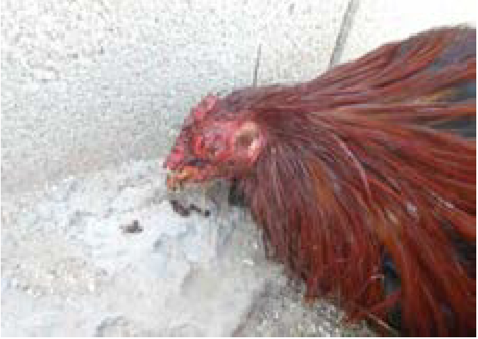
Figure 13.11 Wounds to face and head. Notice combs and wattles have been removed. (Courtesy Ruthie Jesus.)

Figure 13.12 Laceration to breast muscle area sustained during a fight. (Courtesy Ruthie Jesus.)
Additional forensic evidence of cockfighting may be found in discarded (sometimes burned) skeletal remains. Consider taphonomic effects on bone for additional evidence, especially when sharp force injury is suspected.
Necropsy
Routinely in cockfighting cases, a gross exam observing for injuries either antemortem or postmortem is usually adequate. If additional animal cruelty charges are sought by law enforcement, a necropsy may be necessary. If this is anticipated, the bird should be cooled down immediately after death. Water can be sprayed under the feathers to cool the body quickly to minimize rapid deterioration of tissues. The body should be refrigerated, and the necropsy performed within 24 hours. To perform a poultry necropsy, proper personal protective equipment (PPE) consisting of gloves, apron/coveralls, and an M-99 mask or better is required to prevent spread of zoonotic diseases (Greenacre, 2014; Touroo & Reisman, 2018).
Housing
The circumstances of the seizure will dictate handling of the birds. If they are owner surrendered, which is rare, they can be euthanized after a forensic examination. If the birds need to be housed for a seizure period, they will need to be caged individually. Visual barriers are required to prevent them from seeing one another. If seized during an active cockfighting event, care must be taken when handling, as gaffs or knives may still be present on the legs and are very dangerous with an already aggressive bird.
Disease Testing
There are state and federal regulations for international, interstate, and intrastate transport of birds. Specific disease testing requirements vary depending on the applicable regulations (Merck, 2013). Cockfighting often involves illegal transportation of birds, especially in the southwestern United States. Outbreaks of END in Mexico and the United States have been linked to the illegal transportation of gamecocks for the purpose of cockfighting. (Merck, 2013). Many states require testing for avian influenza, Salmonella, and END when gamecocks are confiscated for cockfighting (Lockwood, 2013). These tests are usually performed by the state-designated avian veterinarian. The author (NBS) recommends contacting the state veterinarian in these types of cases for direction and possible assistance.
Outcomes/Euthanasia
Due to the aggressive nature of cockfighting birds, zoonotic disease potential, and concerns with reportable disease transmission to other birds, placement in a home or sanctuary may not be viable (Lockwood, 2013). In many cases where the birds are owner surrendered, the seizure is not being contested, or there is a conviction the only option is that the birds be humanely euthanized. The author (NBS) prefers intraperitoneal injection of sodium pentobarbital for euthanasia of these birds.

